
First Responders and Intimacy: A Trauma-Informed Guide to Sex, Connection, and Relationships in scottsdale, az
How Can First-Responder Work Affect Sex and Intimacy?
Working as a first responder can affect sexual desire, arousal, emotional connection, communication, and relationship satisfaction. Police officers, firefighters, paramedics, EMTs, emergency dispatchers, and other public-safety professionals are regularly exposed to stress, danger, trauma, disrupted sleep, and intense responsibility. These experiences can follow someone home and make it difficult to feel relaxed, emotionally present, or interested in physical intimacy.
First responders are trained to stay alert, remain in control, respond quickly, and set emotions aside during a crisis. Those skills can be lifesaving at work, but the nervous system may not immediately recognize when the danger has passed. A person may remain guarded, restless, numb, distracted, irritable, or disconnected after returning home. This can make the transition from “work mode” to emotional or sexual connection especially difficult.
Common intimacy concerns among first responders can include:
Difficulty becoming or staying physically aroused
Difficulty reaching orgasm
Feeling emotionally numb or disconnected during sex
Trouble relaxing enough to enjoy touch
Avoiding affection or sexual contact
Using sex to manage stress or escape difficult emotions
Feeling triggered by certain types of touch, positions, smells, sounds, or situations
Conflict caused by shift work, exhaustion, or limited time together
Difficulty talking with a partner about work-related stress
These experiences do not mean that someone is broken, no longer attracted to their partner, or incapable of having a satisfying relationship. Intimacy concerns are often understandable responses to chronic stress, trauma exposure, exhaustion, grief, and nervous-system activation.
Partners may also be affected. They may feel rejected, lonely, confused, worried, or unsure how to offer support. Both people can become trapped in a cycle in which one partner seeks more closeness while the other feels pressured and pulls away. Understanding the reason behind this pattern can help couples respond with compassion instead of blame.
Support may include individual therapy, couples therapy, sex therapy, trauma therapy, EMDR, medical care, or a combination of approaches. The right support can help first responders and their partners understand what is happening, communicate more openly, reduce pressure, and rebuild emotional and physical connection.
This guide explains why first-responder work can affect intimacy, what common concerns may look like, and how individuals and couples can begin creating a safer and more connected relationship.
Table of Contents
Why Can First-Responder Work Affect Sex and Intimacy?
What Intimacy Concerns Are Common Among First Responders?
How Do Chronic Stress and Trauma Affect Sexual Desire?
Can PTSD Cause Low Libido or Other Sexual Difficulties?
Why Can Hypervigilance Make It Difficult to Relax During Sex?
Why Do Some First Responders Feel Emotionally Numb or Disconnected?
Can First-Responder Stress Cause Erectile Difficulties or Performance Anxiety?
Why Can Trauma Make It Difficult to Become Aroused or Reach Orgasm?
How Can Trauma Triggers Affect Touch and Sexual Activity?
How Do Shift Work, Poor Sleep, and Exhaustion Affect Intimacy?
Why Is It Difficult to Transition From “Work Mode” to “Partner Mode”?
Can Sex Become a Way of Coping With Stress or Trauma?
How Can First-Responder Work Affect a Spouse or Partner?
Why Do Some First-Responder Couples Fall Into a Pursue-and-Withdraw Cycle?
How Can First Responders Talk to Their Partners About Intimacy Concerns?
How Can Couples Rebuild Emotional and Physical Connection Without Pressure?
What Are Some Pressure-Free Ways to Reintroduce Touch and Affection?
When Should a First Responder Seek Help for Intimacy Concerns?
How Can Sex Therapy Help First Responders and Their Partners?
Can EMDR or Trauma Therapy Improve Intimacy After Trauma?
When Should Sexual Difficulties Be Evaluated by a Medical Provider?
How Can First Responders Find a Therapist Who Understands Their Work?
What Should Partners Know About Supporting a First Responder?
Can First Responders Have Healthy and Satisfying Intimate Relationships?
What Are the Most Frequently Asked Questions About First Responders and Intimacy?
Why Can First-Responder Work Affect Sex and Intimacy?
First-responder work can affect sex and intimacy because chronic stress, trauma exposure, disrupted sleep, and the pressure to remain in control can make it difficult for the mind and body to relax enough for connection. Police officers, firefighters, paramedics, EMTs, emergency dispatchers, and other first responders may spend hours preparing for danger, witnessing suffering, making life-or-death decisions, or helping people through the worst moments of their lives. Even after the shift ends, the nervous system may continue acting as though another emergency could happen at any moment.
Sexual and emotional intimacy usually require a sense of safety. To become aroused, enjoy touch, experience pleasure, or feel emotionally close to a partner, you need to be able to lower your guard. This can be incredibly difficult when your job trains you to remain alert, scan your surroundings, notice possible threats, and react without hesitation.
Your body cannot always tell the difference between a danger happening now and the possibility that something might go wrong. You may be physically at home with someone you love while your nervous system is still operating as though you are at work. This can lead to restlessness, irritability, emotional numbness, difficulty concentrating, or feeling uncomfortable when you are not in control.
You may want to connect with your partner and still find yourself pulling away from affection or sex. You may struggle to become aroused, lose an erection, have difficulty reaching orgasm, or feel mentally somewhere else during sexual activity. You might feel frustrated because your body is not responding the way you believe it should. Your partner may interpret this as rejection or assume that you are no longer attracted to them.
These difficulties do not automatically mean that you have lost attraction to your partner or that something is wrong with your relationship. Sexual response is influenced by your entire physical and emotional state. A body that is exhausted, overstimulated, grieving, or preparing for danger may prioritize survival over pleasure.
The First-Responder Nervous System May Stay in “Work Mode”
First responders often rely on the fight, flight, freeze, or fawn responses to survive and function during emergencies. The body releases stress hormones, increases the heart rate, tightens the muscles, and directs energy toward responding to the threat. These reactions are useful when you need to act quickly, but they can interfere with intimacy when they remain active after you return home.
You may notice that you cannot stop scanning the room, dislike being touched unexpectedly, feel uncomfortable having your back to a door, or need to remain in control of sexual positions. Certain sounds, smells, movements, uniforms, injuries, or types of touch may remind your body of something you experienced at work. You may not consciously connect the reaction to a specific call or event, but your body can still respond as though you are unsafe.
Compartmentalizing Emotions Can Make Connection Difficult
First responders are often expected to remain calm during events that would overwhelm most people. Compartmentalizing emotions can help you complete the call, protect others, and continue working. However, emotions do not always stay neatly contained once the emergency is over.
You may numb fear, sadness, helplessness, or grief so effectively that it becomes difficult to access other emotions, including tenderness, joy, desire, and love. You might care deeply about your partner but struggle to show it. You may also avoid talking about work because you do not want to burden or frighten them. Over time, your partner may feel shut out while you feel misunderstood or pressured to share experiences you are not ready to discuss.
Shift Work and Exhaustion Can Affect Sexual Desire
Long shifts, mandatory overtime, overnight work, interrupted sleep, and unpredictable schedules can take a physical toll. Exhaustion may lower sexual desire, reduce physical arousal, and make it harder to be emotionally present. Even when you have time for intimacy, your body may need sleep and recovery more than sexual activity.
This does not mean that your libido is broken. Desire naturally changes in response to stress, sleep, physical health, medication, hormones, relationship dynamics, and life circumstances. There is no correct amount of sex that a first responder or couple should be having.
First-Responder Culture Can Make It Hard to Ask for Help
First-responder culture often values strength, control, independence, and the ability to push through discomfort. These qualities can help you perform your job, but they may also create pressure to hide emotional or sexual concerns. You may worry that seeking help means you are weak, cannot handle the work, or might place your career at risk.
Sexual difficulties can carry an additional layer of shame. Many people connect erections, desire, orgasm, or sexual performance with masculinity, femininity, competence, or relationship success. When your sexual response changes, it can feel like you are failing at something that should happen naturally.
You are not failing. Your mind and body may be responding exactly as they learned to respond in order to protect you. With trauma-informed support, honest communication, and pressure-free opportunities for connection, it is possible to help your nervous system recognize that you are no longer at work and that intimacy can be safe again.
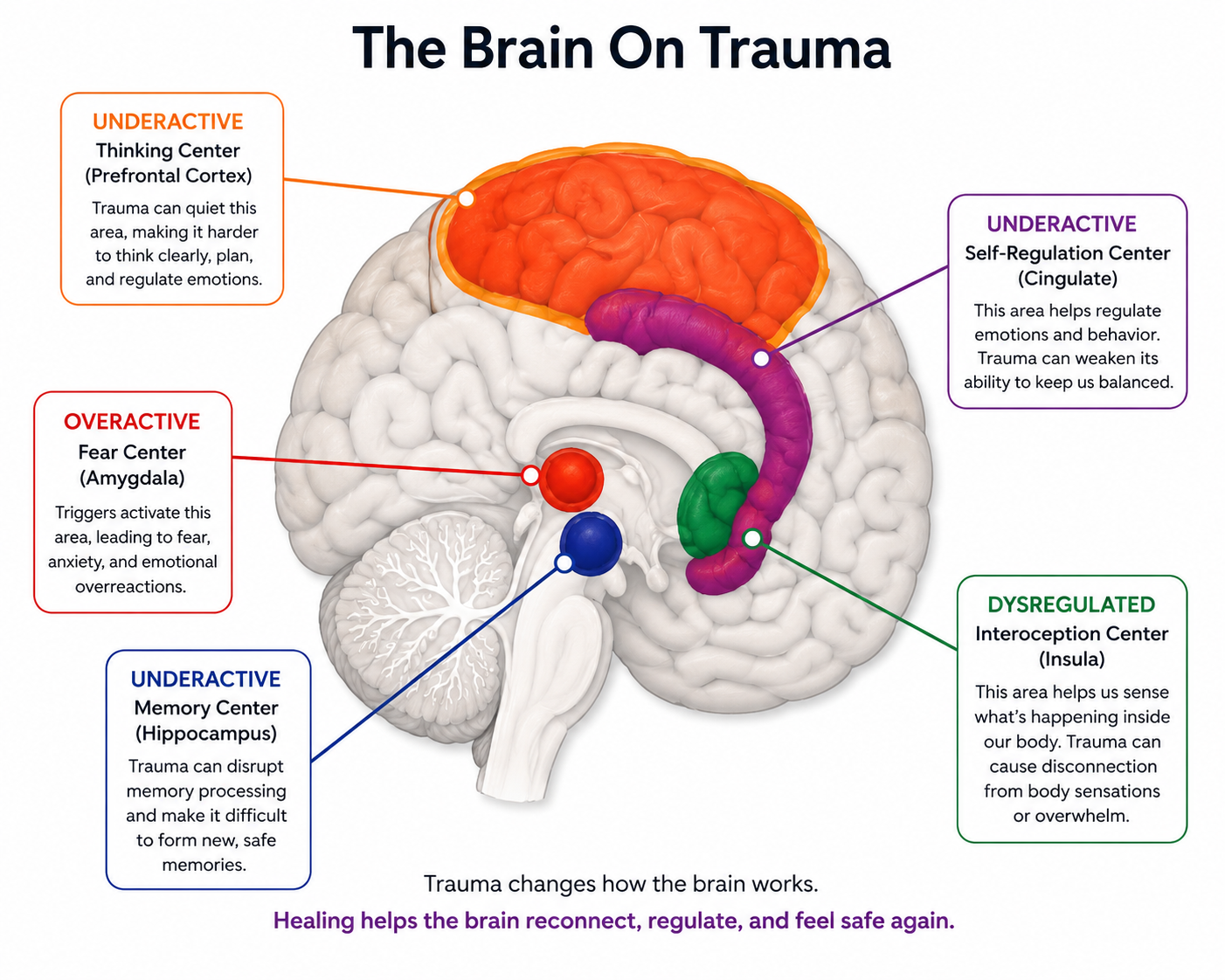
What Intimacy Concerns Are Common Among First Responders?
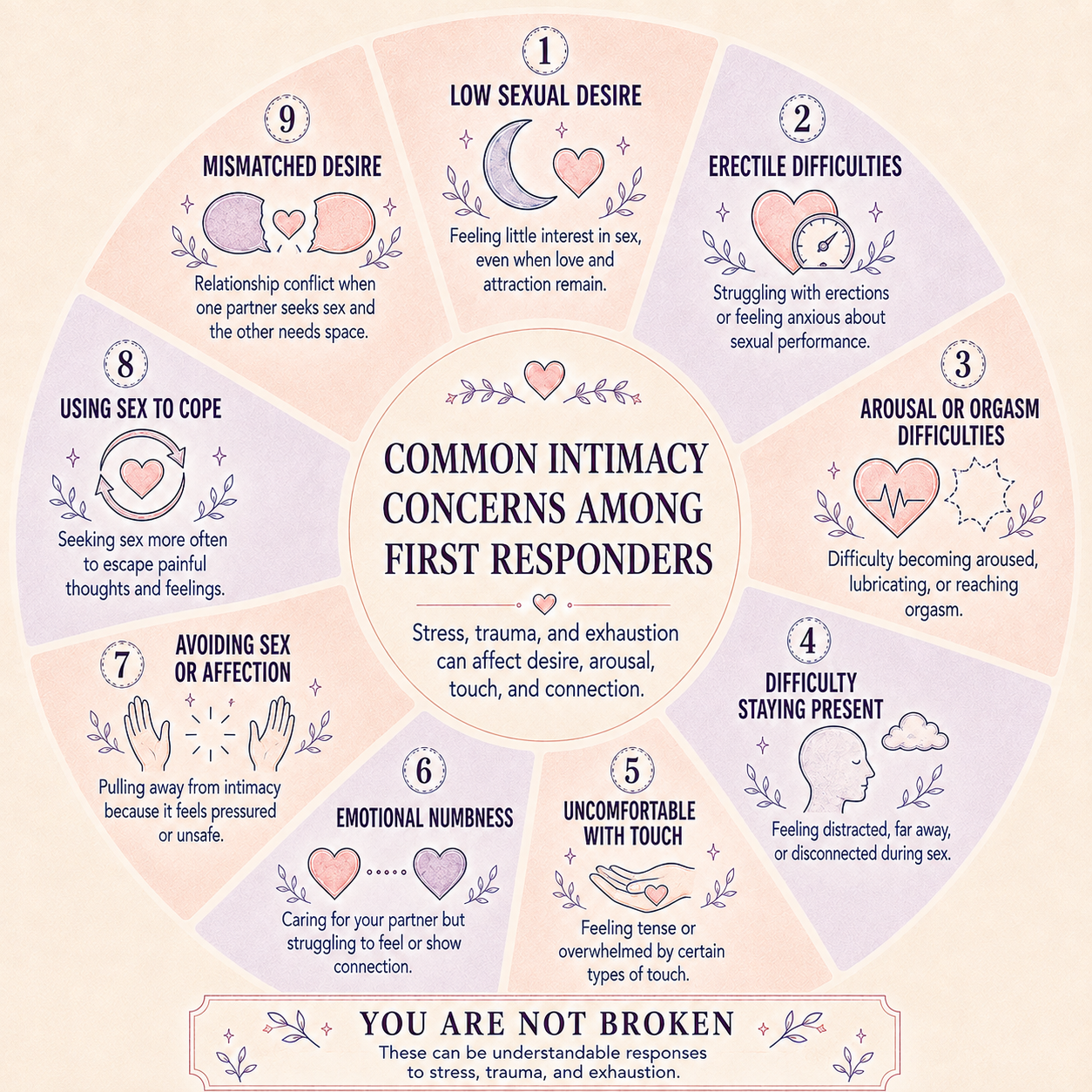
Common intimacy concerns among first responders include changes in sexual desire, difficulty becoming or staying aroused, performance anxiety, emotional disconnection, avoidance of touch, and conflict with a partner. Some first responders also struggle to remain present during sex, experience trauma triggers, or use sexual activity as a way to escape stress.
Not every first responder will experience these concerns, and they may look different from person to person. One person may lose interest in sex, while another may seek it more often. Someone may crave emotional closeness after a difficult shift but feel uncomfortable being touched. Others may enjoy sexual activity but struggle to talk openly with their partners about their needs.
There is no single “normal” response to first-responder work. Your sexual response can be influenced by stress, sleep, trauma exposure, physical health, medication, hormones, relationship dynamics, and the ways you have learned to cope with difficult emotions.
Low Sexual Desire
Some first responders notice that they think about sex less often or no longer feel the same desire they once did. Chronic stress, exhaustion, depression, anxiety, trauma, medication, and relationship conflict can all contribute to low libido.
You may still love your partner and find them attractive, but your body may not have enough emotional or physical energy for sex. This does not mean your relationship is failing. There is also no correct number of times you should want or have sex. Low desire is only a problem if it is causing you distress or creating difficulties in your relationship.
Erectile Difficulties and Performance Anxiety
Stress can make it difficult to get or maintain an erection. Erections typically happen more easily when the body feels safe and relaxed. If your nervous system is preparing for danger, monitoring your performance, or worrying about disappointing your partner, physical arousal may become more difficult.
After one unexpected change in an erection, you may begin worrying that it will happen again. This fear can create a cycle of monitoring, pressure, and anxiety that pulls you further away from pleasure. Erectile difficulties do not automatically mean that you are no longer attracted to your partner.
Because changes in erections can also have physical causes, it is important to speak with a medical provider if the concern is new, persistent, painful, or accompanied by other symptoms.
Difficulty Becoming Aroused or Reaching Orgasm
First responders of any gender may experience reduced physical arousal, difficulty lubricating, delayed orgasm, or an inability to reach orgasm. Stress can make it difficult to focus on pleasurable sensations, while exhaustion may make sexual activity feel like another task you are expected to complete.
Medication can also affect sexual response. Some antidepressants, anxiety medications, blood-pressure medications, pain medications, and sleep aids may influence desire, arousal, erections, lubrication, or orgasm. Do not stop taking medication without talking to the provider who prescribed it. A medical professional may be able to adjust the dose, timing, or medication safely.
Difficulty Staying Present During Sex
You may notice that your mind wanders during sex or that you begin thinking about work, past calls, unfinished tasks, or possible danger. You might feel as though you are watching the experience from outside your body or simply going through the motions.
This disconnection may be a form of dissociation, which is a protective response that can occur when the nervous system feels overwhelmed. Dissociation can include feeling numb, unreal, far away, or disconnected from your body. It does not mean you are intentionally ignoring your partner or that you do not care about the experience.
Feeling Uncomfortable With Touch
After repeated exposure to danger, injury, or trauma, certain types of touch may feel overwhelming or unsafe. Unexpected touch can cause a strong reaction, even when it comes from someone you trust. You may dislike being approached from behind, held down, touched while sleeping, or placed in a position where you cannot easily see the room or leave.
Your body may react before your mind understands why. You might tense, pull away, become angry, freeze, or feel suddenly panicked. These responses are not personal rejections of your partner. They may be signs that your nervous system needs more choice, predictability, and control during physical intimacy.
Emotional Numbness and Disconnection
Some first responders cope with traumatic exposure by shutting down difficult emotions. This may help you function during a crisis, but emotional numbness can also make it difficult to experience affection, desire, excitement, or closeness.
You may know that you love your partner but struggle to feel connected to them. You might stop initiating affection, avoid meaningful conversations, or feel irritated when your partner asks what is wrong. Your partner may feel lonely or rejected, while you may feel pressured to access emotions that seem unavailable.
Avoidance of Sex or Affection
Avoiding sex does not always mean that you do not want your partner. You may avoid intimacy because you fear disappointing them, becoming triggered, losing an erection, being unable to orgasm, or having to explain what is happening.
Even nonsexual affection can begin to feel risky if you believe every hug or kiss will create an expectation for sex. Over time, you may avoid all touch to prevent your partner from getting the wrong idea. This can unintentionally create more distance between you.
Creating clear opportunities for affection that are not expected to lead to sex can help rebuild safety and connection.
Seeking Sex More Often or Using Sex to Cope
Not all first responders experience low desire. Some may seek sex, pornography, masturbation, or sexual novelty more often after stressful or traumatic experiences. Sexual activity can temporarily provide comfort, distraction, excitement, validation, or relief from emotional pain.
Wanting frequent sex is not automatically unhealthy. The concern is whether the behavior feels outside your control, conflicts with your values, creates secrecy, harms your relationship, or becomes your only way of managing stress.
Relationship Conflict and Mismatched Desire
First-responder couples often have to navigate unpredictable schedules, missed events, poor sleep, parenting demands, and limited time together. One partner may want sex as a way to reconnect, while the other needs rest, space, or emotional closeness first.
Neither person is wrong. Problems often begin when one partner feels repeatedly rejected and the other feels repeatedly pressured. The more one person pursues intimacy, the more the other may pull away. This cycle can leave both partners feeling unwanted and misunderstood.
These concerns are common, but you do not have to ignore them or wait until the relationship reaches a breaking point. A trauma-informed sex therapist or couples sex therapy can help you understand what is happening without blame, communicate more openly, and develop a version of intimacy that respects both partners’ needs, boundaries, and nervous systems.
How Do Chronic Stress and Trauma Affect Sexual Desire?
Chronic stress and trauma can increase, decrease, or completely change sexual desire. Some first responders lose interest in sex, while others seek sexual activity more often as a way to feel connected, release tension, or escape painful thoughts and emotions. Both responses can be the nervous system’s attempt to cope with overwhelming experiences.
Sexual desire does not exist separately from the rest of your life. Sleep, physical health, hormones, medication, relationship dynamics, emotional safety, and stress can all affect how often you think about or want sex. When your body is exhausted or preparing for danger, pleasure may become less of a priority.
There is no correct amount of sexual desire that a person should have. You do not need to want sex a certain number of times each week to be healthy or to prove that you love your partner. Changes in desire may be worth exploring when they cause you distress, feel outside your control, or negatively affect your relationship.
Chronic Stress Can Keep the Body Focused on Survival
During a stressful or dangerous situation, your body releases hormones that help you react quickly. Your heart rate increases, your muscles tighten, and your attention narrows so you can focus on the threat. This response is incredibly helpful when you are responding to an emergency.
The problem occurs when your body does not have enough time to recover before the next call, shift, or crisis. Your nervous system may remain activated even after you are physically safe. When your body is focused on survival, it may have difficulty shifting into the relaxed state that supports sexual interest, physical arousal, and pleasure.
You may want to want sex but feel as though the desire simply is not there. You may also become frustrated when your body does not respond to touch as quickly as it once did. This does not necessarily mean that you have lost attraction to your partner. It may mean that your body needs more time, safety, rest, and stimulation before desire can emerge.
Trauma Can Change What Feels Safe
Trauma can change the way the brain and body respond to closeness. Touch, vulnerability, loss of control, certain sexual positions, smells, sounds, or physical sensations may remind your nervous system of a frightening experience. Even when you consciously know that your partner is safe, your body may react as though danger is present.
You might avoid sex because you do not want to feel trapped, overwhelmed, exposed, or out of control. You may become tense when your partner initiates touch or feel irritated without understanding why. You might also disconnect from your body during sex because remaining fully present feels unsafe.
These reactions do not mean that you are choosing to reject your partner. They may be protective responses your body learned during or after traumatic experiences.
Emotional Numbness Can Reduce Sexual Desire
Some first responders survive repeated exposure to trauma by becoming emotionally numb. Numbness can create distance from fear, grief, helplessness, and anger, allowing you to continue doing your job. Unfortunately, the mind cannot always select which emotions to turn off.
When painful emotions become muted, desire, excitement, joy, affection, and pleasure may also become harder to access. You may know that you love your partner but feel disconnected from them. You may want closeness in theory but experience little emotional or physical response when the opportunity arises.
Emotional numbness is not proof that you no longer care. It can be a sign that your nervous system has been protecting you for a long time.
Sexual Desire May Not Appear Until Intimacy Begins
Many people expect desire to happen spontaneously. They believe they should think about sex first, feel turned on, and then initiate sexual activity. However, sexual desire does not always begin this way.
Responsive desire develops after safe, wanted, and pleasurable touch begins. You may not feel interested in sex while completing chores, caring for children, recovering from a shift, or thinking about your next day at work. Desire may appear only after you have had time to decompress, connect with your partner, and experience touch without pressure.
Responsive desire does not mean forcing yourself to have sex you do not want. It means giving yourself permission to explore affection or touch when you feel open to it, without promising that it must lead to intercourse, orgasm, or any other sexual activity. You can pause or stop at any time.
Stress Can Also Increase Sexual Desire
Not every first responder responds to stress by losing interest in sex. Some people experience an increase in sexual desire following frightening, intense, or emotionally painful experiences. Sex may provide comfort, reassurance, physical release, excitement, or proof that you are alive.
Seeking connection after trauma is not inherently unhealthy. However, sexual behavior may become concerning when it is used primarily to numb or escape painful thoughts and feelings. You may begin relying on sex, pornography, masturbation, sexting, affairs, or sexual novelty to avoid grief, anxiety, anger, loneliness, or traumatic memories.
The concern is not how often you want or have sex. The concern is whether the behavior feels outside your control, causes distress, conflicts with your values, creates secrecy, or harms you or your relationship.
Differences in Desire Can Create a Painful Relationship Cycle
Stress and trauma can affect each partner differently. One person may seek sex to feel loved and connected, while the other needs space and rest before they can tolerate touch. Neither partner is wrong, but both may begin attaching painful meanings to the difference.
The partner seeking sex may feel undesirable, abandoned, or rejected. The partner with less desire may feel pressured, inadequate, or responsible for meeting the other person’s emotional needs through sex. Over time, one partner may pursue more intensely while the other pulls further away.
Talking about what sex represents to each person can help reduce blame. One partner may be asking, “Do you still love me?” while the other is trying to say, “I am overwhelmed, and my body needs to feel safe.”
Your desire is not broken, and it does not determine how much you love your partner. Sexual desire can change as your nervous system receives more opportunities for rest, safety, healing, and pressure-free connection. A trauma-informed sex therapist can help you understand these changes, address the pain underneath them, and create a version of intimacy that feels safe and nourishing for both partners.
Can PTSD Cause Low Libido or Other Sexual Difficulties?
Yes, post-traumatic stress disorder (PTSD) can contribute to low libido and other sexual difficulties. PTSD may affect erections, physical arousal, lubrication, orgasm, sexual satisfaction, and the ability to remain emotionally present during sex. It can also lead someone to avoid sexual activity or seek sex more often as a way to cope with painful thoughts and feelings.
Research has found a clear connection between PTSD and sexual concerns, particularly changes in sexual desire, sexual satisfaction, and distress related to sex. However, having PTSD does not mean that you will develop sexual difficulties, and sexual difficulties do not automatically mean that you have PTSD. Research examining PTSD and sexual functioning has also found that depression, relationship strain, physical health, medication, and other factors may influence the connection.
How Can PTSD Lower Sexual Desire?
PTSD can keep your nervous system focused on detecting and surviving danger. You may be physically safe at home with your partner while your mind and body remain prepared for the next emergency. When your nervous system is stuck in survival mode, it may have difficulty shifting into the safety and relaxation often needed for sexual desire and pleasure.
You may stop thinking about sex, feel irritated when your partner initiates, or wish you wanted sex but feel no desire in your body. Low libido does not necessarily mean that you have lost attraction to your partner or that your relationship is failing. Your body may be directing its energy toward protection rather than pleasure.
There is also no correct number of times you should desire or have sex. Low desire is only a concern if it bothers you, causes distress, or negatively affects your relationship. If you do not want sex and do not want to want it, you do not need to treat your libido as a problem.
How Can PTSD Affect Physical Arousal?
Sexual arousal generally happens more easily when the body feels safe. PTSD can cause hypervigilance, muscle tension, a racing heart, and difficulty relaxing. You may find yourself listening for noises, watching the door, scanning your surroundings, or monitoring your partner’s movements instead of noticing pleasurable sensations.
This can contribute to difficulty getting or maintaining an erection, becoming lubricated, feeling physically aroused, or reaching orgasm. Some people may experience physical arousal but feel no emotional desire for sex. Others may want sex emotionally but notice that their bodies are not responding.
Your physical response does not determine whether you want or consent to sexual activity. Bodies can respond to stimulation without desire, and desire can exist without an immediate physical response.
Can PTSD Cause Erectile Difficulties or Performance Anxiety?
PTSD may contribute to erectile difficulties by keeping the body tense, alert, or emotionally disconnected. After experiencing an unexpected change in an erection, you may worry that it will happen again. You might begin monitoring your body, rushing toward penetration, or trying to force an erection before it disappears.
This pressure can create a cycle. The more you worry about your erection, the harder it becomes to remain connected to pleasure. Sex may begin to feel like a test you have to pass instead of an experience you can enjoy.
Research has found an association between PTSD and sexual difficulties among veterans, including erectile concerns and reduced desire, although findings for specific sexual functions have not been consistent across every study. This means PTSD can be one contributing factor, but it should not be assumed to be the only cause.
Why Can PTSD Make It Difficult to Stay Present During Sex?
PTSD can cause intrusive memories, flashbacks, hypervigilance, or dissociation. During sex, you may suddenly think about a distressing call or feel as though you are mentally back in a dangerous situation. A sound, smell, position, facial expression, or type of touch may activate your nervous system before you consciously understand what is happening.
Dissociation can make you feel numb, unreal, far away, or disconnected from your body. You might go through the motions of sex while feeling as though you are watching the experience from somewhere else. This is not you being cold, uncaring, or distracted on purpose. Dissociation is a protective response the mind may use when an experience feels overwhelming.
Can PTSD Cause Someone to Avoid Sex or Affection?
PTSD can make vulnerability and loss of control feel unsafe. You may avoid sex because you are afraid of becoming triggered, losing an erection, being unable to orgasm, disappointing your partner, or having to explain what is happening.
You may also begin avoiding hugs, kissing, cuddling, or other forms of affection if you believe they will create an expectation for sex. Your partner may interpret this as rejection, while you may feel trapped between wanting connection and wanting to avoid pressure.
Pressure-free affection can help rebuild safety. A hug can be allowed to remain a hug. Cuddling does not have to lead to sexual activity. Either person can pause or stop touch at any time.
Can PTSD Increase Sexual Desire?
PTSD does not always lower sexual desire. Some people seek sex more often after traumatic or stressful experiences. Sex, pornography, masturbation, sexting, affairs, or sexual novelty may provide a temporary escape from grief, anxiety, anger, numbness, or unwanted memories.
Having a high libido does not automatically mean that something is wrong. The concern is whether sexual behavior feels difficult to control, creates secrecy, conflicts with your values, places you in unsafe situations, harms your relationship, or becomes your only way of coping.
If sex has helped you survive painful feelings, healing should not begin with shame or punishment. Therapy can help you understand what the behavior is doing for you while building additional ways to manage stress, feel grounded, and experience connection.
Could Medication or Another Health Concern Be Affecting Sexual Function?
PTSD may not be the only reason for a change in sexual functioning. Depression, anxiety, disrupted sleep, chronic pain, alcohol or substance use, hormonal changes, cardiovascular concerns, and other health conditions can also affect desire, erections, lubrication, arousal, and orgasm.
Some medications used to treat depression, anxiety, sleep difficulties, pain, or blood pressure may have sexual side effects. Do not stop taking medication without speaking with the provider who prescribed it. A medical provider may be able to evaluate possible physical causes or safely adjust the medication, dose, or timing.
New or persistent sexual changes should be discussed with a qualified medical professional, especially when they involve pain, genital numbness, physical injury, urinary symptoms, or a sudden change in erections.
Can Sexual Difficulties Related to PTSD Improve?
Yes, sexual difficulties related to PTSD can improve. Healing may include trauma therapy, EMDR, sex therapy, couples sex therapy, medical care, medication management, or a combination of approaches.
Trauma-informed sex therapy can help you understand how PTSD affects your nervous system without treating you or your relationship as broken. Therapy may focus on identifying triggers, reducing performance pressure, communicating boundaries, staying present in your body, and rebuilding touch at a pace that feels safe.
You do not need to force yourself to have sex to prove that you are healing. Healing means having more choice. It means being able to say yes, no, not yet, or stop without guilt, pressure, or punishment. You deserve an intimate life in which your body feels safe, your boundaries are respected, and connection does not require you to ignore your own needs.
Why Can Hypervigilance Make It Difficult to Relax During Sex?
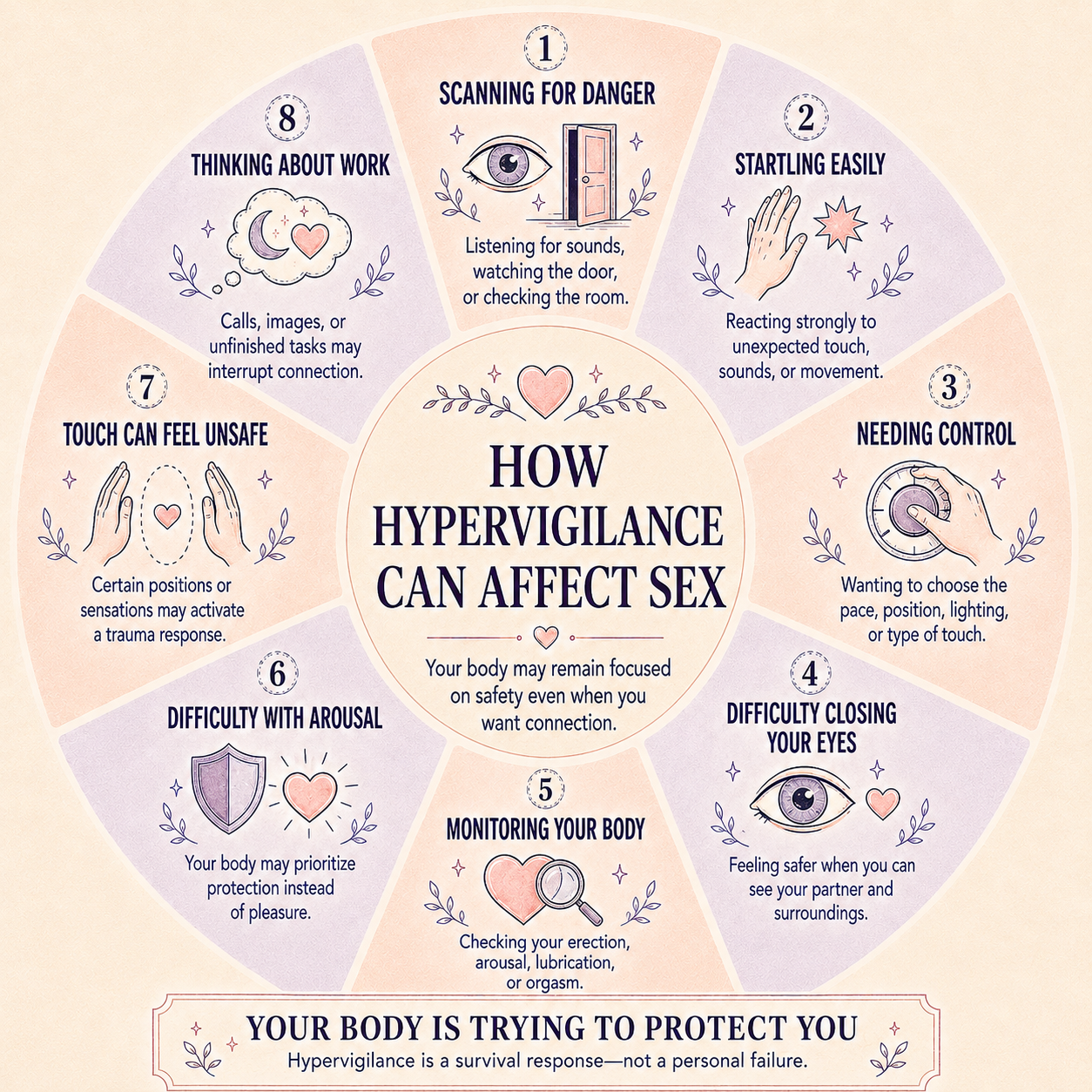
Hypervigilance can make it difficult to relax during sex because your nervous system remains focused on finding and responding to possible danger. Even when you are physically safe with someone you trust, your body may continue scanning the room, listening for unusual sounds, monitoring your partner’s movements, or preparing to react.
First responders are trained to notice what other people miss. Watching exits, reading body language, anticipating sudden changes, and staying aware of your surroundings can help keep you and others alive. However, these skills do not always switch off when you return home. The same alertness that protects you at work can interfere with your ability to become absorbed in touch, pleasure, and emotional connection.
Sex often requires enough safety to lower your guard. Hypervigilance can make lowering your guard feel irresponsible or dangerous.
What Does Hypervigilance During Sex Feel Like?
Hypervigilance is a state of increased alertness in which the mind and body remain prepared for a threat. During sex, it may look like:
Listening for noises outside the room
Needing to see the door or know where the exits are
Feeling uncomfortable with your back turned
Becoming startled when your partner touches you unexpectedly
Disliking positions that limit your movement or visibility
Watching your partner’s facial expressions for signs that something is wrong
Feeling irritated by interruptions, sounds, or sudden movements
Struggling to close your eyes
Monitoring your erection, lubrication, or orgasm
Feeling unable to stop thinking about work
Needing to remain in control of the pace, position, or type of touch
Feeling tense even though you want to enjoy the experience
You may not consciously feel afraid. Hypervigilance can appear as restlessness, frustration, impatience, distraction, numbness, or a strong need for control. Your body may recognize a threat before your mind understands why you are reacting.
How Does Hypervigilance Affect Sexual Arousal?
Sexual arousal is often easier when your body feels safe enough to focus on pleasurable sensations. Hypervigilance directs your attention away from pleasure and toward protection.
You may become focused on noises, movement, your partner’s reactions, or whether your body is performing correctly. This can make it difficult to become physically aroused, maintain an erection, lubricate, experience pleasure, or reach orgasm.
Once you notice that your body is not responding, you may begin trying harder. You might rush, monitor yourself, or worry that your partner will feel disappointed. Sex can quickly shift from connection to performance.
Your sexual response is not a test of your attraction, strength, or ability to satisfy your partner. Your body may simply be prioritizing safety over pleasure.
Why Can Certain Types of Touch Feel Unsafe?
Unexpected touch can activate the startle response, especially after repeated exposure to danger or trauma. Being approached from behind, held down, touched while sleeping, or placed in a position where you cannot see the room may cause your body to react immediately.
You might tense, freeze, pull away, become angry, or feel panicked. You may also experience a sudden image, memory, physical sensation, or feeling connected to a difficult call. Sometimes there is no clear memory at all—only the strong sense that something is wrong.
This reaction does not mean that your partner did something intentionally harmful or that you no longer want them. It may mean that your nervous system needs more warning, choice, predictability, and control.
Partners can help by asking before initiating certain types of touch, approaching from where they can be seen, and accepting “no,” “pause,” or “stop” without guilt or punishment.
Why Might a First Responder Need to Remain in Control?
Control can create a sense of safety. You may prefer to choose the position, control the pace, remain on top, keep the lights on, or avoid closing your eyes. You may need to know what is going to happen before it happens.
These preferences are not automatically unhealthy. They may be ways your body is trying to remain connected while reducing vulnerability. Problems can occur when you feel unable to communicate these needs or believe that you must tolerate discomfort to please your partner.
Consent should be freely given, reversible, informed, enthusiastic, and specific. You are allowed to change your mind during any sexual activity. Starting something does not mean that you have to finish it.
How Can Hypervigilance Affect a Partner?
A partner may interpret hypervigilance as rejection, distrust, criticism, or a lack of attraction. They may wonder why you cannot relax around them or feel hurt when you pull away from touch.
Meanwhile, you may feel misunderstood, pressured, or ashamed that your body will not cooperate. You might avoid intimacy entirely because you do not want to explain your reactions or disappoint your partner.
Try to remember that the hypervigilance—not either partner—is the problem. One person is not too needy, and the other is not too damaged. Your nervous system may be trying to protect you while your partner is trying to feel close.
A helpful conversation might sound like, “I want to be close to you, but my body is still on alert. I need us to slow down and let me know before you touch me.”
How Can First Responders Feel Safer During Sex?
The goal is not to force yourself to relax. Being told to “just relax” can create more pressure and make you feel as though you are failing. Instead, focus on creating conditions that help your nervous system recognize that you are safe.
This may include:
Taking time to transition out of work mode before attempting intimacy
Showering, changing clothes, eating, or resting after a shift
Choosing a room where you feel comfortable
Checking the doors or surroundings once, if that helps you settle
Keeping a light on or choosing positions that allow you to see the room
Asking your partner to approach you from the front
Agreeing on words or signals for slowing down, pausing, or stopping
Beginning with nonsexual touch that has no expectation of leading to sex
Keeping your eyes open if closing them feels unsafe
Allowing yourself to move, adjust, or change positions
Focusing on one neutral or pleasant sensation at a time
Ending the experience if your body becomes overwhelmed
These are not rules you must follow forever. They are ways to meet your nervous system where it is today.
Can sex Therapy Help With Hypervigilance and Intimacy?
Yes, trauma-informed sex therapy can help reduce hypervigilance and make intimacy feel safer. EMDR may help your brain reprocess traumatic memories so they feel less immediate and overwhelming. Sex therapy can help you reduce performance pressure, communicate boundaries, identify triggers, and gradually reconnect with physical pleasure.
Couples sex therapy can also help a partner understand that hypervigilance is not a personal rejection. Both people can learn how to create touch that includes more consent, predictability, patience, and choice.
You do not need to push through fear or discomfort to reclaim intimacy. Healing does not mean ignoring your body’s warning signals. It means helping your body recognize the difference between past danger and present safety so you have more freedom to choose the connection you want.
Why Do Some First Responders Feel Emotionally Numb or Disconnected?
Some first responders feel emotionally numb or disconnected because shutting down emotions can help them function during frightening, painful, or overwhelming situations. Emotional numbness can be the nervous system’s way of protecting someone from feelings that seem too intense to process while responding to an emergency.
First responders may witness death, severe injuries, violence, abuse, grief, and human suffering on a regular basis. They are expected to remain calm, make quick decisions, and continue doing their jobs regardless of what they have just seen. There may not be time to cry, feel afraid, or fully process the experience before the next call begins.
Learning to compartmentalize can save lives. The problem is that emotions do not always return when the shift ends. You may arrive home wanting to connect with the people you love but feel as though a wall is separating you from them.
What Does Emotional Numbness Feel Like?
Emotional numbness can feel like having little or no emotional response to experiences that once mattered to you. You may not feel deeply sad, but you may also struggle to feel love, excitement, joy, desire, or pleasure.
Emotional numbness may look like:
Feeling empty, flat, or emotionally unavailable
Knowing that you love someone but struggling to feel it
Having difficulty expressing affection
Losing interest in sex, hobbies, or activities you once enjoyed
Feeling detached from your partner, family, or friends
Becoming uncomfortable when someone asks how you feel
Avoiding conversations about difficult calls
Using humor to move away from painful topics
Feeling irritated instead of sad, scared, or overwhelmed
Going through the motions of daily life without feeling fully present
Needing intense experiences to feel anything
Feeling as though you are watching your life from a distance
Emotional numbness is a recognized response to trauma. The National Center for PTSD explains that people with PTSD may feel unable to experience positive or loving feelings and may lose interest in activities they previously enjoyed.
However, emotional numbness does not automatically mean that someone has PTSD. Depression, burnout, chronic stress, grief, sleep deprivation, medication, alcohol or substance use, and other mental or physical health concerns can also contribute to feeling disconnected.
Why Is Compartmentalizing Common Among First Responders?
Compartmentalizing means mentally separating painful emotions from the task that needs to be completed. During an emergency, you may need to focus on securing the scene, treating an injury, communicating with a family, or protecting someone from further harm. There may be no safe opportunity to process your own emotional response.
Over time, putting feelings away can become automatic. You may become skilled at turning emotions off before they interfere with your work. This ability can follow you home, where it may be much less helpful.
Your partner may want you to be emotionally open, but vulnerability can feel unfamiliar, unsafe, or impossible. You may not be intentionally hiding your feelings. You may genuinely have difficulty identifying what you feel because you have spent so much time learning not to feel it.
Can Repeated Trauma Make Someone Feel Numb?
Yes. Repeated exposure to trauma can overwhelm the nervous system. When remaining constantly alert becomes exhausting, the body may shift from hyperarousal into shutdown.
Instead of feeling panicked or visibly distressed, you may feel tired, detached, foggy, or emotionally absent. You might assume you are handling the work well because you are no longer reacting strongly. In reality, numbness can be a sign that your mind and body have absorbed more than they can currently process.
Some first responders can clearly connect their numbness to a specific call. For others, it develops slowly after months or years of cumulative trauma. There may not be one event that explains it.
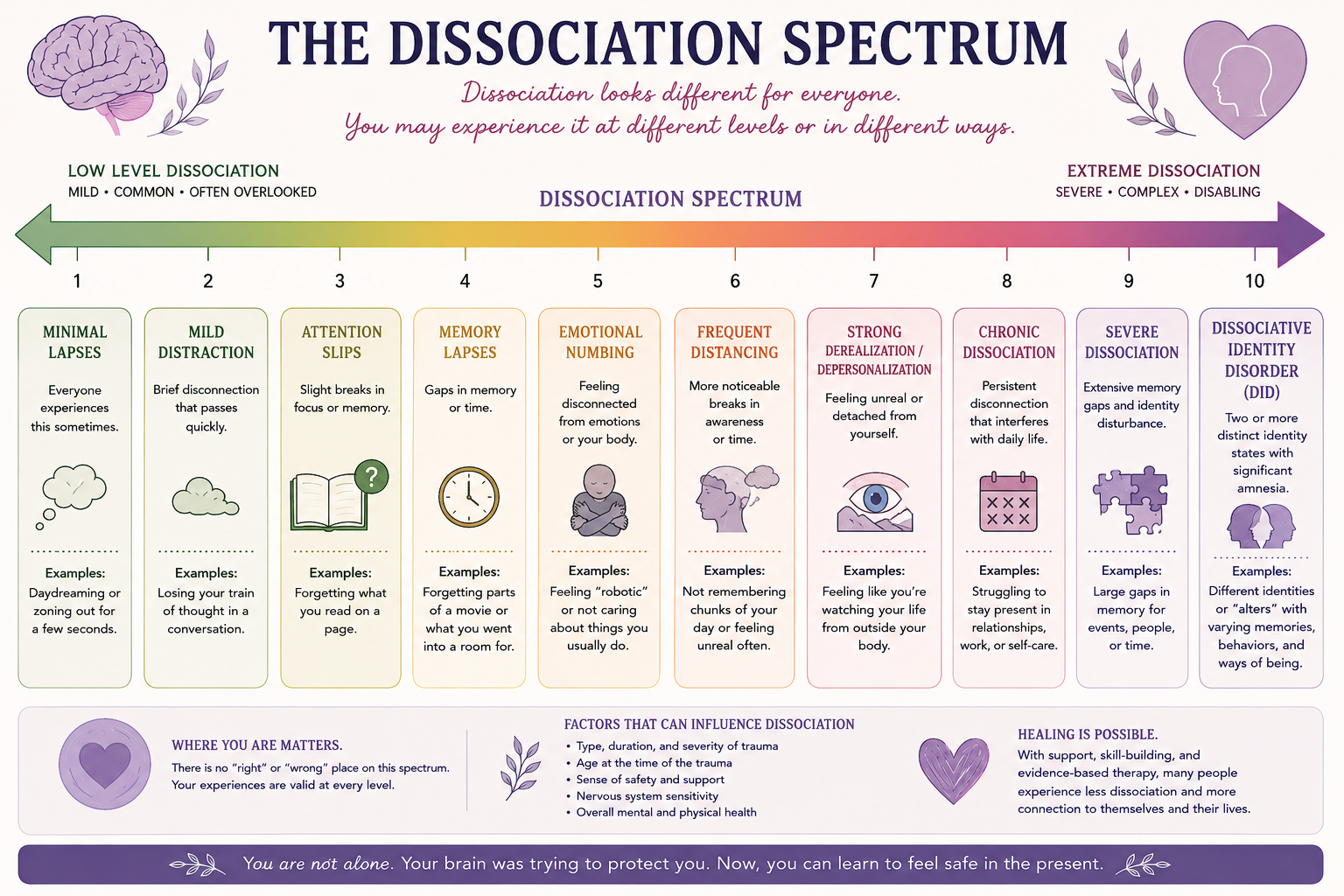
What Is Dissociation?
Dissociation is a protective response that can make you feel disconnected from your body, emotions, memories, or surroundings. You may feel as though you are watching yourself from outside your body or that the world around you is not completely real.
Dissociation and emotional numbness can overlap, but they are not exactly the same. Emotional numbness involves difficulty feeling emotions, while dissociation may involve a broader sense of separation from yourself or reality.
During intimacy, you may go through the motions while feeling far away. You might have difficulty noticing physical sensations, understanding what you want, or remaining mentally connected to your partner. This is not something you are doing intentionally. Your nervous system may be trying to create distance from an experience it believes could become overwhelming.
How Can Emotional Numbness Affect Sex and Intimacy?
Emotional numbness can reduce sexual desire and make physical pleasure harder to access. You may want to want sex but feel no interest in your body. You might participate because you love your partner or want to avoid conflict, yet struggle to feel emotionally present.
You may also avoid kissing, cuddling, or affectionate touch. These experiences can create vulnerability, and vulnerability may feel uncomfortable after spending hours or years remaining guarded.
For some people, the opposite occurs. You may seek intense or frequent sexual experiences because sex temporarily helps you feel alive, connected, powerful, or relieved. The concern is not how often you want sex. The concern is whether sexual behavior becomes your only way to escape numbness or painful emotions.
How Can Emotional Numbness Affect a Partner?
A partner may feel as though you are physically present but emotionally gone. They may wonder whether you still love them, find them attractive, or want the relationship. They may repeatedly ask what is wrong, while you become frustrated because you do not know how to explain something you cannot fully understand yourself.
According to the National Center for PTSD, avoidance and emotional numbness can contribute to withdrawal from relationships and a loss of emotional or physical intimacy.
The more your partner asks for reassurance or closeness, the more pressured and overwhelmed you may feel. You might pull away, which can cause your partner to pursue you more intensely. Both partners can become trapped in a painful cycle of disconnection.
Try to remember that emotional numbness—not either partner—is the problem. Your partner is not necessarily too needy, and you are not incapable of love.
What Can Partners Do When a First Responder Feels Emotionally Numb?
You do not need to share every detail of a traumatic call to let your partner know that you are struggling. A simple statement can help create understanding:
“I care about you, but I feel shut down right now. I am having a hard time accessing my emotions, and it is not because of you.”
Partners can support connection by offering choices rather than demanding emotional disclosure. They might ask, “Would you like space, company, or a hug?” This allows the first responder to identify what feels manageable without being pressured to explain everything.
It can also help to create small, predictable forms of connection. Eating together, taking a walk, sitting on the couch, or holding hands may feel more accessible than a serious conversation or sexual activity.
Can Emotional Numbness Improve?
Yes, emotional numbness can improve. Healing does not mean forcing yourself to feel everything at once. It means slowly helping your nervous system recognize that emotions can be experienced without becoming overwhelmed.
Trauma therapy, EMDR, sex therapy, couples sex therapy, and other forms of mental health support may help you understand what your numbness is protecting you from. Therapy can also help you identify emotions, process traumatic experiences, communicate with your partner, and reconnect with your body at a pace that feels safe.
If numbness is accompanied by hopelessness, thoughts of suicide, increased substance use, reckless behavior, or feeling unable to function, seek professional support as soon as possible.
Feeling emotionally numb does not mean that you are cold, uncaring, or permanently changed. You may have learned to disconnect because remaining emotionally present felt impossible. With safety, support, and time, it is possible to reconnect with yourself and the people you love.
Can First-Responder Stress Cause Erectile Difficulties or Performance Anxiety?
Yes, first-responder stress can contribute to erectile difficulties and sexual performance anxiety. Chronic stress, trauma exposure, hypervigilance, exhaustion, disrupted sleep, depression, anxiety, and relationship pressure can all make it more difficult to get or maintain an erection.
Erections are not controlled by willpower. They generally occur more easily when the body feels safe, relaxed, and open to pleasure. A first responder may want sex, feel attracted to their partner, and still have difficulty with erections because their nervous system remains focused on stress or possible danger.
An erection is not proof of attraction, masculinity, consent, or sexual skill. Losing an erection does not mean that you do not want your partner or that something is wrong with your relationship.
How Does Stress Affect Erections?
Erections depend on communication among the brain, nerves, hormones, blood vessels, emotions, and sexual stimulation. Stress can interrupt this process by keeping the body in a state of alertness.
During an emergency, your nervous system directs energy toward the functions needed to survive. Your heart rate increases, muscles tighten, and attention shifts toward possible threats. This response is useful at work, but it can make sexual arousal more difficult after the shift ends.
You may be physically at home while your mind is replaying a call, thinking about unfinished paperwork, preparing for the next shift, or listening for sounds around the house. Your body may have difficulty moving from protection into pleasure.
What Is Sexual Performance Anxiety?
Sexual performance anxiety occurs when worry about sexual functioning makes it difficult to remain present and enjoy the experience. You may become focused on getting an erection, keeping it firm, satisfying your partner, lasting long enough, or reaching orgasm.
Instead of noticing pleasure, you begin watching and judging your body:
“Am I hard enough?”
“Is my erection going away?”
“Does my partner notice?”
“What if this happens again?”
This kind of monitoring pulls your attention away from the sensations that support arousal. Your body may become even more tense, causing the erection to soften. When this happens, it can feel as though your worst fear has been confirmed.
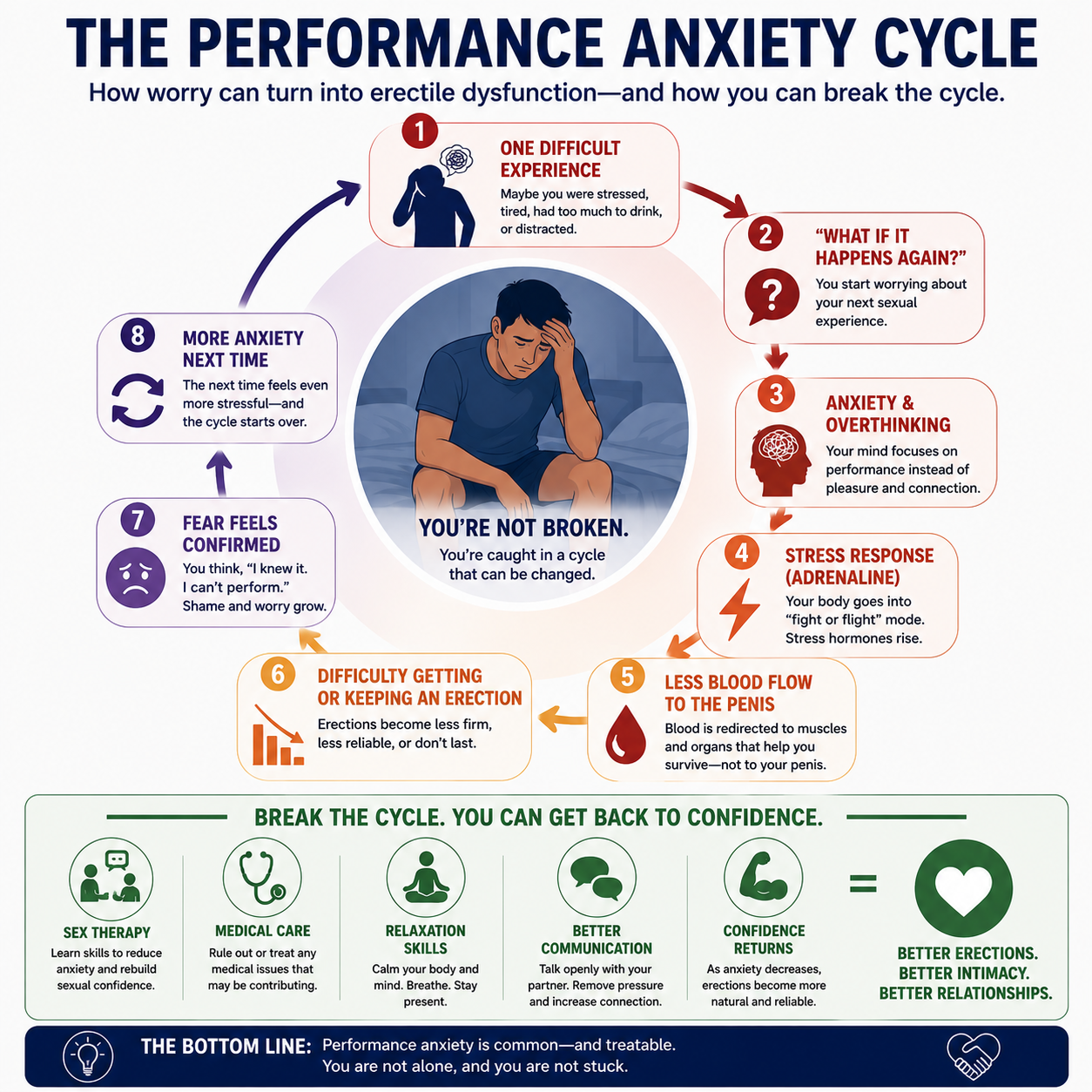
How Does the Erectile-Anxiety Cycle Develop?
Performance anxiety often begins with one ordinary change in an erection. You may be exhausted, distracted, stressed, intoxicated, or simply not sufficiently aroused. Erections naturally change throughout sexual activity, and occasionally losing one is not unusual.
However, if you interpret the experience as a failure, you may become afraid that it will happen again. The next time you have sex, you begin monitoring your erection. That pressure makes arousal more difficult, which increases your anxiety and reinforces the cycle.
The cycle may look like this:
Stress or exhaustion makes an erection difficult.
You worry that something is wrong with you.
You begin monitoring your body during sex.
Pressure pulls your attention away from pleasure.
Your erection becomes more difficult to maintain.
You avoid sex or try even harder the next time.
The problem is no longer just the erection. Sex has become a test that you believe you must pass.
Why Can Erections Be Easier Alone Than With a Partner?
Some first responders can get an erection during masturbation but struggle with a partner. This does not mean that you are no longer attracted to your partner.
When you are alone, there may be less pressure. You control the pace, type of stimulation, environment, and outcome. You do not have to monitor another person’s facial expressions or worry about disappointing them. You can stop, change what you are doing, or take as long as you need without explaining yourself.
Partnered sex may involve more vulnerability. You may worry about your erection, your partner’s pleasure, relationship conflict, pregnancy, sexually transmitted infections, body image, or whether sex will go as expected. These concerns can activate anxiety even when you genuinely want the experience.
Can PTSD Contribute to Erectile Difficulties?
PTSD can contribute to sexual difficulties, including changes in desire, arousal, erections, orgasm, and sexual satisfaction. Hypervigilance may make it difficult to relax, while intrusive memories or trauma triggers may interrupt arousal. Emotional numbness can also make pleasure and connection harder to access.
A systematic review of PTSD and sexual functioning found that PTSD was associated with an increased risk of experiencing at least one sexual difficulty. The clearest connections involved overall sexual functioning, desire, sexual satisfaction, and sexual distress. Findings specifically involving erectile dysfunction were mixed, which means PTSD may be one contributing factor but should not automatically be assumed to be the only cause.
How Can Erectile Difficulties Affect a Relationship?
A partner may assume that a change in an erection means you are not attracted to them. They may become embarrassed, hurt, or afraid that you no longer want the relationship.
You may feel ashamed, frustrated, or responsible for fixing the situation immediately. You might rush toward penetration before the erection disappears, avoid certain types of sex, or stop initiating affection altogether. If you believe that every intimate experience must include a firm erection and penetration, all physical closeness can begin to feel risky.
Both partners may end up feeling rejected. One partner feels unwanted, while the other feels watched, pressured, and inadequate.
Talking openly can interrupt this cycle. You might say, “I am attracted to you. My body is having a stress response, and pressure makes it harder. I want us to focus on what feels good instead of whether I stay hard.”
Does Every Sexual Experience Require an Erection?
No. An erection does not need to be the goal of every sexual experience. Intimacy can include kissing, massage, mutual touch, oral sex, sex toys, sensual touch, or simply lying close together.
Taking penetration off the table temporarily can reduce the feeling that your erection is being evaluated. This allows both partners to focus on comfort, curiosity, and pleasure instead of performance.
If an erection appears, you can enjoy it without treating it as something that must be maintained. If it changes, the experience does not need to end. Sex does not have to follow one specific script to be satisfying.
When Should Erectile Difficulties Be Evaluated by a Medical Provider?
Stress and performance anxiety are not the only possible causes of erectile difficulties. Changes in erections can also be related to:
Cardiovascular or blood-vessel concerns
Diabetes
High blood pressure or cholesterol
Hormonal changes
Nerve injuries
Chronic pain
Sleep problems
Pelvic or genital injuries
Tobacco, alcohol, or substance use
Medication side effects
Depression or other mental health concerns
Some antidepressants, blood-pressure medications, pain medications, and other prescriptions may affect sexual functioning. Do not stop taking medication without speaking with the provider who prescribed it.
Consider talking with a medical provider if erectile changes are new, happen consistently, occur during both partnered sex and masturbation, or are accompanied by pain, curvature, numbness, urinary symptoms, reduced sensation, or other physical changes. A medical evaluation can identify health conditions that should not be overlooked.
How Can Sex Therapy Help With Erectile Difficulties and Performance Anxiety?
Sex therapy can help you understand the connection between stress, the nervous system, erections, and performance pressure. Treatment may involve slowing down, expanding the definition of sex, reducing erection monitoring, and creating sexual experiences without a required outcome.
A trauma-informed sex therapist may help you:
Identify thoughts that increase pressure and shame
Communicate with your partner about erectile changes
Create sexual experiences that do not require penetration
Practice remaining present with pleasurable sensations
Address trauma triggers and hypervigilance
Develop pressure-free touch exercises
Rebuild confidence without making erections the measure of success
Coordinate with a medical provider when physical evaluation is needed
EMDR may also help when erectile difficulties are connected to distressing calls, traumatic experiences, or beliefs such as “I am not safe,” “I have to stay in control,” or “I am a failure.”
You are not broken, and your body is not betraying you. An erection is a response—not a command, promise, or grade. With medical support when needed, reduced pressure, and trauma-informed care, it is possible to rebuild a sexual relationship based on pleasure, flexibility, and connection instead of performance.
Why Can Trauma Make It Difficult to Become Aroused or Reach Orgasm?
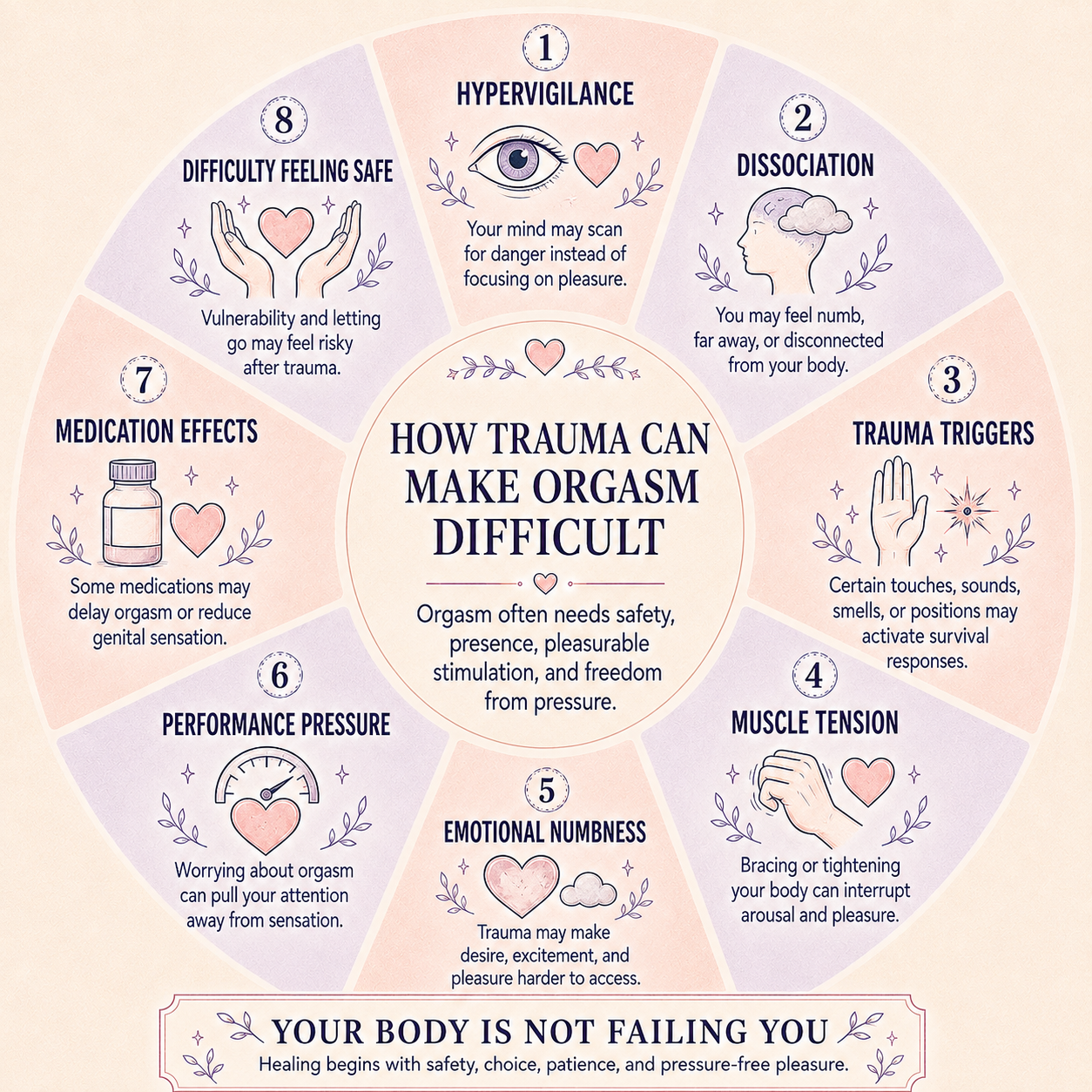
Trauma can make it difficult to become aroused or reach orgasm because sexual pleasure often requires enough safety to relax, remain present, and notice physical sensations. After trauma, the nervous system may continue searching for danger even when you are physically safe with someone you trust.
You may want sex and feel attracted to your partner while your body responds slowly or not at all. You may experience difficulty with erections, lubrication, genital sensation, or orgasm. You might also become physically aroused but feel emotionally disconnected from the experience.
These responses do not mean that you are broken, no longer attracted to your partner, or incapable of having a satisfying sexual relationship. Your nervous system may be prioritizing protection over pleasure.
How Does Trauma Affect Sexual Arousal?
Sexual arousal involves communication among the brain, nervous system, hormones, blood vessels, emotions, and genitals. Trauma can interrupt this process by keeping the body in fight, flight, freeze, or shutdown.
When the nervous system detects possible danger, your attention may shift away from pleasure and toward survival. You might scan the room, listen for noises, monitor your partner, or feel uncomfortable closing your eyes. Your muscles may tighten, breathing may become shallow, and it may feel impossible to let go.
Physical arousal can become more difficult when so much of your attention is focused on remaining safe.
A systematic review examining PTSD and sexual functioning found that PTSD is connected to several sexual concerns, particularly changes in overall sexual functioning, desire, sexual satisfaction, and distress related to sex. However, trauma affects each person differently. Not everyone who experiences trauma will develop arousal or orgasm difficulties.
Why Can Trauma Make It Difficult to Remain Present During Sex?
Certain touches, smells, sounds, positions, facial expressions, or physical sensations may remind your nervous system of a traumatic experience. You may consciously know that you are safe, but your body can react before you understand what triggered it.
You might suddenly think about a difficult call, see an unwanted mental image, feel panicked, or become emotionally numb. You may also dissociate, which can make you feel far away, unreal, or disconnected from your body.
Orgasm generally requires enough attention to build and remain with physical sensation. If your mind repeatedly leaves the experience to monitor danger or protect you from feeling overwhelmed, arousal may disappear or remain stuck at the same level.
Dissociation is not you ignoring your partner or failing to try hard enough. It is a protective response that may have helped you survive overwhelming experiences.
How Can Trauma Affect Genital Sensation?
Some people describe feeling numb or disconnected from their genitals after trauma. You may know that you are being touched but have difficulty experiencing the sensation as pleasurable. Other people become extremely sensitive and find certain types of touch irritating, painful, or overwhelming.
You might need more time, different stimulation, increased pressure, lighter touch, a vibrator, or a completely different type of sexual activity than you needed before. Your sexual preferences and physical responses may change as your nervous system changes.
There is no single correct way your body should respond. Curiosity is often more helpful than judgment.
Can Tight Muscles Interfere With Arousal or Orgasm?
Stress and hypervigilance can cause the muscles throughout the body to remain tense, including the pelvic-floor muscles. This tension may contribute to discomfort, pain, reduced genital sensation, difficulty with penetration, or trouble reaching orgasm.
You may unknowingly hold your breath, tighten your stomach, clench your jaw, or brace your pelvis during touch. Your body may be preparing to protect itself even when you want the sexual experience.
Pain should never be something you are expected to push through. A pelvic-floor physical therapist, medical provider, or trauma-informed sex therapist may help identify the source of discomfort and develop a treatment plan.
Can Someone Want Sex Without Becoming Physically Aroused?
Yes. You can emotionally want sex while experiencing little physical arousal. You can also become physically aroused without wanting sex.
Arousal non-concordance occurs when physical sexual responses and emotional desire do not match. Genital response is an automatic body process; it is not a reliable measure of attraction, enjoyment, or consent.
This is especially important for survivors of sexual violence. An erection, lubrication, ejaculation, or orgasm during an assault does not mean that the person wanted, enjoyed, or consented to what happened. Bodies can respond automatically to stimulation during an unwanted experience. The responsibility remains entirely with the person who violated consent.
Why Can Trying Harder Make Orgasm More Difficult?
After having difficulty reaching orgasm, you may begin worrying that it will happen again. You might monitor your progress, rush toward the outcome, or become concerned that your partner is tired or disappointed.
You may start asking yourself:
“Am I close yet?”
“Why is this taking so long?”
“Is my partner getting frustrated?”
“What is wrong with me?”
This monitoring pulls your attention away from pleasure. Orgasm becomes a task you must complete rather than a response that may develop from enjoyable stimulation.
The more pressure you feel, the more difficult it may become to relax. You may eventually fake an orgasm, continue sexual activity after you no longer want it, or avoid sex because you do not want to disappoint your partner.
You never owe anyone an orgasm. A sexual experience does not need to end with an orgasm to be meaningful or pleasurable.
Can Medication Affect Arousal and Orgasm?
Yes. Some medications used to treat depression, anxiety, PTSD, sleep concerns, pain, or high blood pressure can affect sexual desire, erections, lubrication, genital sensation, ejaculation, or orgasm.
Medication side effects can exist alongside trauma-related concerns. Do not stop taking prescribed medication without talking with the provider who prescribed it. A medical professional may be able to change the dose, timing, or medication while continuing to support your mental and physical health.
Hormonal changes, chronic pain, diabetes, cardiovascular conditions, neurological concerns, alcohol or substance use, and other medical factors may also affect sexual response. New, persistent, painful, or sudden changes should be discussed with a qualified medical provider.
How Can a Partner Help Reduce Pressure?
A partner can help by treating arousal and orgasm as possibilities rather than requirements. Touch does not need to lead to penetration, and penetration does not need to lead to orgasm.
It can help to ask questions such as:
“Would you like me to keep going, change something, or stop?”
“Would more or less pressure feel better?”
“Do you want touch, space, or closeness?”
“Would you feel safer with the lights on?”
“Is there a position that gives you more control?”
“Would you like to take orgasm off the table tonight?”
These questions communicate that the person matters more than the outcome. Consent remains reversible throughout the experience, and either person can pause or stop at any time.
How Can Trauma-Informed Therapy Help With Arousal and Orgasm?
Trauma-informed sex therapy can help you explore sexual difficulties without pressure, shame, or blame. The goal is not to force your body to perform. It is to create enough safety, choice, and connection for pleasure to become possible.
Therapy may help you:
Identify triggers and communicate them to your partner
Reduce pressure to become aroused or reach orgasm
Reconnect with physical sensations at a manageable pace
Explore the types of touch that feel comfortable or pleasurable
Remain present when your mind begins to disconnect
Challenge shame or negative beliefs about sexual performance
Expand your definition of satisfying sex
Coordinate with medical or pelvic-floor providers when needed
Sensate focus may also be helpful. This is a pressure-free touch exercise used in sex therapy to help individuals and couples explore sensation without requiring arousal, penetration, or orgasm. You are invited to notice what feels comfortable, neutral, pleasurable, or unwanted while maintaining complete control over what happens next.
EMDR or another form of trauma therapy may help when sexual difficulties are connected to traumatic memories, triggers, or beliefs such as “I am not safe,” “I have to stay in control,” or “My body has failed me.”
Your body is not failing you. It may have learned to disconnect, tense, or remain alert because those responses once helped keep you safe. Healing means giving your body new experiences of choice, consent, safety, and pleasure—without demanding that it respond before it is ready.
How Can Trauma Triggers Affect Touch and Sexual Activity?
Trauma triggers can make touch or sexual activity feel unsafe, overwhelming, or emotionally confusing—even when the experience is consensual and the person is with a trusted partner. A trigger is anything that reminds the brain or body of a traumatic experience and activates a survival response.
Triggers are not always obvious. You may consciously know that you are safe, but your nervous system can respond before you understand what reminded it of the trauma. You might tense, freeze, pull away, become irritated, dissociate, or suddenly feel the need to escape.
This does not mean that you do not love or trust your partner. Your body may be responding to a reminder of past danger rather than what is happening in the present.
What Can Trigger a First Responder During Intimacy?
A trigger can be something you see, hear, smell, taste, feel, remember, or imagine. It may be connected to one traumatic call or years of cumulative exposure.
Possible triggers during touch or sexual activity include:
Being touched unexpectedly
Being approached from behind
Having your movement restricted
Feeling pinned down or unable to leave
Having someone place weight on your chest
Certain sexual positions
Closing your eyes or facing away from the door
Darkness or particular types of lighting
Loud noises, sirens, yelling, or sudden movements
The smell of smoke, blood, alcohol, sweat, antiseptic, or a particular cologne
Seeing injuries, scars, bruises, or medical equipment
Feeling pressure on a certain part of the body
A partner’s facial expression or tone of voice
Feeling out of breath or noticing a racing heart
Being touched while sleeping
Feeling physically exhausted or emotionally trapped
Images or memories from a difficult call
Feeling pressured to continue after becoming uncomfortable
A trigger does not have to make logical sense to be real. The brain stores traumatic experiences through sensations, emotions, images, and body reactions—not only through clear verbal memories.
What Happens When Someone Is Triggered During Sex?
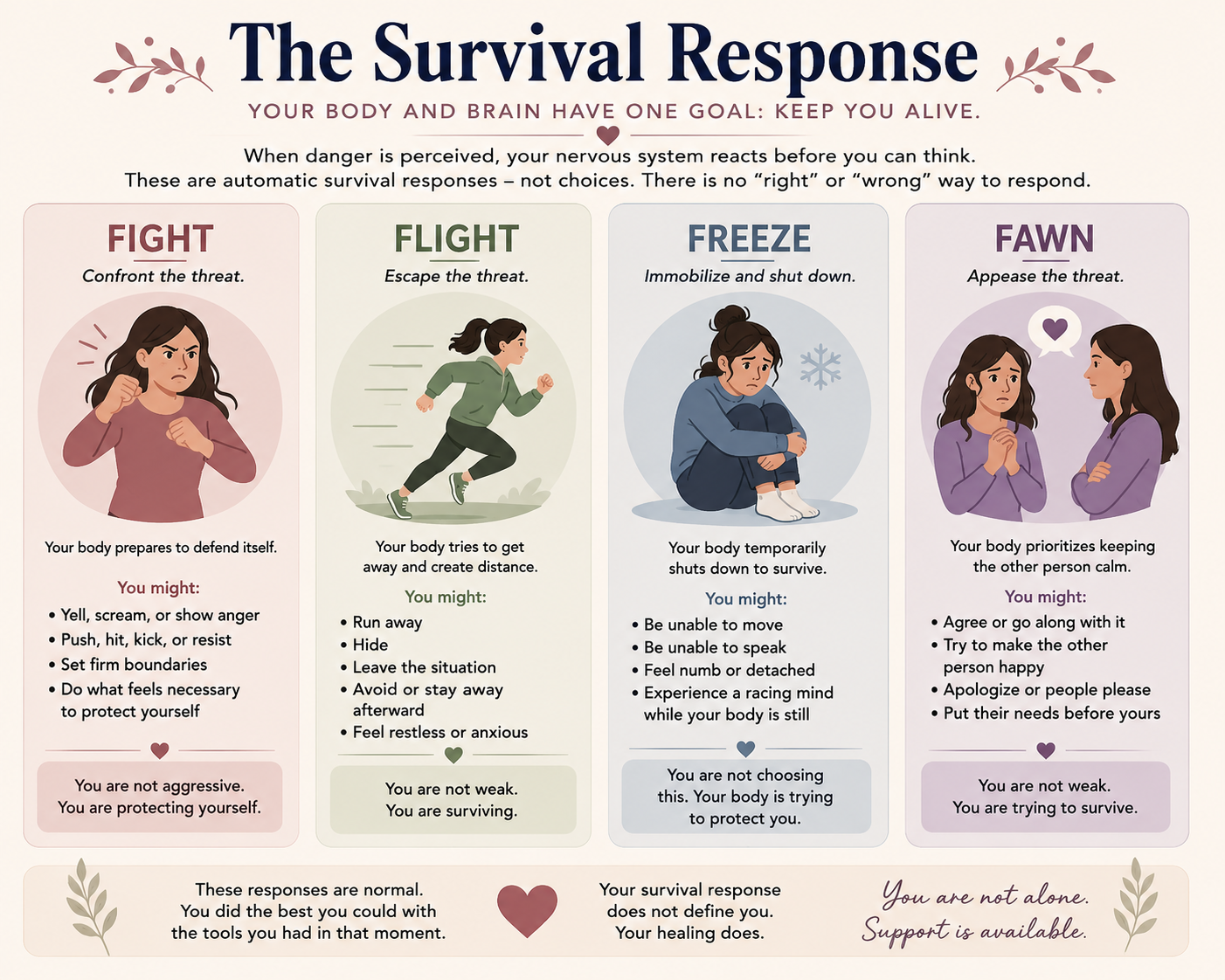
When something activates a trauma response, the nervous system may move into fight, flight, freeze, fawn, or shutdown.
A fight response may look like anger, pushing a partner away, yelling, or becoming suddenly defensive. A flight response may involve leaving the room, ending the experience, or feeling an urgent need to escape. A freeze response can make it difficult to move, speak, or make a decision. Fawning may involve agreeing, pleasing, or continuing sexual activity to prevent conflict. Shutdown may feel like numbness, exhaustion, or complete emotional disconnection.
You may also experience:
A racing heart
Shallow breathing
Muscle tension
Nausea or dizziness
Sweating or shaking
Sudden pain or genital numbness
Intrusive images or memories
Feeling as though the trauma is happening again
Feeling detached from your body
Losing an erection or physical arousal
Becoming unable to orgasm
Crying without understanding why
Feeling intense shame, fear, or anger
These responses are automatic. They are not chosen, exaggerated, or done to punish a partner.
Can Someone Freeze or Dissociate Without Saying “Stop”?
Yes. A person who is triggered may become unable to speak, move, or clearly identify what they want. They may appear quiet or compliant while feeling emotionally far away.
Silence is not consent. A partner should not assume that the absence of resistance means someone wants to continue. Consent must remain freely given throughout the entire sexual experience.
Signs that someone may be freezing or dissociating include:
Becoming unusually still
Staring into the distance
No longer responding to touch
Appearing confused or emotionally absent
Giving automatic answers
Suddenly becoming quiet
Looking frightened or tense
No longer participating
Having difficulty making eye contact
Seeming unaware of what is happening
If your partner appears disconnected, pause the sexual activity. Use a calm voice and ask a simple question such as, “Do you want to stop?” or “Would you like space, a blanket, or for me to stay close?”
Do not demand an explanation while they are overwhelmed.
Does a Physical Sexual Response Mean the Person Was Not Triggered?
No. An erection, lubrication, ejaculation, or orgasm does not prove that someone felt safe, wanted the experience, or gave consent.
Genital responses can happen automatically when the body receives sexual stimulation. A person may experience physical arousal while feeling frightened, numb, disconnected, or emotionally unwilling. This is known as arousal non-concordance, which means that the body’s physical response and the person’s emotional desire do not match.
This is especially important for survivors of sexual violence. A physical response during an assault never means that the survivor wanted or enjoyed what happened. The responsibility belongs entirely to the person who violated consent.
Why Might Someone Avoid All Touch After Being Triggered?
After a frightening reaction, you may begin avoiding sex because you do not want to feel that way again. You might also avoid kissing, cuddling, massage, or holding hands if you believe affection will create an expectation for sexual activity.
Your partner may feel rejected, while you may feel pressured or misunderstood. Both people can become trapped in a cycle in which one partner seeks more closeness and the other pulls further away.
Creating clear boundaries between affectionate and sexual touch can help. A hug can remain a hug. Cuddling does not have to lead to sex. You are allowed to enjoy one type of touch and decline another.
How Can Couples Prepare for Possible Trauma Triggers?
Discussing safety before sexual activity can reduce confusion if a trigger occurs. You do not have to share every detail of the trauma to explain what you need.
You might say:
“Please approach me from the front.”
“I need to be able to see the door.”
“Ask before holding my wrists.”
“If I become quiet or still, please stop and check on me.”
“I may need the lights to stay on.”
“Please do not wake me with sexual touch.”
“If I say ‘pause,’ stop moving but stay close.”
“If I say ‘stop,’ I need all touch to end.”
“I want affection tonight, but I do not want sexual activity.”
Couples may also choose a word or hand signal for slowing down, pausing, or stopping. A nonverbal signal can be helpful if speaking becomes difficult.
These conversations are not unromantic. Knowing that your boundaries will be respected can create the safety needed for desire and pleasure.
What Should a Partner Do When a Trauma Trigger Occurs?
When someone becomes triggered, stop sexual activity and focus on safety. Speak slowly and avoid making sudden movements or touching them without permission.
You can ask:
“Would you like me to move away?”
“Do you want me to stay with you?”
“Would a blanket or glass of water help?”
“Can you feel your feet on the floor?”
“Would you like the lights on?”
“Is there someone you would like me to call?”
Avoid saying, “You are overreacting,” “I would never hurt you,” or “Why are you doing this?” Even if you did not intend harm, the person’s nervous system is responding to something that feels real.
You do not need to solve the trauma in that moment. Your calm presence, respect for boundaries, and willingness to stop can help the person return to the present.
How Can Someone Reconnect With the Present?
Grounding can help the brain and body recognize that the trauma is not happening now. Different strategies work for different people.
You might:
Open your eyes and look around the room
Name where you are and who you are with
Place your feet firmly on the floor
Notice the support of the bed or chair beneath you
Hold a cool drink or textured object
Name things you can see, hear, and feel
Wrap yourself in a blanket
Change positions or move to another room
Take slow breaths without forcing yourself to relax
Ask for space or safe, nonsexual touch
Grounding should always be offered as a choice. Some people do not want to be touched while triggered, even if touch is intended to be comforting.
Can Trauma-Informed Therapy Help With Sexual Triggers?
Yes. Trauma-informed sex therapy can help you identify triggers, understand your body’s survival responses, and develop ways to remain connected to the present.
EMDR may help reprocess traumatic memories so reminders feel less immediate and overwhelming. Sex therapy can help you communicate boundaries, reduce performance pressure, and gradually explore touch without requiring arousal, penetration, or orgasm. Couples therapy can help a partner respond supportively without taking the trauma reaction personally.
You never have to recreate a traumatic experience or push through unwanted touch to heal. Any exploration of intimacy should include choice, consent, predictability, and the ability to stop.
Your triggers are not evidence that you are broken or incapable of intimacy. They are signs that your nervous system learned to protect you. Healing involves helping your body recognize that you have choices now—and that touch can happen with safety, respect, and control.
How Do Shift Work, Poor Sleep, and Exhaustion Affect Intimacy?
Shift work, poor sleep, and physical exhaustion can reduce sexual desire, make arousal and orgasm more difficult, and leave couples with little time or energy for emotional connection. First responders may work overnight, rotate between day and night shifts, stay late for mandatory overtime, or have their sleep interrupted by emergency calls.
Even when you technically have time for sex, your body may need food, sleep, silence, or time alone more than sexual activity. This does not mean that you have lost attraction to your partner or that your relationship is failing. It may simply mean that your body is exhausted.
Why Does Shift Work Affect the Body?
The body uses an internal clock, known as the circadian rhythm, to regulate sleep, alertness, hormones, mood, appetite, and other physical processes. Overnight work and rotating schedules can disrupt this natural rhythm.
You may have to remain awake when your body expects to sleep and try to sleep when your body expects to be alert. Even when you spend enough hours in bed, daytime sleep may be interrupted by light, noise, children, appointments, or household responsibilities.
First responders may also be woken repeatedly while working a 24-hour shift. You may lie down at the station without ever reaching deep, uninterrupted sleep because part of your mind is waiting for the next call.
The CDC and National Institute for Occupational Safety and Health have reported increased poor sleep quality, stress, and depression among police officers working afternoon and night shifts compared with those working during the day. Firefighters, paramedics, dispatchers, and other shift workers can face similar challenges with sleep disruption and recovery.
How Can Poor Sleep Affect Sexual Desire?
Sexual desire is influenced by physical energy, emotional well-being, stress, hormones, medication, and relationship dynamics. When you are chronically tired, sex may feel like one more thing you are expected to do.
You may still love and feel attracted to your partner but have no energy to initiate or respond. You might think, “I would rather sleep,” and then feel guilty because your partner has been waiting for time together.
Needing sleep is not a rejection. Sleep is a basic biological need. The CDC describes healthy sleep as essential for physical health and emotional well-being.
There is also no correct amount of sex that a first responder or couple should be having. A temporary drop in desire during exhausting weeks does not automatically mean that something is wrong.
Can Exhaustion Affect Arousal and Orgasm?
Yes. Exhaustion can make it harder to focus on pleasurable sensations, become physically aroused, maintain an erection, lubricate, or reach orgasm.
You may begin sexual activity with good intentions but find your mind drifting or your body responding more slowly than usual. If you interpret this as failure, you may start monitoring your performance or trying to rush toward orgasm.
The pressure to make the most of limited time can make arousal even more difficult. Sex may begin to feel like something that has to happen before the next shift, before the children wake up, or before one partner falls asleep.
Your body is not a machine. Arousal may require more time when you are tired, and sometimes sleep will be the most caring choice.
Why Can the First Day Off Still Feel Difficult?
Partners may expect the first day off to be a time for connection, chores, family activities, or sex. The first responder may experience that day very differently.
After several long or overnight shifts, your body may need to recover. You might feel foggy, irritable, quiet, or emotionally unavailable. You may need time to sleep, shower, eat, or sit without anyone needing something from you.
Your partner may have also spent several days managing the home, parenting, sleeping alone, or waiting for your return. They may understandably want attention and relief as soon as you come home.
Neither person is wrong. One partner is seeking recovery while the other is seeking reconnection. Without an honest conversation, both may feel unseen.
How Can Opposite Schedules Affect a Relationship?
When one partner works while the other sleeps, couples may begin living separate lives. They may communicate mainly about chores, children, bills, and schedules. Intimacy becomes something they hope will happen when life finally slows down.
Limited time together can create pressure to make every shared moment meaningful. If one partner does not want sex during that small window, the other may feel deeply rejected. The person declining may feel guilty or worry that they have wasted the only opportunity.
Shift work can also cause first responders to miss holidays, birthdays, school events, weekends, and bedtime routines. The partner at home may feel lonely or overburdened, while the first responder may feel criticized for a schedule they cannot control.
These concerns are not simply about sex. They are often about missing each other.
Why Can Mismatched Energy Become Mismatched Desire?
One partner may feel most interested in sex when the first responder partner gets home because they have been waiting to reconnect. The first responder may be at their lowest point of energy and need time to decompress.
Later, the first responder may feel rested and interested in sex, but their partner may be exhausted from work, parenting, or managing the household. Their desire is not necessarily incompatible. Their energy is arriving at different times.
Instead of asking, “Why don’t we want each other?” it may be more helpful to ask, “When do our energy and availability overlap?”
How Can First-Responder Couples Protect Intimacy?
Protecting intimacy does not mean forcing sex into an already exhausting schedule. It means creating realistic opportunities for connection instead of waiting for the perfect moment.
This may include:
Sharing shift schedules as early as possible
Identifying times when both partners usually have more energy
Allowing recovery time after demanding shifts
Planning brief moments of connection instead of waiting for an entire free evening
Separating affectionate touch from the expectation of sex
Sending a caring message during the shift
Eating a meal together when possible
Taking a shower or nap before attempting sexual activity
Scheduling private time while allowing either partner to decline sex
Choosing sexual activities that fit the available time and energy
Protecting sleep from unnecessary interruptions
Sharing household responsibilities so one partner is not always depleted
Talking openly about loneliness, resentment, and unmet needs
Scheduling time for intimacy does not mean scheduling an obligation to have sex. You can schedule privacy, affection, conversation, or exploration while leaving room for either person to decide what feels good in that moment.
An invitation must still allow for any answer.
What Is a Transition Ritual?
A transition ritual is a predictable activity that helps the first responder move from work mode into home life. It creates a boundary between the intensity of the shift and connection with a partner.
A transition ritual might include:
Changing out of work clothes
Showering
Eating something
Sitting alone for a set amount of time
Taking a short walk
Listening to music during the drive home
Stretching or moving the body
Checking in with a partner after having time to decompress
The ritual should not become a way to avoid the relationship indefinitely. Couples can agree on how much transition time is helpful and when they will reconnect.
For example: “I need 30 minutes to shower and settle after my shift. Then I want to sit with you and hear about your day.”
When Should a First Responder Seek Help for Sleep Problems?
Talk with a medical provider if sleep difficulties continue even when you have an opportunity to rest. Loud snoring, gasping during sleep, morning headaches, severe daytime sleepiness, difficulty staying awake while driving, or repeatedly waking without feeling rested may be signs of a sleep disorder.
Sleep concerns can also be connected to PTSD, depression, anxiety, chronic pain, medication, alcohol use, or other health conditions. Treating the sleep problem may improve mood, energy, sexual functioning, and relationship satisfaction.
If you are so exhausted that you feel unsafe driving or working, treat that as a safety concern—not a personal weakness.
Can Couples Therapy or Sex Therapy Help?
Yes. Couples sex therapy can help first-responder couples discuss exhaustion and desire without turning either partner into the problem.
Therapy may help you:
Understand how shift work affects both partners
Talk about rejection and pressure more openly
Develop realistic expectations for sexual frequency
Create pressure-free ways to initiate intimacy
Protect nonsexual affection
Divide responsibilities more fairly
Identify times when energy is more likely to overlap
Rebuild emotional connection after long periods apart
Address trauma, resentment, or sexual concerns that continue after rest improves
You do not need to choose between sleep and a healthy relationship. Intimacy can be flexible. During demanding seasons, connection may look like holding hands, sharing a meal, sleeping beside each other, sending a message, or creating ten quiet minutes together.
Your relationship is not measured by how often you have sex after an exhausting shift. The goal is to create a relationship in which both partners can be honest about their needs, feel respected when they say no, and remain connected even when time and energy are limited.
Can Sex Become a Way of Coping With Stress or Trauma?
Yes, sex can become a way of coping with stress, trauma, emotional numbness, loneliness, or painful thoughts. Sexual activity may provide temporary relief, distraction, connection, validation, excitement, or a sense of control.
Some first responders notice that they seek sex, pornography, masturbation, sexting, affairs, or sexual novelty more often after difficult calls or periods of intense stress. Sex may quiet the mind, release physical tension, or help someone feel alive after being emotionally numb.
Using sex to cope is not automatically unhealthy. Many people use pleasurable activities to manage stress. The concern is whether sexual behavior feels outside your control, causes distress, conflicts with your values, creates secrecy, or becomes your only reliable way to manage painful emotions.
Why Can Sex Provide Temporary Relief?
Sexual activity can briefly narrow your attention to physical sensation and pull you away from intrusive thoughts, grief, anger, anxiety, or memories of work. It may create a temporary sense of closeness after spending the day feeling disconnected from other people.
For some first responders, sex offers:
A release of physical tension
A distraction from traumatic memories
Relief from anxiety or emotional pain
Reassurance that they are loved or desired
A sense of power or control
A way to avoid feeling emotionally numb
Temporary comfort after a frightening call
A way to fall asleep or calm down
An opportunity to feel something intense
These needs are human. Wanting relief does not make you weak or damaged.
Is Wanting Frequent Sex the Same as Hypersexuality?
No. Having a high libido or wanting frequent sex does not automatically mean that you are hypersexual. There is no correct number of times a person should think about, want, or have sex.
The concern is not frequency alone. Sexual behavior may be worth exploring when:
You feel unable to stop even when you want to
You repeatedly take risks that could harm you or others
You hide or lie about your sexual behavior
The behavior conflicts with your values or relationship agreements
You use sex to avoid nearly every difficult emotion
Sexual behavior interferes with work, sleep, finances, or relationships
You need increasingly intense experiences to feel relief
You feel shame, regret, or distress afterward but repeat the behavior
Your partner feels pressured to provide sex to regulate your emotions
Sex has become the only time you feel alive, connected, or calm
The difference is not “a lot of sex” versus “a normal amount of sex.” The difference is whether you still experience choice.
Why Might Trauma Increase Sexual Behavior?
Trauma does not always cause people to avoid sex. Some nervous systems respond by seeking intensity, stimulation, or closeness.
After seeing how quickly life can change, a first responder may want sex as reassurance that they are alive. Someone who feels emotionally numb may seek stronger sensations in an attempt to feel something. A person who feels powerless at work may use sexual experiences to regain a sense of control.
Sex can also become a way to avoid vulnerability. Physical intimacy may feel more manageable than talking about fear, grief, helplessness, or shame. You may be comfortable having sex but feel unable to tell your partner what happened during your shift.
How Can Using Sex to Cope Affect a Partner?
A partner may begin feeling responsible for regulating the first responder’s emotions through sex. They may worry that saying no will cause anger, withdrawal, infidelity, or emotional collapse.
The first responder may interpret a sexual rejection as abandonment at the exact moment they are seeking comfort. This can create pressure, resentment, and conflict.
Consent must remain freely given. A partner is allowed to say no to sex even when the first responder is distressed. Sex cannot be considered consensual when someone feels responsible for preventing another person’s anger, emotional shutdown, or harmful behavior.
A caring response might sound like:
“I can tell that you need connection, but I do not want sex tonight. I can sit with you, hold your hand, or give you space.”
The first responder might say:
“I am having a difficult night, and I notice that I want sex to escape how I feel. I need comfort, but I do not want you to feel pressured.”
Can Pornography or Masturbation Become a Coping Strategy?
Yes. Pornography and masturbation may offer privacy, control, predictable stimulation, and temporary relief without requiring emotional vulnerability.
Neither pornography nor masturbation is automatically harmful. They may become concerning when they interfere with partnered intimacy, sleep, work, finances, or daily responsibilities; involve escalating risks; conflict with relationship agreements; or feel impossible to control.
Shame is unlikely to create lasting change. Understanding the need underneath the behavior is often more helpful than labeling the behavior as bad.
Why Does Shame Make the Cycle Worse?
After using sex to cope, you may feel ashamed or promise yourself that it will never happen again. Shame can increase isolation, secrecy, and emotional pain—the same feelings that may have triggered the behavior in the first place.
The cycle may look like this:
You experience stress, trauma reminders, or emotional numbness.
You use sexual behavior to feel relief or escape.
The relief fades.
You experience shame, regret, or relationship conflict.
The emotional pain increases.
You seek sexual behavior again for relief.
Breaking this cycle requires more than taking sex away. It requires addressing the emotions, trauma, and unmet needs that the behavior has been helping you manage.
What Can Help Create More Choice?
The goal is not necessarily to stop sexual activity. The goal is to expand your options so sex is one possible source of comfort—not the only one.
Before acting on a sexual urge, you might ask:
“What happened right before I felt this urge?”
“What emotion am I trying not to feel?”
“Am I seeking pleasure, connection, escape, control, or reassurance?”
“Does this choice fit my values and relationship agreements?”
“Will this help me feel better only briefly, or will it create more pain?”
“What else might help me feel grounded right now?”
Additional ways of coping may include movement, sleep, talking with a trusted person, spending time outside, grounding exercises, creative activities, peer support, or trauma therapy. These strategies do not have to replace consensual sexual pleasure. They give you more freedom to choose what you actually need.
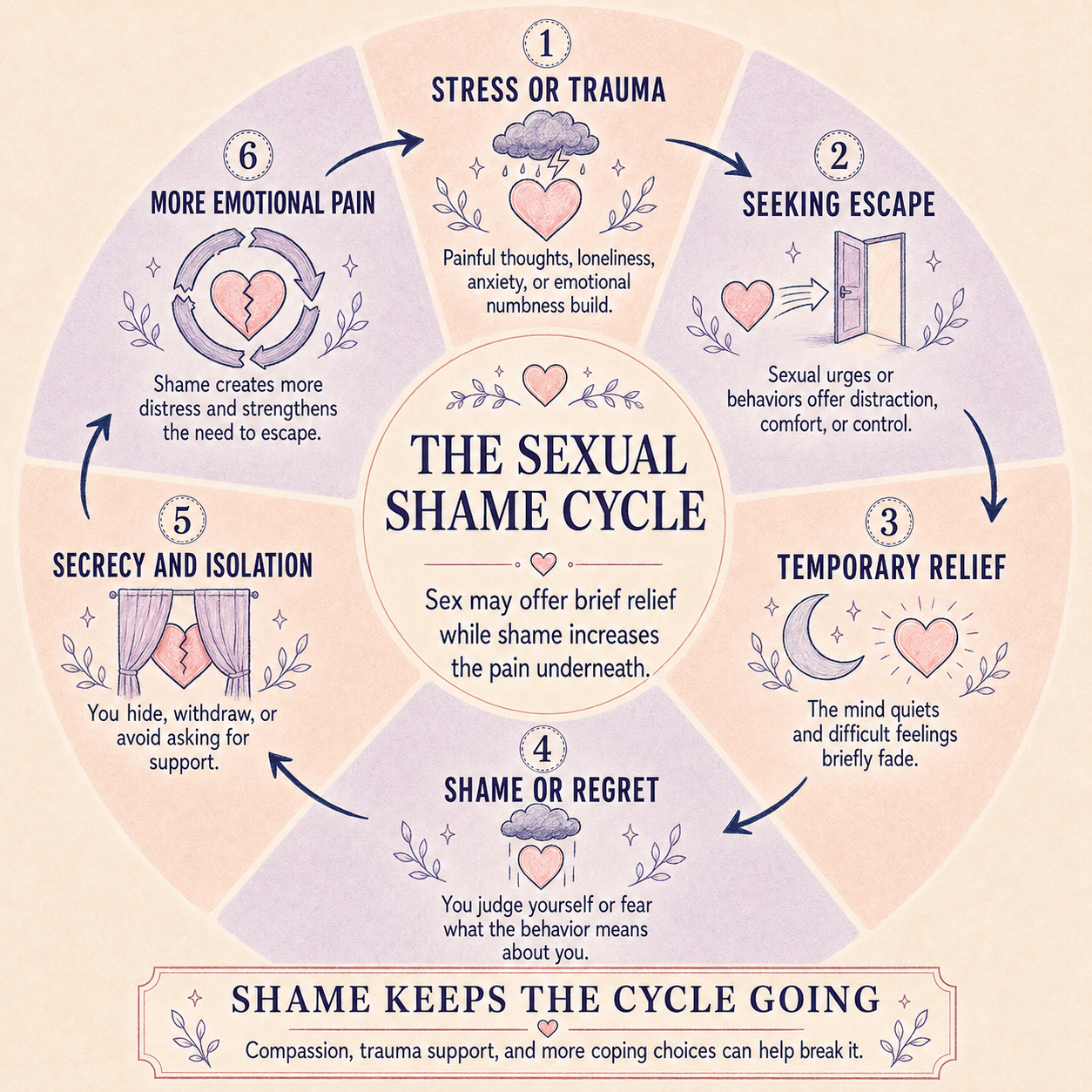
How Can First-Responder Work Affect a Spouse or Partner?
First-responder work can affect a spouse or partner through unpredictable schedules, repeated separations, fear for their loved one’s safety, increased household responsibilities, and changes in emotional or sexual intimacy. Partners may feel proud of the first responder while also feeling lonely, worried, overwhelmed, or disconnected.
These emotions can exist at the same time. Struggling with the effects of the job does not mean that a partner is unsupportive or does not respect the work.
Why Might a Partner Feel Lonely?
Long shifts, overnight work, mandatory overtime, missed holidays, and interrupted plans can leave partners spending significant amounts of time apart. Even when the first responder is physically home, they may be exhausted, distracted, emotionally numb, or mentally preparing for the next shift.
A partner may feel as though the job receives the first responder’s energy while the relationship receives whatever is left. They may hesitate to say this because they do not want to appear selfish or compete with the importance of the work.
Loneliness can be especially painful when other people assume that the partner should simply “understand what they signed up for.” Knowing that a job is demanding does not remove the need for affection, support, reliability, and connection.
How Can Fear Affect a First-Responder Partner?
A spouse or partner may live with ongoing awareness that an ordinary shift could become dangerous. News reports, missed calls, community emergencies, or a delayed return home may create intense worry.
Some partners repeatedly check their phones, monitor local news, or imagine worst-case scenarios. Others avoid thinking about the risks and become irritated when the first responder discusses dangerous calls. Both can be attempts to manage fear.
The first responder may respond by sharing fewer details to protect their partner. While this may come from love, silence can sometimes create more distance and leave the partner imagining something worse.
You do not have to disclose confidential or graphic information to offer reassurance. You might say, “I had a difficult call, but I am physically safe. I am not ready to talk about it yet.”
How Can the Job Change Household and Parenting Responsibilities?
Shift work can leave one partner managing bedtime, school events, appointments, meals, chores, and family emergencies alone. Even when the schedule cannot be changed, the imbalance may create exhaustion or resentment.
The first responder may return home needing sleep and recovery. Their partner may have also been working, parenting, and managing the household without a break. Both people may feel that their exhaustion is not being recognized.
Arguments about chores are rarely only about dishes or laundry. They may be attempts to say, “I need help,” “I feel alone,” or “I need my work to matter too.”
Acknowledging the imbalance does not mean blaming the first responder for their schedule. It means discussing how the couple can share responsibilities as fairly as possible within the reality they face.
How Can Trauma Symptoms Affect a Partner?
After repeated exposure to trauma, a first responder may become hypervigilant, irritable, emotionally numb, withdrawn, or easily startled. They may have difficulty sleeping, avoid certain places, use alcohol or sex to cope, or become uncomfortable with affection.
A partner may begin changing their behavior to prevent a reaction. They may keep the house quiet, avoid difficult topics, manage the children’s emotions, or stop expressing their own needs. Over time, they may feel as though they are walking on eggshells.
The National Center for PTSD explains that avoidance and emotional numbness can contribute to withdrawal from relationships and reduced emotional or physical intimacy.
Trauma can explain a behavior, but it does not excuse intimidation, coercion, threats, violence, or controlling a partner. Everyone in the home deserves physical and emotional safety.
How Can First-Responder Work Affect Sexual Intimacy?
One partner may seek sex as a way to reconnect after time apart, while the other feels too exhausted, emotionally numb, or overstimulated for touch. The first responder may use sex to reduce stress, feel alive, or avoid painful thoughts. Alternatively, they may lose interest in sex or avoid affection because they fear it will create expectations.
The partner may interpret low desire, erectile difficulties, dissociation, or avoidance as a loss of attraction. They may wonder whether the first responder is having an affair or no longer loves them.
Meanwhile, the first responder may feel watched, pressured, or ashamed. Sex can begin to feel like a test of whether the relationship is okay.
It is important to separate sexual response from love. A tired, traumatized, or hypervigilant body may have difficulty accessing desire and arousal even when attraction remains.
Why Do Couples Fall Into a Pursue-and-Withdraw Cycle?
When a partner feels disconnected, they may seek more conversation, affection, reassurance, or sex. The first responder may already feel overwhelmed and respond by becoming quiet, defensive, or physically distant.
The more one partner pursues, the more the other withdraws. The more the first responder withdraws, the more urgently the partner seeks connection.
Neither person is necessarily the problem. One person is trying to protect the relationship by reaching for closeness, while the other is trying to protect themselves from feeling overwhelmed.
Naming the cycle can help couples stop blaming each other. You might say, “We are caught in the pattern again. You need reassurance, and I need time to decompress. How can we make room for both?”
Can a Partner Experience Secondary Stress?
Yes. A partner can experience stress from repeatedly hearing about traumatic events, witnessing the first responder’s symptoms, fearing for their safety, or carrying additional responsibilities at home.
They may develop sleep problems, anxiety, irritability, emotional exhaustion, or a sense that they must remain strong for everyone else. Some partners feel guilty seeking support because they believe the first responder has experienced something worse.
Pain does not have to be compared to deserve care. A spouse or partner is allowed to need support even when they were not present at the emergency.
How Can Partners Support a First Responder Without Losing Themselves?
Supporting a first responder does not mean becoming their therapist, accepting harmful behavior, or ignoring your own needs. A healthy relationship makes room for both partners’ experiences.
Partners can:
Ask what type of support feels helpful
Offer choices such as space, company, or a hug
Avoid pressing for graphic details
Communicate needs clearly rather than expecting mind-reading
Maintain friendships, hobbies, and sources of support
Set boundaries around substance use, anger, or unsafe behavior
Protect sleep and recovery when possible
Create affection that is not expected to lead to sex
Encourage professional help when symptoms affect the relationship
Seek individual support for themselves
A boundary might sound like, “I understand that you had a difficult shift, but it is not okay to yell at me. We can continue this conversation when we are both calm.”
What Can the First Responder Do to Protect the Relationship?
You do not have to tell your partner everything that happened at work, but complete silence can leave them feeling shut out. Small amounts of honest communication can help.
You might say:
“I had a difficult shift, and I need some quiet before I can talk.”
“I am feeling numb today. It is not because of you.”
“I want to be close, but I do not have energy for sex.”
“I need 30 minutes to decompress, and then I want to reconnect.”
“I am struggling more than usual, and I think I need support.”
Following through matters. If you ask for time alone, return when you said you would. This helps your partner understand that you are taking time to regulate—not abandoning the relationship.
When Should a Couple Seek Help?
Couples sex therapy may be helpful when the same conflicts continue, affection has disappeared, sex feels pressured, trust has been damaged, or either person feels alone within the relationship.
Trauma-informed therapy can help couples understand how first-responder work affects both nervous systems. It can also help them communicate about sex, create safer boundaries, divide responsibilities, and rebuild connection without forcing either person to ignore their needs.
If there are threats, intimidation, sexual coercion, or physical violence, prioritize safety and seek specialized support. Trauma does not make abuse acceptable.
The job may shape your relationship, but it does not have to control it. Both partners deserve to feel valued, heard, safe, and free to ask for support. The strongest first-responder relationships are not those that never struggle; they are those in which both people are allowed to be honest about how the work affects them.
Why Do Some First-Responder Couples Fall Into a Pursue-and-Withdraw Cycle?
First-responder couples may fall into a pursue-and-withdraw cycle when one partner responds to disconnection by seeking more closeness while the other responds to stress by needing more space. The more one partner pursues conversation, affection, reassurance, or sex, the more overwhelmed the other may feel and pull away.
The withdrawal then increases the pursuing partner’s fear of rejection or abandonment, causing them to reach for connection even more urgently. Both people become trapped in a cycle that leaves them feeling lonely, misunderstood, and unwanted.
Neither partner is necessarily the problem. They are using different strategies to protect themselves and the relationship.
What Does the Pursue-and-Withdraw Cycle Look Like?
The cycle may begin when a first responder returns from a long or difficult shift. Their partner has missed them and wants to reconnect. The first responder feels exhausted, overstimulated, or emotionally numb and needs time alone.
The partner might ask:
“Why won’t you talk to me?”
“Do you even want to be here?”
“Why don’t you ever touch me anymore?”
“Are you still attracted to me?”
The first responder may hear these questions as criticism or another demand they cannot meet. They might become quiet, defensive, irritated, or leave the room.
The partner then feels more rejected and begins pushing harder for an answer. The first responder feels increasingly trapped and withdraws even further.
The cycle becomes:
One partner feels disconnected or afraid.
They pursue reassurance, conversation, affection, or sex.
The other partner feels pressured or overwhelmed.
They withdraw, shut down, or become defensive.
The pursuing partner feels more rejected.
They increase their attempts to create closeness.
Both partners feel alone and misunderstood.
Why Does the First Responder Withdraw?
Withdrawal may be an attempt to manage stress rather than a sign that the first responder does not care. After a shift spent responding to other people’s needs, making decisions, and remaining alert, they may have little emotional energy left.
The first responder may withdraw because they:
Need time to come out of work mode
Feel emotionally numb or disconnected
Do not want to burden their partner with difficult details
Fear that talking will make the memories more intense
Feel ashamed about how they are coping
Expect the conversation to become an argument
Worry that they will disappoint their partner sexually
Feel unable to identify or explain their emotions
Need sleep, quiet, or physical space
Withdrawing may temporarily reduce pressure, but prolonged silence can make the partner feel abandoned.
Why Does the Partner Pursue?
Pursuing is often an attempt to protect the relationship. The partner may feel lonely after spending long periods apart or carrying additional responsibilities at home. They may notice changes in affection, sex, communication, or mood and fear that the relationship is slipping away.
The partner may pursue because they:
Need reassurance that they are still loved
Miss emotional and physical closeness
Feel alone in the relationship
Worry about the first responder’s mental health
Fear infidelity or a loss of attraction
Want help with parenting or household responsibilities
Feel shut out of an important part of their partner’s life
Believe that solving the conflict immediately will restore safety
Pursuing may come out as criticism, repeated questions, anger, or pressure for sex. Underneath these behaviors is often the fear that the connection is disappearing.
How Can This Cycle Affect Sexual Intimacy?
Sex may become one of the primary ways the pursuing partner seeks reassurance. They may hope that sexual activity will prove that they are still attractive, loved, and connected to the first responder.
The first responder may already feel exhausted, hypervigilant, or worried about their sexual performance. When sex becomes a test of the relationship, desire may decrease even more. They might avoid kissing, cuddling, or affection because they fear every touch will create an expectation for sex.
The partner then receives even less affection and pursues more intensely. Both people may begin attaching painful meanings to the difference in desire.
One partner may be asking, “Do you still love me?”
The other may be trying to say, “I love you, but I am overwhelmed and need my body to feel safe.”
How Can Couples Interrupt the Cycle?
The first step is naming the pattern without blaming either person. Instead of saying, “You are too needy” or “You never care about me,” try saying, “We are caught in the pursue-and-withdraw cycle again.”
Both partners can then identify the need underneath their reaction.
The pursuing partner might say:
“I notice that I push harder when I feel disconnected. Underneath my anger, I am afraid that I am losing you.”
The withdrawing partner might say:
“I pull away when I feel overwhelmed because I am afraid I will fail you or make the situation worse. I need a pause, but I do not want to leave you alone in this.”
The goal is not to eliminate every need for closeness or space. It is to create a way for both needs to exist.
How Can the Withdrawing Partner Ask for Space Without Abandoning the Relationship?
Taking space can be helpful when it includes reassurance and a clear plan to return.
You might say:
“I care about you, and I want to have this conversation. I am too overwhelmed to do it well right now. I need 30 minutes, and then I will come back.”
Following through is important. If the first responder repeatedly asks for space but never returns, the partner’s fear and pursuit will likely increase.
A pause should help regulate the nervous system—not become a way to avoid the relationship indefinitely.
How Can the Pursuing Partner Ask for Connection Without Creating Pressure?
The pursuing partner can make a clear, specific request while leaving room for an honest answer.
Instead of saying, “You never spend time with me,” try:
“Could we sit together for ten minutes after you shower?”
Instead of saying, “You are never attracted to me,” try:
“I have been feeling insecure and would like reassurance that we are okay.”
Instead of initiating affection with an unspoken expectation for sex, try:
“I would like to cuddle without it leading anywhere. Would that feel okay tonight?”
An invitation is different from a demand because it allows the other person to say yes, no, or suggest another time.
How Can Couples Protect Affection?
Some withdrawing partners avoid all touch because they believe affection will lead to pressure for sex. Couples can create clear forms of nonsexual connection so that touch feels safer.
A hug can remain a hug. A kiss does not have to become sexual. Cuddling can end with sleep. Either partner can change their mind at any time.
Protecting pressure-free affection helps the pursuing partner receive connection while allowing the withdrawing partner to remain close without feeling trapped.
Can Couples sex Therapy Help?
Yes. Trauma-informed couples sex therapy can help both partners understand the pursue-and-withdraw cycle without deciding that one person is too needy or the other is emotionally broken.
Therapy can help couples:
Identify what triggers the cycle
Understand the fears underneath pursuit and withdrawal
Ask for closeness or space more clearly
Create reliable decompression and reconnection routines
Reduce pressure surrounding sex
Repair trust after repeated disconnection
Protect affectionate touch
Address trauma, resentment, and mismatched desire
The cycle—not either partner—is the enemy. One person is trying to prevent abandonment, while the other is trying to prevent overwhelm. When couples learn to recognize these protective responses, they can begin turning toward each other instead of fighting for closeness or escaping from it.
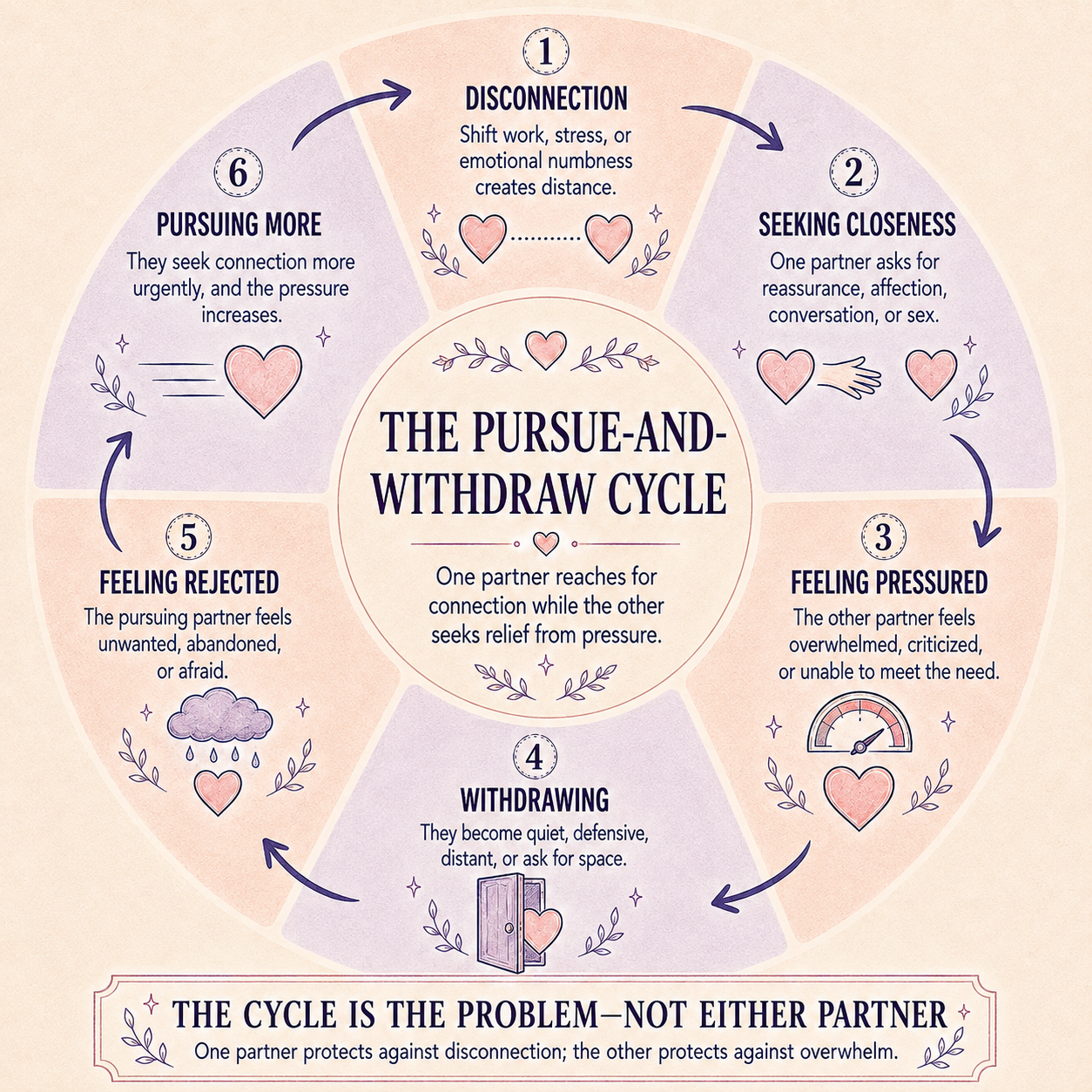
How Can First Responders Talk to Their Partners About Intimacy Concerns?
First responders can talk to their partners about intimacy concerns by choosing a calm time, naming what they have noticed, reassuring their partner that the concern is not automatically about attraction, and clearly explaining what kind of support would help. The conversation should focus on understanding the problem together—not blaming either person or immediately trying to fix it.
Talking about sex can feel vulnerable, especially in a culture that values control, strength, and self-reliance. You may worry that your partner will feel rejected, assume you are having an affair, or see you differently. You might also feel embarrassed discussing low desire, erectile difficulties, orgasm concerns, trauma triggers, or using sex to cope.
Avoiding the conversation may feel safer in the moment, but silence allows both partners to create their own painful explanations.
When Is the Best Time to Talk About Intimacy?
Try to have the conversation when neither person is exhausted, rushing, intoxicated, or already upset. Avoid beginning the discussion during sexual activity, immediately after an erectile change, or directly following a sexual rejection.
Choose a private setting where both people can speak without interruption. You do not need to wait for the perfect moment, but creating emotional space can help prevent the conversation from feeling like another emergency.
You might begin by saying:
“I want to talk about something personal because I care about us. Is now an okay time?”
Giving your partner some choice about timing can help both of you feel more prepared.
How Can You Begin the Conversation?
Start with what you have noticed rather than what you believe is wrong with you or your partner.
You might say:
“I have noticed that I am less interested in sex after difficult shifts.”
“My body has been having a hard time becoming aroused, even though I am attracted to you.”
“Sometimes I feel far away or disconnected during sex.”
“Certain types of touch have started making me tense.”
“I have been avoiding affection because I worry it will create an expectation for sex.”
“I notice that I sometimes seek sex when I am trying to escape painful thoughts.”
“I am worried about disappointing you, and that pressure makes it harder to stay present.”
You do not need to have a diagnosis or fully understand the cause before starting the conversation.
How Can You Reassure Your Partner?
Partners often interpret changes in desire or sexual functioning as a loss of love or attraction. Offer honest reassurance when it is true.
You might say:
“I still love you and find you attractive. My nervous system has been overwhelmed, and my body is not responding the way I expect.”
“I want to feel close to you. I just need us to take some pressure off sex.”
“My erection changing does not mean I do not want you.”
“I am pulling away because I feel overwhelmed—not because you have done something wrong.”
Reassurance should not become a promise to have sex you do not want. You can care about your partner’s feelings while maintaining your own boundaries.
How Much Should You Share About Work?
You do not have to share graphic details, confidential information, or anything you are not ready to discuss. However, giving your partner some context can help them understand why you seem different.
You might say:
“I had a call that affected me more than I expected. I do not want to share the details, but I notice that I feel uncomfortable with touch right now.”
“I have been seeing images from work when I try to relax. I need more time to transition before we are intimate.”
“I am not ready to talk about what happened, but I want you to know that my distance is not about you.”
You can be emotionally honest without violating privacy or forcing yourself to relive the experience.
How Can You Explain What You Need?
Partners may want to help but have no idea what to do. Make your request as clear and specific as possible.
You might ask for:
Time to decompress after a shift
Affection that is not expected to lead to sex
More warning before being touched
The lights to remain on
A different sexual position
Slower or different stimulation
Permission to pause without ending all connection
Reassurance that orgasm or penetration is not required
More sleep before attempting intimacy
A scheduled time to reconnect
Help finding a therapist or medical provider
Instead of saying, “Stop pressuring me,” you might say, “I need us to cuddle without assuming it will lead to sex.”
Instead of saying, “You never understand,” you might say, “When I become quiet, please ask whether I need space, company, or touch.”
How Can Partners Discuss Consent and Trauma Triggers?
If certain touches or situations feel unsafe, talk about them before sexual activity when possible. You do not have to explain the entire trauma to set a boundary.
You might say:
“Please approach me from the front.”
“Ask before touching me while I am sleeping.”
“I need to be able to see the door.”
“Do not hold my wrists.”
“If I become very still or quiet, please stop and check on me.”
“If I say ‘pause,’ stop moving and let me decide what I need.”
“If I say ‘stop,’ I need all sexual touch to end.”
Consent can be withdrawn at any time. Starting sexual activity does not mean that either person must finish it.
How Can You Listen to Your Partner’s Experience?
Your partner may feel lonely, confused, rejected, or worried. Listening to their experience does not mean accepting blame or agreeing to unwanted sex.
Try to remain curious about what the change has meant to them.
You might ask:
“How has this been affecting you?”
“What have you been telling yourself about my distance?”
“What helps you feel loved when sex is not available?”
“What kind of reassurance would feel meaningful?”
“How can we create connection without either of us feeling pressured?”
Your partner’s feelings matter, and your boundaries still matter. Both can be true.
What Should Couples Avoid During the Conversation?
Try to avoid:
Bringing up the concern during an argument
Criticizing someone’s body or sexual performance
Comparing your relationship with other couples
Using sex as proof of love
Threatening infidelity or separation to obtain sex
Demanding graphic details about trauma
Assuming every sexual concern is psychological
Making promises about sexual frequency
Treating one conversation as the complete solution
It may take several smaller conversations for both partners to understand what is happening.
What If Talking About It Feels Impossible?
You can begin with a text, letter, or note if speaking feels too overwhelming. The written message can open the door to a later conversation.
You might write:
“I have been struggling with intimacy, and I have avoided talking about it because I feel embarrassed. I love you, and I do not want silence to create more distance between us. I would like us to talk when we both have the energy.”
A trauma-informed couples therapist or sex therapist can also help create a safer environment for the conversation. Therapy is not only for couples considering separation. It can help you address the concern before resentment, avoidance, or pressure becomes deeply established.
Talking about intimacy may feel uncomfortable, but silence often creates more shame. You do not need the perfect words. Beginning with honesty, reassurance, and a willingness to listen can help you and your partner face the concern as a team.
How Can Couples Rebuild Emotional and Physical Connection Without Pressure?
Couples can rebuild emotional and physical connection by slowing down, removing expectations for sex, communicating clearly, and creating forms of touch that allow both partners to choose what feels comfortable. The goal is not to return to a certain amount of sex. The goal is to create enough safety, trust, and emotional closeness for intimacy to become possible again.
Pressure rarely creates genuine desire. When every hug, kiss, or quiet moment is expected to lead to sex, the partner with less desire may begin avoiding all affection. The other partner then feels increasingly rejected and may pursue closeness more urgently.
Rebuilding connection means protecting affection from this cycle.
Start With Emotional Safety
Emotional connection often begins outside the bedroom. First responders and their partners may need opportunities to feel heard, appreciated, and understood before physical intimacy feels possible.
Emotional safety can include:
Listening without immediately trying to solve the problem
Respecting requests for space while agreeing on a time to reconnect
Following through on promises
Sharing household and parenting responsibilities
Expressing appreciation
Offering reassurance without demanding emotional disclosure
Repairing after conflict
Responding to boundaries without anger, guilt, or punishment
Creating predictable time together
You do not need to share every detail of a traumatic call to be emotionally honest. Saying, “I had a difficult day, and I feel shut down,” may help your partner understand that your distance is not about them.
Separate Affection From Sex
If affectionate touch regularly leads to an expectation for sex, the partner who is overwhelmed may begin avoiding all touch. Couples can rebuild physical connection by agreeing that some affection will remain completely nonsexual.
This might include:
Holding hands
Hugging
Sitting close together
Cuddling
Kissing
Giving a shoulder or foot massage
Resting a hand on your partner’s leg
Lying together before sleep
Before beginning, be clear about the boundary. You might say, “I would like to cuddle, but I do not want it to lead to sex tonight.”
The other partner’s response matters. Accepting that boundary warmly helps teach the nervous system that affection is safe and does not create an obligation.
A hug can remain a hug. A kiss does not have to become sexual. Touch is valuable even when it does not lead anywhere else.
Replace Expectations With Invitations
An invitation leaves room for any answer. A demand creates consequences for saying no.
A pressure-free invitation might sound like:
“Would you like to sit close to me?”
“Would a hug feel good?”
“Are you open to kissing for a few minutes?”
“Would you like some nonsexual touch?”
“Do you want to explore intimacy tonight, knowing we can stop at any time?”
If the answer is no, try not to argue, withdraw affection, or make your partner responsible for your disappointment. You are allowed to have feelings about the answer, but consent cannot be freely given when someone fears guilt, anger, silence, or punishment.
“No” should not threaten the relationship. When partners know that declining one invitation will not cause conflict, they may feel safer remaining open to future connection.
Create a Menu of Connection
Intimacy is larger than intercourse. Couples may benefit from creating a list of emotional, affectionate, sensual, and sexual activities that feel available.
A connection menu might include:
Emotional connection
Talking for ten uninterrupted minutes
Sharing a meal
Taking a walk
Watching a show together
Asking about each other’s day
Expressing appreciation
Affectionate connection
Holding hands
Hugging
Cuddling
Kissing
Sitting with legs touching
Giving a back rub
Sensual connection
Massage
Showering together
Lying together without clothes
Exploring comforting or pleasurable touch
Kissing without a goal
Sexual connection
Mutual touch
Oral sex
Using a vibrator or other sex toy
Masturbating together
Penetrative sex
Any other mutually desired activity
Neither partner has to move from one category to the next. A couple can choose an activity and allow it to remain exactly what they agreed upon.
Take Performance Goals Off the Table
Physical intimacy does not need to require an erection, penetration, orgasm, or a certain amount of time. These expectations can make sex feel like a test, especially when stress, trauma, medication, or exhaustion has changed someone’s sexual response.
Instead of asking, “Did we finish?” consider asking:
“Did we feel connected?”
“Was the touch wanted?”
“Did anything feel pleasurable?”
“Did we respect each other’s boundaries?”
“Would we want to try this again?”
An intimate experience can be successful even if arousal changes, an erection softens, or no one reaches orgasm.
Use Sensate Focus to Reintroduce Touch
Sensate focus is a pressure-free touch exercise used in sex therapy. It helps couples pay attention to physical sensation without requiring arousal, penetration, or orgasm.
Partners may begin by taking turns touching agreed-upon nonsexual areas of the body. The person receiving the touch notices what feels comfortable, neutral, pleasurable, or unwanted. Either person can ask to slow down, change the touch, pause, or stop.
The purpose is not to make the person become aroused. It is to practice:
Staying present
Giving and receiving feedback
Exploring touch with curiosity
Reducing performance pressure
Rebuilding trust in the body
Learning that touch does not have to escalate
Sensate focus should be adjusted when trauma triggers, pain, or dissociation are present. A trauma-informed sex therapist can help create a version that feels safe.
Make Room for Responsive Desire
Some people experience spontaneous desire, which appears before sexual activity begins. Others experience responsive desire, which develops after safe and enjoyable connection or touch has started.
A first responder may not feel sexual while recovering from a shift, completing chores, or thinking about work. Desire may appear only after they have rested, emotionally reconnected, and begun experiencing wanted touch.
Responsive desire does not mean agreeing to sex you do not want. It means you may choose to begin with an activity you feel open to—such as cuddling or kissing—without promising that it will progress. You can stop at any time.
Repair When Pressure Has Already Occurred
If sex has become a source of conflict, both partners may need to acknowledge what happened.
The pursuing partner might say:
“I realize that I have treated sex as proof that you love me. I am sorry that my disappointment created pressure.”
The withdrawing partner might say:
“I have avoided all affection because I was afraid it would lead to sex. I can see how that left you feeling alone.”
Repair does not require either person to accept all the blame. It means recognizing how the cycle has affected both partners and deciding what needs to change.
Protect Small Moments of Connection
First-responder couples may not have long, predictable periods of time together. Connection may need to happen in smaller moments.
This could mean:
A six-second kiss before a shift
A caring message during the day
Ten quiet minutes after decompression
Holding hands in bed
Eating breakfast together after a night shift
Scheduling private time without requiring sex
Asking, “Do you want comfort, space, or help?”
Small moments are not a lesser form of intimacy. They help maintain the sense that the relationship still exists between emergencies, shifts, parenting, and exhaustion.
When Can Therapy Help?
Trauma-informed couples sex therapy may help when touch feels unsafe, sex regularly causes conflict, resentment has developed, or the couple cannot discuss intimacy without falling into the pursue-and-withdraw cycle.
Therapy can help couples:
Communicate boundaries and desires more clearly
Understand trauma and nervous-system responses
Rebuild affectionate touch
Reduce sexual performance pressure
Address mismatched desire
Repair trust after secrecy or avoidance
Create a realistic intimacy plan
Coordinate with medical or pelvic-floor providers when needed
Rebuilding intimacy is not about forcing the relationship back to how it used to be. It is about creating a new version of connection in which both partners feel safe, respected, wanted, and free to choose.
Success is not measured by how often you have sex. It is measured by whether both people can be honest, experience pleasure without pressure, and trust that their boundaries will be respected.
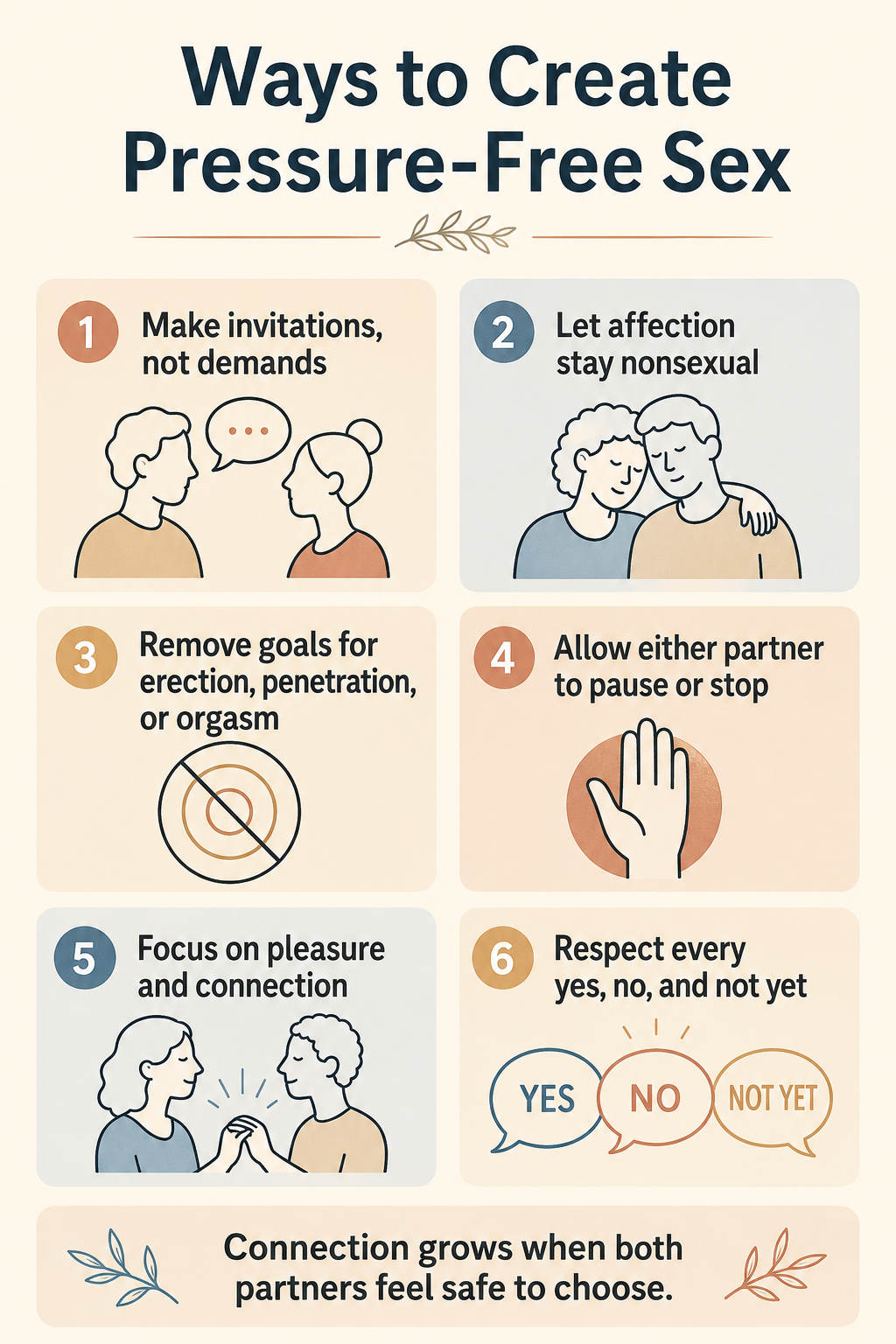
When Should a First Responder Seek Help for Intimacy Concerns?
A first responder should consider seeking help when intimacy concerns cause personal distress, affect the relationship, feel difficult to control, or continue despite attempts to address them. You do not need to wait until your relationship is in crisis, your symptoms become severe, or your partner threatens to leave.
Seeking help does not mean that you are weak, cannot handle the job, or have failed your partner. It means that something important deserves attention.
What Signs Suggest That It Is Time to Seek Support?
It may be helpful to talk with a professional if you notice:
A significant or persistent change in sexual desire
Difficulty becoming aroused, lubricating, or reaching orgasm
Pain, numbness, or discomfort during sexual activity
Feeling triggered, panicked, or emotionally far away during sex
Avoiding all touch because you fear it will lead to sex
Using sex, pornography, or masturbation as your main way of escaping painful feelings
Sexual behavior that feels difficult to control
Secrecy or behavior that conflicts with your relationship agreements
Increasing conflict about sexual frequency or rejection
Feeling pressured to have sex or pressuring your partner
Emotional numbness that makes it difficult to feel love, pleasure, or connection
Intrusive memories, nightmares, hypervigilance, or difficulty sleeping
Alcohol or substance use that is affecting intimacy
Ongoing shame about your body or sexual functioning
Feeling as though you and your partner are becoming strangers
The concern does not have to happen every time you are intimate. If you are changing your life or avoiding connection because you are afraid it might happen, that is also a valid reason to seek support.
Do You Need a Diagnosis Before Asking for Help?
No. You do not need to know whether the concern is caused by PTSD, stress, medication, hormones, a medical condition, relationship strain, or something else before reaching out.
A qualified provider can help you understand the factors that may be contributing. Sexual concerns often have more than one cause. For example, erectile difficulties may involve exhaustion, anxiety, medication, cardiovascular health, and performance pressure at the same time.
You are allowed to ask for help even if you cannot fully explain what is wrong.
When Should You See a Medical Provider?
Sexual changes should not automatically be assumed to be psychological. Consider talking with a primary-care provider, urologist, gynecologist, or other qualified medical professional if the concern is new, persistent, painful, or physically unusual.
Medical evaluation may be especially important when you experience:
Erectile difficulties during both partnered sex and masturbation
A sudden change in erections, arousal, or genital sensation
Penile curvature or a new lump
Genital or pelvic numbness
Urinary symptoms
Bleeding
Changes following an injury, illness, or surgery
Symptoms of hormonal changes
Sexual changes after starting a medication
Severe fatigue, loud snoring, gasping during sleep, or daytime sleepiness
Erectile difficulties can be influenced by blood-vessel, nerve, hormonal, medication, and mental health factors. A medical professional may use your medical, sexual, and mental health history, a physical examination, and testing when appropriate to understand the cause.
Do not stop taking prescribed medication without consulting the provider who prescribed it.
When Can a Trauma Therapist or EMDR Help?
A trauma therapist or EMDR therapy may be helpful when intimacy concerns are connected to:
Intrusive memories or images from work
Nightmares or difficulty sleeping
Hypervigilance
Feeling emotionally numb
Avoiding reminders of difficult calls
Dissociation or feeling disconnected from your body
Strong reactions to touch, sounds, smells, or sexual positions
Shame, guilt, grief, or moral injury
Feeling unable to leave work mode
Beliefs such as “I am not safe,” “I have to remain in control,” or “I should have done more”
EMDR may help the brain reprocess traumatic experiences so the memories feel less immediate and overwhelming. You do not need to describe every graphic detail to your partner in order to receive trauma treatment.
The National Center for PTSD emphasizes that early treatment may prevent PTSD symptoms from worsening, but it is also never too late to receive effective treatment.
When Can Sex Therapy Help?
Sex therapy may be helpful when the primary concern involves desire, arousal, erections, orgasm, sexual pain, performance anxiety, sexual communication, trauma triggers, or differences in what partners want.
A trauma-informed sex therapist can help you:
Understand how stress affects sexual response
Reduce pressure surrounding erections or orgasm
Communicate boundaries and desires
Rebuild touch gradually
Expand your definition of sex
Address shame about sexual functioning
Explore sex being used as a coping strategy
Create pressure-free opportunities for pleasure
Coordinate with medical or pelvic-floor providers
Sex therapy does not require you to engage in sexual activity during a session. Therapy involves conversation, education, and exercises completed privately outside the session if they feel appropriate.
When Can Couples Therapy Help?
Couples sex therapy can help when the concern has become a cycle of pressure, rejection, withdrawal, resentment, or silence.
You do not need to wait until you are considering separation. It may be time to seek help when:
Every conversation about intimacy becomes an argument
One partner feels constantly rejected
The other partner feels constantly pressured
Affection has disappeared
Trust has been damaged
Either partner feels emotionally alone
The relationship revolves around shifts, chores, or parenting
You struggle to reconnect after time apart
One or both partners no longer feel safe expressing needs
A therapist familiar with trauma and first-responder culture can help both partners understand how the work affects the relationship without blaming either person.
What Should You Look for in a Therapist?
Consider looking for a therapist who:
Understands first-responder culture and occupational trauma
Is comfortable discussing sex directly
Uses a trauma-informed approach
Respects all levels of sexual desire
Understands consent and sexual pressure
Has training in couples therapy, sex therapy, EMDR, or your specific concern
Collaborates with medical providers when needed
Does not treat sex as an obligation
Helps you define what a satisfying intimate relationship means to you
You can ask a potential therapist about their experience before scheduling. You deserve a provider who will not shame your sexuality, pressure you to disclose before you are ready, or assume that increasing sexual frequency is always the goal.
When Is Immediate Help Needed?
Seek urgent support if you are experiencing thoughts of suicide, feeling unable to stay safe, using substances in a life-threatening way, engaging in dangerous sexual behavior, or fearing that you may hurt yourself or someone else.
In the United States, you can call or text the 988 Suicide & Crisis Lifeline at 988 for free, confidential support at any time. If there is immediate danger, call 911 or go to the nearest emergency department.
Threats, intimidation, sexual coercion, and physical violence also require immediate attention. Trauma can help explain why someone is struggling, but it does not make abuse acceptable. Prioritize the safety of everyone involved.
You do not need to reach a breaking point before asking for help. Intimacy concerns are common, and many are treatable. Reaching out early can help you protect your health, your relationship, and your ability to experience connection without pressure or shame.
How Can Sex Therapy Help First Responders and Their Partners?
Sex therapy can help first responders and their partners understand how stress, trauma, exhaustion, relationship patterns, medical concerns, and sexual pressure may be affecting intimacy. It provides a place to discuss sexual concerns openly, learn practical tools, and rebuild connection without treating sex as an obligation or measure of the relationship’s success.
Sex therapy is not only about increasing how often a couple has has has sex. The goal may be to reduce performance anxiety, make touch feel safer, communicate more clearly, restore affection, address differences in desire, or help both partners feel less alone.
What Concerns Can Sex Therapy Address?
First responders and their partners may seek sex therapy for concerns such as:
Difficulty becoming aroused or lubricating
Difficulty reaching orgasm
Feeling numb, distracted, or disconnected during sex
Trauma triggers related to touch
Avoiding affection because it may lead to sex
Using sex sex, pornography, or masturbation to cope
Feeling pressured to have sex
Conflict about sexual frequency
Shame about sexual interests or functioning
Difficulty communicating desires and and boundaries
Loss of emotional or physical connection
Rebuilding trust after secrecy or broken agreements
Adjusting to changes caused by medication, injury, illness, or aging
You do not have to wait wait until intimacy has completely disappeared. Sex therapy can also help when something simply feels different and you are unsure how to talk about it.
What Happens During Sex Therapy?
Sex therapy is a form of talk therapy. There is no sexual activity or physical examination during sessions.
A sex therapist may ask about:
Your current concerns and goals
When the concern began
Stress, trauma, sleep, and work schedules
-- Medical conditions and medications
Your relationship history
Messages you learned about sex
What helps you feel emotionally and physically safe
Experiences of pain, pressure, shame, or disconnection
How you and your partner communicate about intimacy
What a satisfying sexual relationship would mean to you you
You remain in control of what you share. A trauma-informed therapist should not pressure you to describe disturbing calls or sexual experiences before you are ready.
Therapy may include education, communication exercises, grounding skills, or activities completed privately privately between sessions. Any suggested exercise should be optional and adjusted to your boundaries, relationship agreements, physical health, and trauma history.
How Can Sex Therapy Reduce Performance Pressure?
Stress can make it more difficult for the body to move into sexual arousal. A first responder may care deeply about their partner and still experience low desire, erectile changes, delayed orgasm, difficulty lubricating, or trouble staying present.
When these experiences are interpreted as failure, each sexual encounter can begin to feel like a test. The person may monitor their body, worry about disappointing their partner, or rush rush rush to prove that everything is working. That pressure can interfere with arousal even more.
Sex therapy can help couples separate sexual response from love, attraction, and masculinity or femininity. It may also help them expand their definition of successful intimacy.
Success does not have to require:
An erection that remains firm
Penetration
Orgasm
Spontaneous desire
A specific amount of time
A particular number of sexual encounters
Both partners wanting the same thing at the same moment
Instead, success may mean that the touch was wanted, both partners felt respected, and and they were able to remain honest about what felt good or uncomfortable.
How Can Sex Therapy Help With Trauma Triggers?
First responders may experience reactions to touch, sounds, smells, positions, lighting, or a feeling of being physically restricted. They may become tense, pan pan panicked, numb, frozen, or emotionally far away during intimacy.
Sex therapy can help identify identify these responses and create more predictability and choice. This may include:
Asking before initiating touch
Approaching from a visible direction
Agreeing on words for pausing or stopping
Keeping certain lights on
Avoiding specific positions or sensations
Checking in when someone becomes quiet or still
Pract Practicing grounding before and during touch
Allowing a partner to guide the pace
Beginning with nonsexual areas of the body
Creating a plan for what to do if a trigger occurs
The goal is not to push through discomfort. It is to help the nervous nervous nervous system learn that present-day intimacy can include consent, control, safety, and the ability to stay present in your body.
When sexual concerns are connected to traumatic memories, sex therapy may be combined with EMDR or another form of trauma therapy. Trauma treatment can address the experiences underneath the reaction, while sex therapy helps the person apply healing within their intimate life.
How Can Sex Therapy Help Couples Communicate?
Couples often attach painful meanings to changes in intimacy.
A partner may think:
“You are no longer attracted to me.”
“You do not love me.”
“There must be someone else.”
“My needs do not matter.”
The first responder may think:
“I am failing my partner.”
“I should be able to control this.”
“If I show affection, I will be expected to have sex.”
“It is safer to avoid the conversation.”
Couples sex therapy can help both partners explain what is happening beneath their reactions. Instead of arguing about how often they have sex, they may begin discussing loneliness, exhaustion, fear, shame, pressure, or the need for reassurance.
A therapist can help couples practice language such as:
“I still find you attractive, but my body has been overwhelmed.”
“I miss feeling close to you, and I do not want you to feel pressured.”
“I would like affection tonight, but I do not want sexual activity.”
“I need time to decompress, and I want us to reconnect afterward.”
“I feel disappointed, but I respect your answer.”
Clear communication cannot guarantee that both partners will always want the same thing. It can help them respond to differences without turning them into rejection, blame, or obligation.
How Can Sex Therapy Help With Mismatched Desire?
Differences in desire are common. They do not automatically mean that the relationship is unhealthy or that either partner is broken.
Shift work, disrupted sleep, chronic stress, medication, hormonal changes, parenting, relationship conflict, and trauma symptoms can all affect desire. One partner may want sex to feel connected after time apart, while the other needs emotional connection and rest before sexual interest becomes possible.
Sex therapy can help couples understand the type of desire each person experiences, identify what supports or blocks interest, and create opportunities for intimacy that do not require a guaranteed outcome.
This might include:
Planning private time without requiring sex
Creating a menu of different ways to connect
Protecting affection from sexual expectations
Exploring responsive desire
Making sexual invitations easier to accept or decline
Finding ways to handle disappointment respectfully
Creating more flexible definitions of sex
Addressing resentment outside the bedroom
The goal is not to pressure the lower-desire partner into wanting more or shame the higher-desire partner for wanting connection. It is to help both people understand their needs and make mutually respectful choices.
How Can Sex Therapy Rebuild Physical Connection?
When touch has become associated with pressure, conflict, or fear, couples may need to rebuild physical connection gradually.
A sex therapist may introduce exercises such as sensate focus. These exercises allow partners to explore agreed-upon touch without requiring arousal, penetration, or orgasm. Couples practice noticing physical sensations, communicating preferences, and stopping when needed.
They may begin with fully clothed or nonsexual touch and progress only when both partners feel comfortable. For couples affected by trauma, pain, or dissociation, the exercise should be carefully adapted.
Sex therapy may also help couples create different categories of connection:
Emotional connection, such as talking or sharing a meal
Affectionate connection, such as hugging or holding hands
Sensual connection, such as massage or extended kissing
Sexual connection, such as mutual touch, oral sex, toys, or penetration
Choosing one form of connection does not require progressing to another. Learning that touch can remain within the agreed boundary helps restore trust.
Can Sex Therapy Help When Sex Is Used to Cope?
Yes. Sex therapy can help someone explore sexual behavior that has become a way to manage stress, intrusive memories, loneliness, numbness, or emotional pain.
The therapist’s role is not to shame sexual desire or automatically label frequent sexual behavior as unhealthy. Treatment focuses on whether the person still experiences choice and whether the behavior fits their values and relationship agreements.
Therapy may help the first responder:
Identify triggers for sexual urges
Understand what relief the behavior provides
Reduce secrecy and shame
Develop additional coping strategies
Repair broken relationship agreements
Communicate needs without pressuring a partner
Create sexual experiences based on pleasure and connection
Address trauma or emotional pain underneath the behavior
The goal may not be to eliminate sex, pornography, or masturbation. It may be to create enough emotional support and coping options that sexual behavior is no longer the only available escape.
Does the First Responder Have to Attend With Their Partner?
No. Sex therapy can be individual or relational.
Individual sex therapy may be helpful when you want to address performance anxiety, trauma triggers, sexual shame, compulsive patterns, pain, or difficulty understanding your own desire before involving a partner.
Couples sex therapy may be helpful when the concern affects communication, consent, trust, affection, or differences in desire. Both partners can learn how the job affects their relationship and how to respond without blaming each other.
In some situations, partners may attend certain sessions together while also receiving individual support from separate therapists. Your providers can help determine which arrangement protects privacy, safety, and treatment goals.
Can Sex Therapy Address Medical Concerns?
Sex therapy can address the emotional and relationship effects of medical concerns, but it does not replace medical evaluation.
A sex therapist may collaborate with:
Primary-care providers
Urologists
Gynecologists
Pelvic-floor physical therapists
Psychiatrists or medication prescribers
Sleep specialists
Pain specialists
Other trauma or mental health providers
For example, erectile difficulties may involve performance anxiety, poor sleep, medication effects, cardiovascular health, or hormonal changes. Pain during sex may involve fear and muscle tension as well as a medical or pelvic-floor condition.
Addressing both physical and psychological factors often provides a more complete path forward.
What Should First Responders Look for in a Sex Therapist?
A helpful therapist should be able to discuss sex directly without becoming judgmental, embarrassed, or overly focused on sexual frequency. Consider looking for someone who:
Has specialized training in sex therapy
Understands trauma and the nervous system
Is familiar with first-responder culture
Recognizes that sexual concerns can have medical and psychological causes
Respects consent and relationship boundaries
Does not treat sex as a duty
Is comfortable discussing desire, erections, orgasm, pain, pornography, and sexual interests
Can work with couples without deciding that one partner is the problem
Collaborates with medical providers when appropriate
Adjusts exercises for trauma, dissociation, and pain
It is appropriate to ask a therapist about their training and experience before beginning treatment.
What Can First Responders and Their Partners Gain From Sex Therapy?
Sex therapy cannot remove difficult shifts, change work schedules, or guarantee that partners will always have the same level of desire. It can help couples stop treating their sexual concern as evidence that the relationship is failing.
Through couples sex therapy, partners may learn to:
Understand what is happening in their bodies
Talk about intimacy without immediately arguing
Separate affection from sexual obligation
Recognize and interrupt the pursue-and-withdraw cycle
Respond to trauma triggers with greater safety
Reduce shame surrounding sexual functioning
Make room for both closeness and decompression
Repair trust and broken agreements
Experience pleasure without performance demands
Ask for what they need while respecting each other’s boundaries
First-responder work may change how a person experiences safety, vulnerability, touch, and connection. Sex therapy can help the couple create an intimate relationship that responds to those changes with curiosity and compassion.
The goal is not to force intimacy back to what it was before. It is to help both partners build a version of connection in which they feel safe, respected, understood, and free to choose.
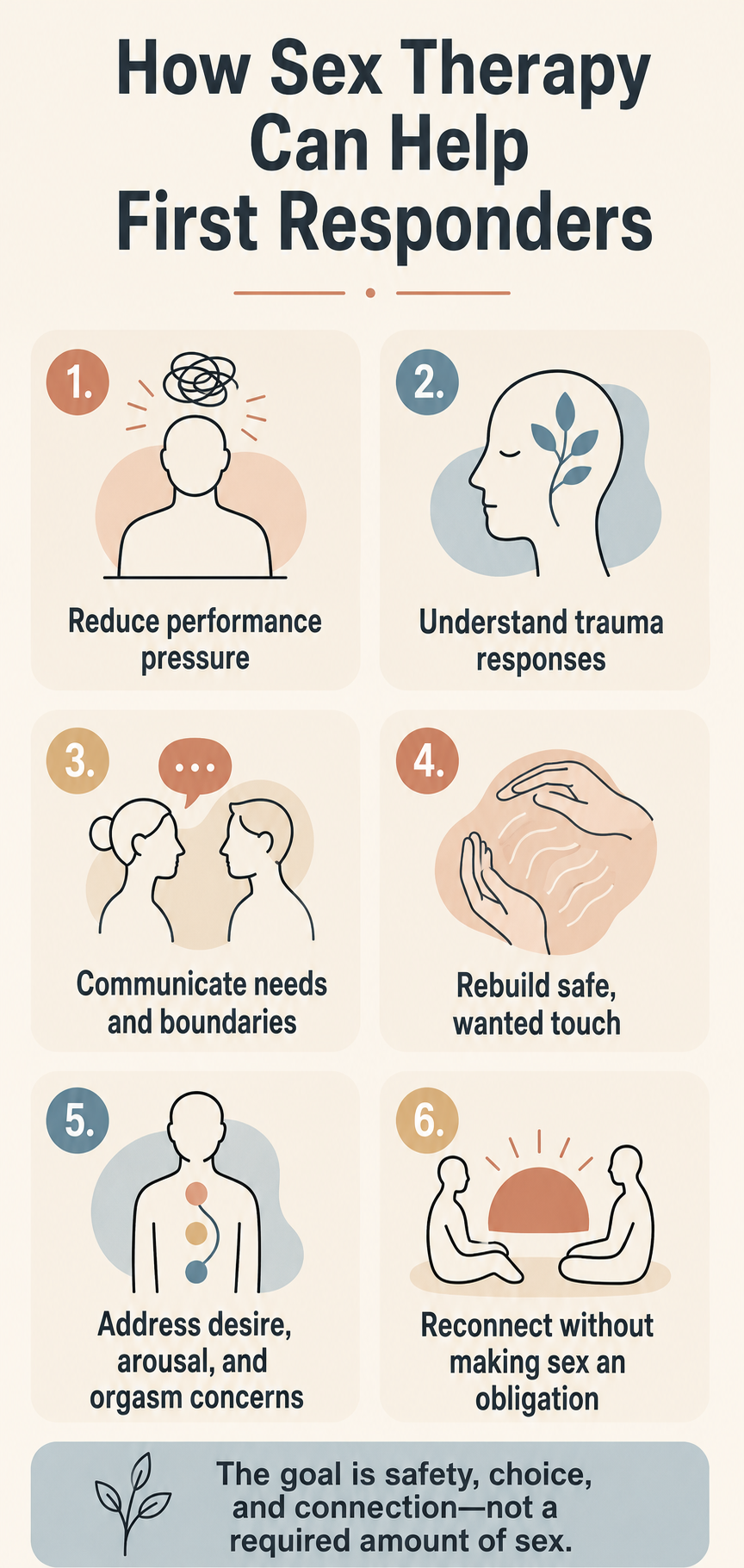
How Can First Responders Find a Therapist Who Understands Their Work?
First responders can find the right therapist by looking for someone who understands trauma, shift work, occupational culture, confidentiality concerns, and the effects of the job on relationships and intimacy. The therapist does not necessarily need to have worked as a first responder, but they should be willing to understand the realities of the profession without judging, romanticizing, or minimizing them.
Finding the right therapist may take more than one consultation. You are allowed to ask questions, compare providers, and decide that someone is not the right fit.
Why Does Understanding First-Responder Culture Matter?
First-responder work includes experiences that may be difficult to explain to someone outside the profession. These may include:
Repeated exposure to death, violence, injury, and grief
Pressure to remain calm during emergencies
Shift work and chronic sleep disruption
Fear of being viewed as unreliable or unfit for duty
Loyalty to coworkers
Dark humor as a coping strategy
Difficulty leaving work mode
Concern about burdening family members
Public expectations to remain strong
Exposure to situations that cannot be discussed freely
Fear that seeking help will affect employment or reputation
A therapist who understands this culture is less likely to mistake every coping strategy for a disorder or expect a first responder to process experiences in the same way as someone with a different type of job.
Cultural understanding should not mean excusing harmful behavior. Trauma and occupational stress can explain withdrawal, anger, substance use, or sexual difficulties, but they do not excuse intimidation, coercion, violence, or controlling a partner.
What Training Should a Therapist Have?
The right training depends on the concerns you want to address. Look for a licensed mental health professional with experience in one or more of the following areas:
Occupational trauma
PTSD and traumatic stress
EMDR or another evidence-based trauma treatment
Grief and traumatic loss
Moral injury
Substance use
Anxiety, depression, or sleep concerns
Dissociation
Suicidal thoughts and crisis intervention
A therapist may have experience working with firefighters, police officers, paramedics, emergency medical technicians, dispatchers, corrections officers, emergency-room professionals, or military populations.
Experience with military clients can be useful, but military and first-responder cultures are not identical. Ask whether the therapist has specifically worked with people in your profession.
What If the Main Concern Is Intimacy?
If trauma or work stress is affecting desire, erections, orgasm, sexual pain, arousal, touch, or communication, consider a therapist with training in both trauma and sexuality.
A trauma-informed sex therapist may help with:
Difficulty becoming aroused or reaching orgasm
Sexual pain
Dissociation during sex
Trauma triggers related to touch
Avoidance of affection
Using sex or pornography to cope
Pressure surrounding sexual frequency
Rebuilding physical connection
Communicating boundaries and desires
Sex therapy is talk therapy. Sexual activity and physical examinations do not occur during sessions.
If one therapist does not have all the needed training, providers can sometimes collaborate. For example, a first responder may work with a trauma therapist while attending couples or sex therapy with a partner.
Where Can First Responders Look for a Therapist?
Possible places to begin include:
A state licensing-board directory
Professional therapist directories
EMDR or trauma-treatment directories
Sex-therapy directories
First-responder peer-support programs
Employee assistance programs
Department wellness programs
Trusted medical providers
First-responder organizations
Recommendations from colleagues who have attended therapy
Local or statewide psychological associations
A peer-support officer or employee assistance program may provide a referral, but you are not required to use the first therapist suggested. Ask whether you can select an independent provider if you are concerned about privacy or fit.
Telehealth may expand your options, especially if you live in a smaller community or do not want to attend a local office. The therapist generally must be legally permitted to practice in the state where you are physically located during the session.
What Questions Should You Ask During a Consultation?
Many therapists offer a brief phone or video consultation before the first appointment. You do not need to share your full history during this call.
You might ask:
“How much experience do you have working with first responders?”
“Which first-responder populations have you worked with?”
“How do you approach cumulative trauma and repeated exposure?”
“What trauma treatments are you trained to provide?”
“How do you work with people who are hesitant to discuss emotions?”
“Do you understand concerns about fitness for duty and confidentiality?”
“How do you approach dark humor or emotional compartmentalization?”
“Do you have experience with moral injury?”
“How do you address trauma that affects sex and intimacy?”
“Do you work with couples?”
“How do you approach differences in sexual desire?”
“What is your experience with dissociation?”
“How do you involve partners while protecting individual privacy?”
“Do you offer telehealth or appointments around shift schedules?”
“How will we decide whether treatment is helping?”
A therapist should be able to explain their approach in language you understand. Be cautious if the response consists mainly of credentials or technical terms without a clear explanation of what therapy will actually involve.
What Should You Ask About Confidentiality?
Fear about confidentiality prevents many first responders from seeking support. Before sharing sensitive information, ask the therapist to explain the limits of confidentiality.
You might ask:
“Under what circumstances would you have to break confidentiality?”
“Will my department know that I am attending therapy?”
“Who can access my records?”
“How are telehealth sessions and messages protected?”
“What information is shared if I use insurance?”
“Are you connected to my department or employee assistance program?”
“Would you ever communicate with my employer?”
“What happens if I am involved in a fitness-for-duty evaluation?”
“How do you respond if a client reports suicidal thoughts?”
Therapy and a fitness-for-duty evaluation are different services. A therapist providing confidential treatment may have a different role and responsibility from an evaluator hired to determine whether someone can safely perform their job.
Ask the provider to explain their role before treatment begins. If an employer, insurance company, attorney, or other party requests information, ask what can be shared and whether your written permission is required.
Confidentiality has legal exceptions, which can vary by location. These commonly involve immediate safety concerns, suspected abuse of a child or vulnerable adult, or a court order. A therapist should explain the rules that apply where you live.
What Does a Good Fit Feel Like?
A good therapeutic relationship does not require you to feel completely comfortable immediately. Discussing trauma, sexuality, relationships, or work difficulties may still feel vulnerable.
However, you should gradually feel that the therapist:
Listens without rushing you
Respects the importance of your work
Does not seem shocked by what you share
Takes your symptoms seriously
Explains treatment clearly
Allows you to ask questions
Respects your pace and boundaries
Does not demand graphic details
Understands both individual and relationship effects
Can discuss sex without embarrassment or judgment
Welcomes feedback when something is not helping
Treats you as a whole person rather than a diagnosis
The therapist should recognize your strengths without using them to minimize your pain. Being capable during an emergency does not mean that you should be unaffected afterward.
What Are Signs That a Therapist May Not Be the Right Fit?
Consider looking for another provider if a therapist:
Glorifies first-responder work or treats you like a hero instead of a person
Criticizes the profession without understanding it
Appears fascinated by graphic details
Pressures you to disclose before trust has developed
Assumes that all first responders have PTSD
Minimizes your symptoms because trauma is “part of the job”
Treats dark humor as proof that you lack empathy
Promises a quick cure
Uses a trauma method without explaining it or preparing you
Dismisses medical contributors to sexual difficulties
Treats sex as an obligation within a relationship
Blames one partner for every relationship problem
Does not respect consent or boundaries
Cannot clearly explain confidentiality
Makes you feel ashamed of your coping strategies, sexuality, or emotional responses
Therapy can be challenging, and discomfort does not always mean that the therapist is ineffective. The important question is whether the discomfort comes from meaningful therapeutic work or from feeling judged, pressured, unsafe, or misunderstood.
What If You Do Not Connect With the First Therapist?
It is okay to change therapists. A provider can be skilled and still not be the right person for you.
You might tell the therapist:
“I do not think this approach is the right fit for me. Can you recommend someone with more experience working with first responders?”
“I need someone with more training in sexual concerns and trauma.”
“I do not feel comfortable enough to continue, so I am going to explore other options.”
You do not need to remain in an unhelpful therapeutic relationship to prove that you are committed to healing. If possible, tell the therapist what is not working. A responsive therapist may be able to adjust the approach. If the fit still feels wrong, seeking someone else is reasonable.
How Can Partners Be Included in Treatment?
A first responder may begin therapy individually and later invite their partner to one or more sessions. Couples therapy may also begin from the start when the main concerns involve communication, intimacy, trust, or recurring conflict.
Before including a partner, ask:
What information will remain private?
Will the therapist keep secrets between partners?
What are the goals of joint sessions?
Will individual and couples sessions be provided by the same therapist?
How will safety concerns be addressed?
Does the therapist understand sexual pressure and consent?
Does the therapist have experience with first-responder couples?
A partner should not be expected to become the first responder’s therapist. Joint treatment should give both people room to discuss how the work affects them.
How Can Someone Begin if Asking for Help Feels Difficult?
You do not need to explain everything in the first message. A simple request is enough:
“I am a first responder, and work stress has started affecting my sleep, relationship, and intimacy. Do you have experience treating these concerns?”
You can also write:
“I am looking for a trauma-informed therapist who understands first-responder culture. I am particularly concerned about staying present and connected with my partner.”
The first appointment does not commit you to months of treatment. It is an opportunity to ask questions, explain what you want help with, and decide whether the therapist feels like someone you can work with.
The right therapist will not expect you to stop being strong, abandon the culture of your profession, or disclose everything immediately. They will help you understand how the work has affected you while respecting the skills and protective responses that helped you survive it.
Finding a therapist who understands first-responder work may take persistence, but you deserve support that makes room for your career, your nervous system, your relationships, and your need for privacy.
Most Frequently Asked Questions About First Responders and Intimacy?
1. How Does First-Responder Work Affect Sex and Intimacy?
First-responder work can affect intimacy through chronic stress, traumatic exposure, unpredictable schedules, disrupted sleep, and difficulty transitioning out of work mode. Some first responders experience low desire or emotional numbness, while others seek sex more often for comfort, connection, or relief. These changes do not automatically mean attraction or love has disappeared.
2. Can PTSD Cause Low Sex Drive in First Responders?
Yes. PTSD can make the nervous system remain focused on detecting danger, leaving less capacity for relaxation, pleasure, and sexual desire. Depression, exhaustion, medication, alcohol use, relationship conflict, and hormonal or medical concerns can also contribute. PTSD has been associated with changes in desire, sexual satisfaction, and overall sexual functioning.
3. Why Is My First-Responder Partner Emotionally Distant?
Emotional distance may be a protective response to repeated exposure to suffering and emergencies. A first responder may compartmentalize emotions to function at work and then struggle to become emotionally available at home. Withdrawal does not necessarily mean they no longer care, but continued distance still deserves attention because it can leave both partners feeling alone.
4. Why Do First Responders Struggle With Intimacy?
Intimacy requires vulnerability, presence, and the ability to lower your guard. These skills can feel difficult after spending a shift staying alert, controlling emotions, and making rapid decisions. Exhaustion, traumatic memories, fear of burdening a partner, and discomfort losing control may all interfere with emotional or physical closeness.
5. Can Trauma Cause Erectile Dysfunction or Performance Anxiety?
Yes. Trauma, stress, and hypervigilance can interfere with the relaxation and concentration involved in sexual arousal. After one erection change, fear that it will happen again may create a cycle of monitoring, pressure, and additional difficulty. Persistent erectile changes should also be medically evaluated because medications, cardiovascular health, hormones, sleep problems, and other physical factors may contribute.
6. Why Is It Difficult to Relax During Sex After a Traumatic Call?
The body may remain in survival mode after the immediate emergency has ended. Sounds, smells, images, or physical sensations can interrupt sexual activity, even when they are unrelated to the partner. Decompression, grounding, rest, predictable touch, and permission to pause can help the nervous system recognize that the person is now home and safe.
7. Can PTSD Make Someone Avoid Touch or Affection?
Yes. Touch may feel overstimulating, startling, restrictive, or connected to a traumatic memory. Some first responders also avoid affection because they worry it will create an expectation for sex. Asking before touching, approaching from the front, and agreeing that affection does not have to become sexual can make closeness feel safer.
8. Why Does My First-Responder Partner Want Space After Work?
A first responder may need time to transition out of a role that requires constant alertness, responsibility, and emotional control. Wanting space is not necessarily rejection. It becomes easier for a partner to tolerate when the first responder communicates clearly, gives a specific timeframe, and follows through on reconnecting afterward.
9. How Does Shift Work Affect Intimacy and Relationships?
Shift work can disrupt sleep, hormones, routines, childcare, household responsibilities, and opportunities for private time. Partners may have energy for connection at different times or go days without meaningful contact. Small rituals—such as eating together after a shift, scheduling private time, or reconnecting after decompression—can help protect the relationship.
10. Can Lack of Sleep Cause Low Libido or Sexual Difficulties?
Yes. Poor sleep can reduce energy, interest in sex, emotional availability, and the body’s ability to respond sexually. Loud snoring, gasping during sleep, breathing that repeatedly stops, morning headaches, or severe daytime sleepiness may indicate sleep apnea and should be discussed with a medical provider.
11. Why Do Some First Responders Feel Numb During Sex?
Emotional numbness may develop when the nervous system reduces access to feelings in order to manage overwhelming experiences. Unfortunately, the mind cannot always block fear and grief while leaving pleasure untouched. A first responder may care about their partner but feel disconnected from their emotions or body. Trauma therapy can help restore emotional range gradually.
12. Can Trauma Make It Difficult to Become Aroused or Reach Orgasm?
Yes. Arousal and orgasm generally require enough safety and concentration to remain connected to physical sensations. Hypervigilance, intrusive memories, dissociation, shame, medication, and performance pressure can interrupt that process. Removing orgasm and penetration goals can reduce pressure, while medical and therapeutic evaluation can identify additional contributing factors.
13. Can Sex or Pornography Become a Way of Coping With Trauma?
Yes. Sex, pornography, or masturbation may temporarily provide relief, distraction, validation, intensity, or a sense of control. This is not automatically unhealthy. It may need attention when it feels difficult to control, creates secrecy, violates relationship agreements, causes harm, or becomes the person’s only reliable way to escape painful emotions.
14. How Can First Responders Talk to Their Partners About Intimacy?
Choose a calm time outside the bedroom and begin with what you have noticed. For example: “I have been less interested in sex after difficult shifts, but it is not because I am no longer attracted to you.” Offer reassurance, explain what support would help, and invite your partner to share how the change has affected them.
15. How Can Couples Rebuild Intimacy After First-Responder Trauma?
Begin by removing pressure to have sex or return to a previous level of sexual activity. Couples can rebuild connection through conversation, affection, massage, kissing, or other mutually chosen touch without requiring escalation. Intimacy becomes safer when either partner can pause, stop, or decline without facing anger, guilt, or withdrawal.
16. How Does First-Responder PTSD Affect a Spouse or Partner?
A partner may experience loneliness, fear, increased household responsibilities, disrupted sleep, or uncertainty about how to help. They may begin monitoring the first responder’s moods or avoiding topics that could cause conflict. Supporting a first responder should not require the partner to ignore their own needs, become their therapist, or accept unsafe behavior.
17. Can a First-Responder Spouse Experience Secondary Trauma?
Yes. Partners may experience anxiety, sleep problems, emotional exhaustion, or increased alertness after hearing about traumatic events, witnessing symptoms, or fearing for the first responder’s safety. This is sometimes called secondary traumatic stress. Partners deserve their own support, even if they were not physically present during the emergency.
18. Can Sex Therapy Help First Responders and Their Partners?
Yes. Sex therapy can address desire differences, erections, orgasm, sexual pain, trauma triggers, performance anxiety, communication, and pressure surrounding sex. It is a form of talk therapy; sexual activity does not occur during sessions. A trauma-informed sex therapist can also help couples rebuild touch in ways that emphasize safety, consent, and choice.
19. Can EMDR Improve Intimacy After Trauma?
EMDR may help when unresolved memories, body sensations, or trauma-related beliefs interfere with intimacy. As those memories become less emotionally intense, a person may find it easier to remain present, tolerate vulnerability, and experience wanted touch. EMDR cannot create desire on command, and it should never be used to make someone tolerate sexual activity they do not want.
20. How Can First Responders Find a Trauma-Informed Therapist Who Understands Their Work?
Look for a licensed therapist with experience in first-responder culture, occupational trauma, PTSD, or cumulative traumatic exposure. If intimacy is the primary concern, ask about additional training in sex therapy or couples work. During a consultation, ask about confidentiality, experience with first responders, treatment methods, shift-friendly scheduling, and how the therapist approaches trauma without requiring immediate graphic disclosure.
About the Author
Holly Nelson, LPC, is a licensed professional counselor and trauma therapist at The Connection Couch in Scottsdale, Arizona.
Holly’s work includes supporting first responders and their partners with concerns such as low desire, erectile difficulties and performance anxiety, painful intercourse, difficulty reaching orgasm, dissociation during sex, trauma triggers, mismatched desire, and rebuilding intimacy without pressure. She also has extensive experience supporting survivors of sexual assault, trafficking, and abuse within relationships.
Her approach combines trauma-informed care, EMDR, sexual-health education, and practical relationship tools. Holly believes healing intimacy is not about forcing the body to respond or reaching a required amount of sex. It is about creating greater safety, choice, communication, pleasure, and connection.
Holly provides therapy to clients in Arizona, including telehealth services. She also creates accessible sexual-health and relationship education through social media. YouTube, Instagram, & TikTok: @sextherapywithholly.
References
American College of Obstetricians and Gynecologists. (n.d.). When sex is painful. https://www.acog.org/womens-health/faqs/when-sex-is-painful
American Psychological Association. (2025). Clinical practice guideline for the treatment of posttraumatic stress disorder in adults. https://www.apa.org/ptsd-guideline
Berger, W., Coutinho, E. S. F., Figueira, I., Marques-Portella, C., Luz, M. P., Neylan, T. C., Marmar, C. R., & Mendlowicz, M. V. (2012). Rescuers at risk: A systematic review and meta-regression analysis of the worldwide current prevalence and correlates of PTSD in rescue workers. Social Psychiatry and Psychiatric Epidemiology, 47, 1001–1011. https://pubmed.ncbi.nlm.nih.gov/21681455/
Bird, E. R., Piccirillo, M., Garcia, N., Blais, R., & Campbell, S. B. (2021). Relationship between posttraumatic stress disorder and sexual difficulties: A systematic review of veterans and military personnel. The Journal of Sexual Medicine, 18(11), 1893–1906. https://pubmed.ncbi.nlm.nih.gov/34257051/
Centers for Disease Control and Prevention. (2026). Getting tested for sexually transmitted infections. https://www.cdc.gov/sti/testing/
Godfrey, D. A., Zegel, M., Babcock, J. C., & Vujanovic, A. A. (2022). Posttraumatic stress disorder and relationship satisfaction among firefighters: The role of emotion-regulation difficulties. Journal of Aggression, Maltreatment & Trauma, 31(3), 356–369. https://pmc.ncbi.nlm.nih.gov/articles/PMC9122019/
National Center for PTSD. (n.d.). Common reactions after trauma. U.S. Department of Veterans Affairs. https://www.ptsd.va.gov/understand/isitptsd/common_reactions.asp
National Center for PTSD. (n.d.). How does PTSD affect families? U.S. Department of Veterans Affairs. https://www.ptsd.va.gov/family/effect_families.asp
National Center for PTSD. (n.d.). PTSD and the family. U.S. Department of Veterans Affairs. https://www.ptsd.va.gov/professional/treat/specific/ptsd_family.asp
National Center for PTSD. (n.d.). Eye movement desensitization and reprocessing for PTSD. U.S. Department of Veterans Affairs. https://www.ptsd.va.gov/professional/treat/txessentials/emdr_pro.asp
National Heart, Lung, and Blood Institute. (2025). Sleep apnea symptoms. https://www.nhlbi.nih.gov/health/sleep-apnea/symptoms
National Institute of Diabetes and Digestive and Kidney Diseases. (n.d.). Diagnosis of erectile dysfunction. https://www.niddk.nih.gov/health-information/urologic-diseases/erectile-dysfunction/diagnosis
National Institute of Diabetes and Digestive and Kidney Diseases. (n.d.). Symptoms and causes of erectile dysfunction. https://www.niddk.nih.gov/health-information/urologic-diseases/erectile-dysfunction/symptoms-causes
National Institute of Diabetes and Digestive and Kidney Diseases. (n.d.). Treatment for erectile dysfunction. https://www.niddk.nih.gov/health-information/urologic-diseases/erectile-dysfunction/treatment
Sharp, M. L., Solomon, N., Harrison, V., Gribble, R., Cramm, H., Pike, G., & Fear, N. T. (2022). The mental health and wellbeing of spouses, partners and children of emergency responders: A systematic review. PLOS ONE, 17(6), e0269659. https://doi.org/10.1371/journal.pone.0269659
van Woudenberg, C., Voorendonk, E. M., Bongaerts, H., Zoet, H. A., Verhagen, M., Lee, C. W., van Minnen, A., & de Jongh, A. (2023). The impact of intensive trauma-focused treatment on sexual functioning in individuals with PTSD. Frontiers in Psychology, 14, 1191916. https://doi.org/10.3389/fpsyg.2023.1191916
Zegel, M., Babcock, J. C., Vujanovic, A. A., & Godfrey, D. A. (2024). Firefighter relationship satisfaction: Associations with mental health outcomes. The Family Journal, 32(3), 450–459. https://doi.org/10.1080/01926187.2023.2209338
Crisis and Safety Resources
988 Suicide & Crisis Lifeline. (n.d.). 988 Suicide & Crisis Lifeline. https://988lifeline.org/
National Domestic Violence Hotline. (n.d.). Get help. https://www.thehotline.org/