
The Complete Guide to Sex Therapy-with an intimacy therapist in scottsdale, az
Everything You Need to Know About Improving Your Sexual Health, Intimacy, and Relationships
By Holly Nelson, LPC | EMDR Certified Therapist | AASECT Certified Sex Therapist (In Progress)
Introduction
If you're here, chances are you have questions about your sex life, your relationship, or both. Maybe your desire has changed. Maybe sex has become painful, stressful, or something you avoid altogether. Perhaps you and your partner have different levels of desire, or you're struggling with erectile dysfunction, difficulty reaching orgasm, or the lasting effects of sexual trauma.
Whatever brought you here, you're not alone.
Sexual concerns are incredibly common, yet they're rarely talked about openly. Many people spend months—or even years—wondering if what they're experiencing is "normal," searching online for answers, or feeling too embarrassed to ask for help. Unfortunately, shame and misinformation often keep people from getting the support they deserve.
The good news is that many sexual concerns are treatable. Sex therapy is an evidence-based form of counseling that helps individuals and couples understand the emotional, psychological, relational, and behavioral factors that influence their sexual well-being. Whether your concerns are new or something you've struggled with for years, meaningful change is possible.
In this guide, you'll learn what sex therapy is, who it can help, what happens during sessions, and how therapy can address common concerns like low libido, erectile dysfunction, performance anxiety, painful sex, difficulty reaching orgasm, sexual trauma, desire discrepancies, and communication challenges. You'll also learn what sex therapy is not, what to expect from the process, and how to know if it's the right fit for you.
My hope is that by the end of this guide, you'll have a clearer understanding of how sexual concerns develop, why they are often more common than people realize, and what effective treatment can look like. More importantly, I hope you'll leave knowing that you don't have to navigate these challenges alone.
Healthy sexuality isn't about perfection or meeting someone else's expectations. It's about feeling safe in your body, connected to yourself and your partner, and able to experience intimacy in a way that aligns with your values and goals. If that's something you're looking for, you've come to the right place.
Why This Guide Exists
Sexual health is an important part of overall well-being, but it's often one of the most misunderstood areas of health care. Many people receive little to no education about healthy sexuality, pleasure, intimacy, or common sexual concerns. Instead, they rely on internet searches, social media, or advice from friends—sources that can be helpful but are often incomplete or inaccurate.
As a therapist, I've seen how confusing and isolating sexual concerns can feel. People often believe they're the only ones struggling, that their relationship is beyond repair, or that they should simply "get over it." In reality, concerns like low desire, erectile dysfunction, painful sex, orgasm difficulties, and intimacy challenges are incredibly common, and they are often treatable.
I created this guide to provide reliable, evidence-based information in one place. Whether you're just beginning to ask questions or actively looking for support, my goal is to help you better understand your concerns, reduce shame, and empower you to make informed decisions about your sexual health.
Who This Guide Is For
This guide is designed for adults who want to better understand their sexual health, improve intimacy, or address concerns that are affecting their quality of life or relationships.
It may be especially helpful if you:
Feel disconnected from your partner emotionally or sexually.
Experience erectile dysfunction or performance anxiety.
Have pain during sex or difficulty enjoying intimacy.
Struggle to reach orgasm or experience pleasure.
Are healing from sexual trauma and want to rebuild a healthy relationship with intimacy.
Feel embarrassed, anxious, or ashamed when it comes to sex.
Are in a relationship with mismatched sexual desire.
Are curious whether sex therapy could help your specific situation.
Whether you're single, dating, married, or in another type of relationship, you deserve accurate information and compassionate support. Sexual wellness isn't just about having more sex—it's about feeling connected, confident, and comfortable with yourself and your relationships.
What You'll Learn
By the end of this guide, you'll have a clear understanding of what sex therapy is, how it works, and whether it may be the right next step for you.
You'll learn:
What sex therapy is—and what it isn't.
The most common reasons people seek sex therapy.
How emotional, physical, and relationship factors influence sexual health.
What to expect during your first therapy session.
How sex therapy helps with concerns like low libido, erectile dysfunction, painful sex, orgasm difficulties, and sexual trauma.
The different approaches therapists use to support lasting change.
How to choose a qualified sex therapist.
Answers to the most frequently asked questions about sex therapy.
Practical resources to continue learning about sexual wellness.
My goal is for you to finish this guide feeling informed, hopeful, and confident about your next steps. Whether that means starting therapy, having an important conversation with your partner, speaking with your medical provider, or simply understanding yourself a little better, you deserve information you can trust.
Table of Contents
Chapter 1: What Is Sex Therapy?
What Sex Therapy Is
What Sex Therapy Isn't
Common Myths About Sex Therapy
How Sex Therapy Differs from Couples Therapy
Individual vs. Couples Sex Therapy
Chapter 2: Why People Seek Sex Therapy
Low Libido
Mismatched Desire (Desire Discrepancy)
Erectile Dysfunction
Performance Anxiety
Pain During Sex
Difficulty Reaching Orgasm
Premature or Delayed Ejaculation
Sexual Trauma
Sexual shame
Body Image and Self-Esteem
Relationship Conflict Around Sex
Intimacy After Major Life Changes
Kink, BDSM, and Ethical Non-Monogamy
Chapter 3: Common Causes of Sexual Concerns
Medical Factors
Hormonal Changes
Mental Health
Stress and Burnout
Relationship Dynamics
Trauma
Medications
Lifestyle Habits
Aging and Life Transitions
Chapter 4: Signs It Might Be Time to See a Sex Therapist
Emotional Signs
Physical Signs
Relationship Signs
Communication Signs
Chapter 5: What Happens During Sex Therapy?
Your First Appointment
Assessment and Goal Setting
Creating a Treatment Plan
Common Therapy Approaches
Homework Between Sessions
Confidentiality and Privacy
Chapter 6: How Sex Therapy Can Help
Improving Sexual Desire
Treating Erectile Dysfunction
Overcoming Performance Anxiety
Healing After Sexual Trauma
Increasing Emotional Intimacy
Improving Communication
Addressing Pain During Sex
Building Sexual Confidence
Strengthening Your Relationship
Chapter 7: Sex Therapy for Individuals
Men's Sexual Health
Women's Sexual Health
LGBTQ+ Clients
Young Adults
Midlife and Menopause
Aging and Sexual Wellness
Chapter 8: Sex Therapy for Couples
Rebuilding Intimacy
Navigating Desire Differences
Recovering After Infidelity
Improving Emotional Connection
Rebuilding Trust
Creating a More Fulfilling Sex Life
Chapter 9: Evidence Behind Sex Therapy
What Research Says
Success Rates
Factors That Influence Progress
How Long Therapy Usually Takes
Chapter 10: Choosing the Right Sex Therapist
Qualifications to Look For
Questions to Ask
Red Flags to Avoid
When to Seek Medical Care Alongside Therapy
Chapter 11: Frequently Asked Questions
Is sex therapy confidential?
Do I have to come with my partner?
Will I have to talk about explicit details?
Is there homework?
Does insurance cover sex therapy?
How long does therapy take?
Can sex therapy help save my relationship?
Can therapy improve low libido?
Can therapy help erectile dysfunction?
Can therapy help after trauma?
Chapter 12: Additional Resources
Books
Podcasts
Helpful Articles
Crisis Resources
Professional Organizations
Chapter 1: What Is Sex Therapy?
Sex is a natural part of being human, yet many people grow up without accurate information about sexual health, intimacy, or relationships. When concerns arise—whether it's low desire, erectile dysfunction, painful sex, performance anxiety, difficulty reaching orgasm, or the effects of sexual trauma—it's easy to feel like something is "wrong" with you.
The truth is that sexual concerns are common, and you don't have to figure them out alone.
Sex therapy is a specialized form of talk therapy that helps individuals and couples understand and address the emotional, psychological, relational, and behavioral factors that affect their sexual well-being. Rather than focusing only on symptoms, sex therapy explores the whole person and the many influences that shape sexuality, including stress, trauma, relationships, communication, mental health, medical conditions, cultural beliefs, and life experiences.
Like other forms of psychotherapy, sex therapy provides a safe, confidential, and nonjudgmental space to explore concerns, learn new skills, and work toward meaningful, lasting change.
What Sex Therapy Is
Sex therapy is evidence-based counseling designed to help people improve their sexual health, intimacy, and relationships.
Depending on your goals, therapy may help you:
Increase sexual desire or understand changes in libido.
Reduce performance anxiety.
Address erectile dysfunction or other sexual functioning concerns.
Heal from sexual trauma.
Improve communication with your partner.
Navigate differences in sexual desire.
Reduce pain during sex.
Increase sexual confidence.
Improve emotional and physical intimacy.
Explore questions about sexuality, identity, relationships, or sexual values.
A sex therapist doesn't simply focus on what happens in the bedroom. Instead, they look at the many factors that contribute to your sexual experiences.
These may include:
Anxiety or depression
Chronic stress
Relationship conflict
Trauma
Body image
Medical conditions
Hormonal changes
Parenting and life transitions
Cultural or religious beliefs
Communication patterns
Shame or negative beliefs about sex
Because sexuality is influenced by so many parts of our lives, treatment is often personalized. What works for one person or couple may not be the right approach for another.
What Sex Therapy Isn't
One of the biggest reasons people hesitate to seek sex therapy is because they misunderstand what happens in a session.
Let's clear up a few important misconceptions.
Sex therapy is not:
Physical or hands-on therapy.
Sexual activity of any kind.
Watching or viewing sexual material together.
Being asked to remove clothing.
Being touched by your therapist.
Receiving demonstrations of sexual techniques.
Judgment or criticism about your sexual preferences (as long as they are consensual and legal).
Sex therapy is simply psychotherapy that focuses on sexual health and intimacy.
Sessions involve conversation, education, skill-building, emotional processing, and collaborative problem-solving. Depending on your goals, your therapist may recommend exercises or activities to practice between sessions in the privacy of your own home, but nothing sexual ever occurs during therapy itself.
If your concerns have a medical component, your therapist may also collaborate with your physician, gynecologist, urologist, pelvic floor physical therapist, or other healthcare providers to ensure you're receiving comprehensive care.
Common Myths About Sex Therapy
Myth #1: "Sex therapy is only for couples."
Reality: Many people attend sex therapy individually. Individuals seek support for concerns like low libido, erectile dysfunction, sexual trauma, anxiety, body image, compulsive sexual behaviors, questions about sexuality, or difficulties reaching orgasm.
Myth #2: "The therapist will tell us how to have better sex."
Reality: While education is often part of treatment, therapy is not about giving a list of sexual positions or techniques. It's about understanding the emotional, relational, psychological, and physical factors that influence your sexual experiences and helping you build a healthier relationship with intimacy.
Myth #3: "Talking about sex will be embarrassing."
Reality: It's completely normal to feel nervous at first. Sex therapists are trained to discuss sexual health professionally, compassionately, and without judgment. Many clients are surprised by how comfortable they feel after just a few sessions.
Myth #4: "If we need sex therapy, our relationship must be failing."
Reality: Seeking therapy is often a sign that you're invested in improving your relationship. Addressing concerns early can prevent resentment, misunderstandings, and emotional distance from growing over time.
Myth #5: "Nothing can change because this has been happening for years."
Reality: Many sexual concerns have been present for months or even decades before someone seeks help. While every situation is unique, people can make meaningful progress at any stage of life.
How Sex Therapy Differs from Couples Therapy
Although there's overlap, sex therapy and couples therapy are not the same thing.
Couples therapy focuses broadly on the health of the relationship. Topics often include communication, conflict resolution, parenting, trust, finances, emotional connection, and life transitions.
Sex therapy focuses specifically on sexual health and intimacy while recognizing that relationship dynamics often influence sexual well-being.
A sex therapist may help clients address concerns such as:
Low sexual desire
Desire discrepancy
Erectile dysfunction
Performance anxiety
Pain during sex
Difficulty reaching orgasm
Sexual trauma
Sexual communication
Rebuilding intimacy after illness or childbirth
Navigating differences in sexual interests or preferences
Many couples benefit from addressing both relationship concerns and sexual concerns together. Because intimacy doesn't exist in isolation, emotional connection and sexual connection often influence one another.
Individual vs. Couples Sex Therapy
One of the most common questions people ask is whether they should come to therapy alone or with their partner.
The answer depends on your goals.
Individual Sex Therapy
Individual therapy may be the best fit if you're working on concerns such as:
Healing from sexual trauma
Erectile dysfunction
Performance anxiety
Low libido
Difficulty reaching orgasm
Pain during sex
Body image concerns
Shame related to sexuality
Questions about sexual identity or values
Preparing to have healthier future relationships
Individual therapy gives you space to focus on your own experiences, emotions, and goals without needing your partner present.
Couples Sex Therapy
Couples sex therapy may be the better choice when concerns involve both partners, such as:
Mismatched sexual desire
Communication about sex
Emotional disconnection
Loss of intimacy
Recovering after infidelity
Rebuilding trust
Differences in sexual preferences
Navigating life transitions that affect intimacy
Working together allows both partners to better understand one another, improve communication, and develop practical strategies for creating a more satisfying intimate relationship.
Sometimes the Best Approach Is Both
In some situations, individual and couples therapy complement one another. For example, one partner may work individually on healing from trauma or reducing performance anxiety while the couple works together on improving communication and rebuilding intimacy.
There is no one-size-fits-all approach. The right treatment plan depends on your unique concerns, goals, and relationship.
The most important thing to remember is this: you don't have to wait until things feel unbearable to seek help. Whether you're experiencing a recent challenge or a concern you've lived with for years, sex therapy offers a supportive space to understand what's happening and work toward meaningful, lasting change.

Chapter 2: Why People Seek Sex Therapy
Every person's sexual story is different. Some people come to therapy because they've noticed a recent change in their sex life, while others have struggled with the same concerns for years. Some are navigating challenges with a partner, while others want to better understand themselves before entering a relationship.
The common thread is this: something about sex, intimacy, or relationships isn't working the way they'd like, and they want support making sense of it.
Sex therapy isn't just for people in crisis. It's for anyone who wants to build a healthier relationship with their sexuality, improve intimacy, strengthen communication, or overcome barriers that are getting in the way of a fulfilling sex life.
Below are some of the most common reasons people seek sex therapy.
Low Libido
A decrease in sexual desire is one of the most common reasons people seek sex therapy. Low libido can happen suddenly or develop gradually over time, and it's often influenced by more than one factor.
Stress, anxiety, depression, relationship conflict, medications, hormonal changes, chronic illness, trauma, parenting, burnout, and major life transitions can all affect sexual desire.
Rather than assuming low libido is something that's "wrong" with you, sex therapy helps identify the factors contributing to your desire and develop a personalized plan for improving your sexual well-being.
Mismatched Desire (Desire Discrepancy)
It's completely normal for partners to have different levels of sexual desire. In fact, most long-term couples experience desire discrepancies at some point in their relationship.
The problem isn't necessarily that one partner wants sex more often than the other—it's how couples respond to those differences.
Without healthy communication, mismatched desire can lead to rejection, resentment, pressure, avoidance, or feelings of inadequacy.
Sex therapy helps couples understand the many factors that influence desire, communicate more effectively, and find solutions that feel respectful and satisfying for both partners.
Erectile Dysfunction
Erectile dysfunction (ED) is far more common than many people realize, affecting men of all ages—not just older adults.
Sometimes ED has a primarily medical cause, while other times stress, anxiety, depression, trauma, relationship dynamics, or performance pressure play a significant role. In many cases, both physical and psychological factors are involved.
Sex therapy can help reduce anxiety, rebuild confidence, improve communication, and address the emotional impact of erectile difficulties while working alongside medical providers when appropriate.
Performance Anxiety
Many people worry about "performing well" during sex. They may fear losing an erection, taking too long or not long enough to orgasm, disappointing their partner, or not looking attractive enough.
When the mind becomes focused on performance instead of connection, anxiety often takes over. That anxiety can interfere with arousal, erections, lubrication, orgasm, and enjoyment, creating a frustrating cycle.
Sex therapy helps shift the focus away from performance and toward connection, pleasure, and presence.
Pain During Sex
Pain during sex is never something you should simply "push through."
Pain can have medical, muscular, hormonal, psychological, or relational causes. Sometimes it's related to pelvic floor dysfunction, menopause, endometriosis, childbirth, or other medical conditions. Other times, anxiety, fear, trauma, or anticipation of pain contribute to the experience.
Sex therapy often works alongside physicians and pelvic floor physical therapists to help reduce fear, improve communication, and support a gradual return to comfortable, pleasurable intimacy.
Difficulty Reaching Orgasm
Some people have never experienced an orgasm, while others notice that orgasms have become less frequent or more difficult over time.
Orgasm difficulties can be influenced by medications, stress, anxiety, trauma, relationship dynamics, medical conditions, body image, or limited sexual education.
Sex therapy helps identify the contributing factors, challenge unhelpful beliefs, and build the emotional and physical conditions that support pleasure.
Premature or Delayed Ejaculation
Ejaculation concerns are more common than many people realize and can affect confidence, intimacy, and relationship satisfaction.
Premature ejaculation may lead to frustration or anxiety about disappointing a partner, while delayed ejaculation can leave both partners feeling confused or discouraged.
Rather than focusing solely on timing, sex therapy explores the physical, emotional, relational, and psychological factors contributing to the concern and provides evidence-based strategies for improving sexual confidence and satisfaction.
Sexual Trauma
Past experiences of sexual assault, abuse, coercion, or unwanted sexual experiences can continue to affect intimacy long after the trauma occurred.
Some survivors experience anxiety during sex, difficulty trusting partners, pain, low desire, emotional numbness, intrusive memories, or a sense of disconnection from their bodies.
Healing doesn't mean forgetting what happened. It means helping your mind and body regain a sense of safety, choice, and control.
Sex therapy provides a compassionate, trauma-informed space to help survivors rebuild trust in themselves, reconnect with their bodies, and create healthier experiences of intimacy at their own pace.
Sexual Shame
Many people carry messages about sex that leave them feeling guilty, embarrassed, or ashamed of their bodies, desires, or experiences. These messages may come from family, religion, culture, past relationships, or negative sexual experiences.
Sexual shame can make it difficult to communicate openly, enjoy intimacy, set healthy boundaries, or feel comfortable with your sexuality.
Sex therapy helps people identify where these beliefs came from, challenge shame-based messages, and build a healthier, more accepting relationship with their sexuality.
Body Image and Self-Esteem
How you feel about your body can have a significant impact on your sex life.
People who struggle with body image often find themselves worrying about how they look instead of enjoying the moment. They may avoid intimacy, keep clothing on during sex, or feel undeserving of pleasure.
Sex therapy helps shift the focus away from self-criticism and toward self-acceptance, confidence, and connection.
Relationship Conflict Around Sex
Sex is one of the most common sources of conflict in long-term relationships.
Arguments about frequency, initiation, rejection, emotional connection, pornography, boundaries, or unmet expectations can leave both partners feeling misunderstood and disconnected.
Rather than deciding who's "right," sex therapy helps couples understand the emotions underneath the conflict, improve communication, and develop solutions that strengthen both the relationship and their intimate connection.
Intimacy After Major Life Changes
Life doesn't stand still—and neither does our sexuality.
Events such as pregnancy, childbirth, menopause, illness, surgery, cancer treatment, aging, caregiving, career changes, grief, or becoming parents can all affect intimacy in different ways.
These transitions often require couples to redefine what intimacy looks like and learn new ways of connecting.
Sex therapy helps individuals and couples adapt to these changes with compassion, flexibility, and realistic expectations.
Kink, BDSM, and Ethical Non-Monogamy
Healthy relationships don't all look the same.
Some individuals and couples explore kink, BDSM, ethical non-monogamy (ENM), polyamory, or other consensual relationship structures. While these relationships can be deeply fulfilling, they may also bring unique questions around communication, boundaries, jealousy, consent, identity, or navigating societal stigma.
An affirming sex therapist provides a nonjudgmental space to explore these topics without assuming that consensual alternative relationship styles are problems to be fixed.
Therapy may focus on improving communication, strengthening relationships, navigating challenges, or processing experiences while honoring each person's values and relationship agreements.
You Don't Need to Wait Until Things Get Worse
Many people delay seeking sex therapy because they believe their concerns aren't "serious enough" or hope they'll resolve on their own. But just as you don't have to wait until a relationship is falling apart to benefit from couples therapy, you don't have to wait until your sex life feels hopeless to seek support.
Whether you're experiencing a specific sexual concern, feeling disconnected from your partner, healing from trauma, or simply wanting a healthier relationship with intimacy, sex therapy can provide the education, support, and tools to help you move forward.
Whatever brought you here, know this: your concerns are valid, you're not alone, and change is possible.

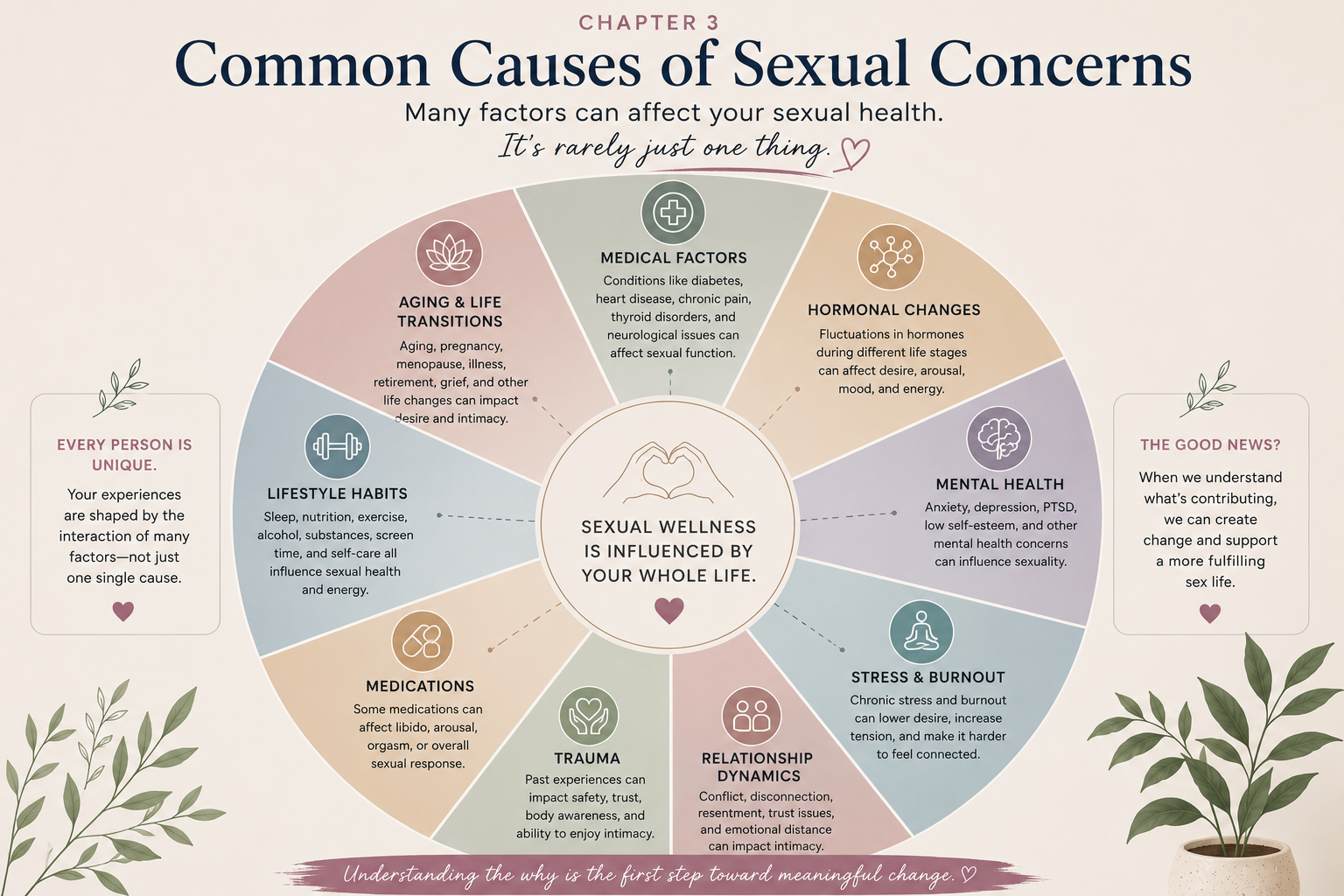
Chapter 3: Common Causes of Sexual Concerns
One of the biggest misconceptions about sexual difficulties is that there's always one clear cause. In reality, sexual health is influenced by a complex interaction of physical health, mental health, relationships, life experiences, and everyday habits.
Think of your sexuality like a wheel. Every part of your life—from your hormones and medications to your stress levels, sleep, relationships, and emotional well-being—can affect how that wheel turns. When one area is out of balance, it can impact your desire, arousal, pleasure, or ability to feel connected.
This is why there is rarely a "quick fix" for concerns like low libido, erectile dysfunction, painful sex, or difficulty reaching orgasm. Effective treatment starts with understanding the whole picture rather than focusing on just one symptom.
Below are some of the most common factors that influence sexual health.
Medical Factors
Our bodies play a significant role in sexual functioning. Medical conditions can affect blood flow, nerve function, hormones, energy levels, pain, and overall well-being, all of which influence sexuality.
Some common medical conditions that may contribute to sexual concerns include:
Diabetes
Heart disease
High blood pressure
Chronic pain
Endometriosis
Pelvic floor dysfunction
Thyroid disorders
Neurological conditions
Cancer and cancer treatment
Autoimmune disorders
Experiencing a sexual concern doesn't necessarily mean a medical condition is the sole cause, but it's important to rule out physical factors when appropriate. Sex therapists often work collaboratively with physicians, gynecologists, urologists, endocrinologists, and pelvic floor physical therapists to provide comprehensive care.
Hormonal Changes
Hormones influence much more than reproduction—they affect desire, arousal, energy, mood, and overall sexual functioning.
Hormonal changes can occur during:
Puberty
Pregnancy
Postpartum
Breastfeeding
Perimenopause
Menopause
Andropause (age-related testosterone changes)
Gender-affirming hormone therapy
Certain medical conditions affecting hormone production
It's important to remember that hormones are only one piece of the puzzle. Two people with similar hormone levels may have very different experiences depending on their mental health, relationships, stress levels, and overall physical health.
Mental Health
Our brains are one of our most important sexual organs.
Anxiety, depression, obsessive thinking, grief, and other mental health concerns can all affect sexual desire and functioning. When your mind is focused on survival, worry, or emotional pain, it becomes much harder to experience curiosity, pleasure, and connection.
Common mental health concerns that may affect sexuality include:
Anxiety disorders
Depression
Obsessive-compulsive disorder (OCD)
Eating disorders
Chronic stress
Low self-esteem
Improving mental health often leads to improvements in sexual well-being, which is why sex therapy looks at emotional wellness alongside sexual concerns.
Stress and Burnout
Modern life isn't exactly designed to support intimacy.
Between demanding careers, parenting, caregiving, financial pressures, household responsibilities, and constant notifications, many people feel emotionally exhausted before they ever make it to the bedroom.
Stress activates our body's survival system. While this response is incredibly helpful during danger, it's much less helpful when we're trying to feel relaxed, connected, and sexually engaged.
When people are burned out, they often experience:
Lower sexual desire
Difficulty becoming aroused
Trouble staying present during intimacy
Less emotional connection
Increased irritability and conflict
Reducing stress isn't always possible, but learning how to manage it can make a meaningful difference in your sex life.
Relationship Dynamics
Sex rarely exists in isolation from the rest of a relationship.
If you don't feel emotionally safe, respected, appreciated, or connected outside the bedroom, those feelings often show up inside the bedroom as well.
Relationship factors that commonly affect intimacy include:
Poor communication
Frequent conflict
Emotional distance
Resentment
Trust issues
Infidelity
Different expectations around sex
Feeling emotionally unseen or unsupported
While not every sexual concern is caused by relationship problems, strengthening emotional connection often improves sexual connection as well.
Trauma
Trauma can change the way the brain and body experience safety.
For survivors of sexual assault, childhood abuse, relationship violence, medical trauma, or other traumatic experiences, intimacy may trigger fear, anxiety, numbness, or emotional overwhelm.
Trauma can affect:
Sexual desire
Arousal
Erections
Lubrication
Orgasm
Pain during sex
Emotional closeness
Body awareness
Healing from trauma doesn't mean pretending the past didn't happen. It means helping your nervous system learn that intimacy can feel safe again.
Trauma-informed sex therapy helps clients move at their own pace while rebuilding trust, choice, and connection.
Medications
Many people are surprised to learn that medications can affect sexual functioning.
Some medications may influence desire, arousal, erections, lubrication, ejaculation, or orgasm.
Examples include:
Certain antidepressants
Anti-anxiety medications
Blood pressure medications
Hormonal medications
Birth control
Some medications used for chronic pain
Never stop taking a prescribed medication without talking to your healthcare provider. If you suspect a medication is affecting your sex life, your therapist and prescribing provider can work together to explore possible options.
Lifestyle Habits
Our everyday habits have a bigger impact on sexual health than many people realize.
Healthy sexuality isn't just about what happens during sex—it's also influenced by how we care for ourselves throughout the day.
Lifestyle factors that may affect sexual well-being include:
Sleep quality
Physical activity
Nutrition
Alcohol use
Recreational drug use
Smoking or vaping
Screen time
Time spent nurturing emotional connection
Opportunities for relaxation and pleasure
Small, sustainable changes in daily habits can sometimes lead to meaningful improvements in sexual health over time.
Aging and Life Transitions
Sexuality naturally changes throughout life.
Aging doesn't mean intimacy disappears—it simply means our bodies, relationships, and priorities evolve.
Major life transitions that commonly affect sexuality include:
Becoming parents
Empty nesting
Marriage or divorce
Career changes
Caring for aging parents
Menopause
Retirement
Illness or surgery
Loss and grief
Rather than trying to recreate the sex life you had ten years ago, therapy helps people adapt to where they are now and discover new ways to experience pleasure, intimacy, and connection.
Many people report that some of their most fulfilling sexual experiences happen later in life—not because everything stayed the same, but because they learned to communicate better, let go of unrealistic expectations, and embrace a broader definition of intimacy.
Sexual Concerns Are Rarely Caused by Just One Thing
If you've been searching for a single explanation for your sexual concerns, you're not alone. Most people hope there's one simple answer—a hormone, a medication, a communication issue, or a stressful season of life.
But more often than not, sexual concerns develop because several factors are interacting at the same time.
For example, someone experiencing low libido might also be managing chronic stress, taking a medication with sexual side effects, navigating relationship conflict, and sleeping only five hours a night. Another person with erectile dysfunction may have mild vascular changes combined with performance anxiety and fear of disappointing their partner. A survivor of sexual trauma may be healing emotionally while also adjusting to hormonal changes after childbirth.
The encouraging news is that when we identify the factors contributing to a concern, we can begin addressing them one by one. You don't have to figure out the entire puzzle on your own.
The goal of sex therapy isn't simply to treat a symptom—it's to understand why it's happening so you can build a healthier, more connected, and more satisfying relationship with your sexuality.
Chapter 4: Signs It Might Be Time to See a Sex Therapist
Many people wait months—or even years—before seeking help for a sexual concern. Some hope the problem will resolve on its own. Others feel embarrassed to bring it up, assume it's a normal part of aging, or worry that their concerns aren't "serious enough" to justify therapy.
The reality is that you don't have to wait until your sex life is in crisis before reaching out for support.
Just as you wouldn't ignore persistent back pain or ongoing anxiety, it's worth paying attention when something consistently interferes with your sexual well-being or your relationship. Seeking help early can often prevent concerns from becoming more distressing over time.
While everyone's experience is different, here are some common signs that it may be time to consider working with a sex therapist.
Emotional Signs
Sexual concerns don't just affect your body—they can have a profound impact on your emotional well-being.
You may benefit from sex therapy if you:
Feel anxious before or during intimacy.
Frequently worry about your sexual performance.
Experience shame or guilt related to sex.
Feel disconnected from your body.
Avoid dating or relationships because of sexual concerns.
Feel frustrated, hopeless, or discouraged about your sex life.
Struggle to enjoy intimacy even when you want to.
Feel like your sexual concerns are affecting your confidence or self-esteem.
Many people begin blaming themselves when sexual concerns arise. They wonder if they're "broken," unattractive, or somehow failing their partner. Therapy helps replace self-criticism with understanding, self-compassion, and practical solutions.
Physical Signs
Your body often gives you important information when something isn't working the way it should.
Consider seeking support if you experience:
Difficulty becoming aroused.
Difficulty maintaining arousal.
Difficulty reaching orgasm.
Ejaculation concerns that cause distress.
A significant decrease in sexual desire.
Fear of intimacy because of physical discomfort.
Sexual changes following childbirth, surgery, illness, or medical treatment.
Sometimes these concerns have medical causes, psychological causes, or a combination of both. A sex therapist can help identify contributing factors and collaborate with your healthcare providers when appropriate.
Relationship Signs
Sexual concerns rarely stay confined to the bedroom.
Over time, they can affect emotional closeness, communication, and overall relationship satisfaction.
You may benefit from therapy if you and your partner:
Frequently argue about sex.
Have mismatched levels of desire that create ongoing conflict.
Avoid physical affection because you're worried it will lead to pressure for sex.
Feel emotionally distant from one another.
Have stopped talking about your sex life altogether.
Feel rejected or unwanted.
Struggle to rebuild intimacy after infidelity, illness, childbirth, or other major life events.
Feel more like roommates than romantic partners.
It's important to remember that these experiences are more common than many couples realize. They don't necessarily mean your relationship is failing. Often, they're signs that your relationship needs new tools, better communication, and a safe place to work through challenges together.
Communication Signs
Healthy sexual relationships depend on healthy communication.
Unfortunately, many people never learn how to talk openly about sex. They worry about hurting their partner's feelings, sounding selfish, or starting an argument. As a result, concerns often go unspoken until resentment begins to build.
You may benefit from sex therapy if you find yourself:
Avoiding conversations about sex.
Feeling uncomfortable asking for what you want.
Unsure how to communicate your boundaries.
Afraid to say "no" without feeling guilty.
Struggling to talk about fantasies, preferences, or concerns.
Feeling misunderstood by your partner.
Having the same conversations over and over without making progress.
Unsure how to initiate intimacy in a way that feels comfortable for both of you.
Learning to communicate about sex isn't just about discussing problems. It's also about learning how to express affection, curiosity, appreciation, boundaries, and desires in ways that strengthen intimacy and deepen connection.
You Don't Have to Meet Every Sign
Reading through this chapter, you may recognize one sign—or several.
There isn't a checklist you have to complete before seeking therapy. You don't have to be having sex to benefit from sex therapy. You don't have to be in a relationship. You don't have to be experiencing severe distress.
If something about your sexual health or intimate relationships has been weighing on you, that alone is enough reason to explore support.
Therapy isn't reserved for the most extreme situations. It's a place to ask questions, better understand yourself, strengthen your relationships, and build the kind of intimate life you want.
Seeking help isn't a sign that you've failed. It's a sign that you're investing in your well-being, your relationships, and your quality of life. Like every other part of your health, your sexual well-being deserves attention, care, and compassion.
Chapter 5: What Happens During Sex Therapy?
One of the biggest reasons people hesitate to schedule their first appointment is uncertainty. They know they need help, but they aren't sure what sex therapy actually looks like.
Will I have to talk about explicit details?
Will it be awkward?
Will the therapist judge me?
Will I have homework?
These are completely normal questions.
The good news is that sex therapy looks much like other forms of psychotherapy. Sessions take place in a comfortable office or through secure telehealth, and the focus is always on conversation, education, skill-building, and emotional growth.
There is never any nudity, sexual touching, or sexual activity between you and your therapist. Sex therapy is simply talk therapy with specialized training in sexual health, intimacy, and relationships.
Every person's experience is unique, but here's what you can generally expect throughout the process.
Your First Appointment
Your first session is about getting to know you—not trying to solve everything in one appointment.
Your therapist will spend time understanding what brought you to therapy and what you hope will be different as a result of treatment. This is also your opportunity to ask questions, share concerns, and decide whether the therapist feels like a good fit for you.
You may discuss topics such as:
Your current concerns
Your relationship status and history
Medical history
Mental health history
Previous therapy experiences
Sexual history (only as it relates to your goals)
Current stressors
Family, cultural, or religious influences
What a successful outcome would look like for you
You are always in control of what you share. If a topic feels difficult to discuss, you can let your therapist know. Building trust is part of the therapeutic process, and there's no expectation that you have to tell your entire story during your first visit.
Many people leave their first appointment feeling relieved. After carrying their concerns alone for so long, it can be incredibly validating to speak openly with someone who understands sexual health and responds without judgment.
Assessment and Goal Setting
Once your therapist has a better understanding of your concerns, you'll begin identifying the factors that may be contributing to them.
Rather than looking only at symptoms, sex therapists often assess multiple areas of your life because sexuality is influenced by many interconnected factors.
Together, you'll explore areas such as:
Physical health
Mental health
Stress levels
Relationship dynamics
Communication patterns
Past experiences
Trauma history
Cultural and religious beliefs
Lifestyle habits
Medical conditions
Medications
Sexual values and expectations
This assessment isn't about finding something "wrong" with you. It's about understanding the bigger picture so treatment can address the root causes rather than simply managing symptoms.
You'll also begin setting meaningful goals. Some people want to increase desire. Others want to reduce anxiety, heal from trauma, improve communication, rebuild intimacy, or feel more confident in their bodies.
Your goals become the roadmap for therapy.
Creating a Treatment Plan
No two clients receive the exact same treatment because no two people have the exact same experiences.
Once you and your therapist understand what's contributing to your concerns, you'll work together to create a personalized treatment plan.
Your plan may include goals such as:
Reducing performance anxiety
Increasing sexual desire
Healing after sexual trauma
Improving communication
Rebuilding trust after relationship challenges
Managing pain during sex
Strengthening emotional intimacy
Improving body image
Developing healthier beliefs about sexuality
As therapy progresses, your treatment plan may evolve. New insights often emerge, priorities shift, and goals become more refined as you gain confidence and understanding.
Therapy is a collaborative process. Rather than telling you what to do, your therapist works alongside you to develop strategies that fit your values, relationships, and unique circumstances.
Common Therapy Approaches
Sex therapists draw from a variety of evidence-based approaches depending on your needs.
Some of the approaches that may be incorporated into treatment include:
Cognitive Behavioral Therapy (CBT)
CBT helps identify and change thought patterns that contribute to anxiety, shame, low self-esteem, or performance concerns.
Acceptance and Commitment Therapy (ACT)
ACT focuses on helping people make room for uncomfortable thoughts and emotions while taking meaningful action aligned with their values instead of getting stuck in fear or avoidance.
Emotionally Focused Therapy (EFT)
Often used with couples, EFT helps partners strengthen emotional connection, improve communication, and create greater security within the relationship.
Trauma-Informed Therapy
When trauma is part of the picture, therapy emphasizes safety, choice, collaboration, and empowerment while helping the nervous system heal at a pace that feels manageable.
EMDR Therapy
For some individuals, Eye Movement Desensitization and Reprocessing (EMDR) can help reduce the emotional impact of traumatic memories that continue to interfere with intimacy, relationships, or sexual well-being.
Mindfulness-Based Approaches
Mindfulness helps people become more present during intimacy by reducing self-judgment, performance pressure, and distraction while increasing awareness of physical sensations and emotional connection.
Psychoeducation
Sometimes one of the most powerful interventions is simply receiving accurate information. Many people have never been taught how desire works, what is considered typical sexual functioning, or how stress and relationships influence intimacy.
Learning about sexuality through an evidence-based lens often reduces shame and empowers people to make informed decisions.
Homework Between Sessions
Growth doesn't happen only during your therapy appointment.
The work you do between sessions is often where meaningful change begins to take shape.
Depending on your goals, your therapist may recommend exercises to practice outside of therapy.
These might include:
Communication exercises with your partner
Journaling
Mindfulness practices
Relaxation techniques
Reading or educational resources
Sensate focus exercises (when appropriate)
Self-reflection activities
Identifying thoughts or emotional patterns
Practicing new communication skills
Homework is never about "passing" or "failing."
It's an opportunity to experiment, gather information, and continue learning about yourself in everyday life. If something doesn't work, that's valuable information—not a setback.
Confidentiality and Privacy
For many people, talking about sex feels deeply personal.
It's understandable to wonder whether your information will remain private.
Like other licensed mental health professionals, sex therapists are legally and ethically required to protect your confidentiality, with a few specific exceptions required by law, such as concerns about immediate safety, abuse, or court orders. Your therapist will explain these limits during your first appointment so you know exactly what to expect.
Beyond legal requirements, creating a space where clients feel emotionally safe is one of the most important parts of therapy.
You deserve to ask questions without embarrassment.
You deserve to talk openly without fear of judgment.
You deserve a place where your experiences are taken seriously and treated with compassion.
Whether you're discussing low libido, erectile dysfunction, painful sex, trauma, body image, relationship challenges, or questions about sexuality, your therapist's role is not to judge you—it's to help you better understand yourself and support you in reaching your goals.
Therapy Is a Partnership
Many people come to therapy hoping the therapist will "fix" the problem. While guidance, expertise, and evidence-based treatment are important, lasting change happens through collaboration.
Your therapist brings clinical knowledge, specialized training, and an objective perspective. You bring your lived experience, values, goals, and willingness to grow.
Together, you create a path toward healthier relationships, greater confidence, and a more fulfilling intimate life.
There is no perfect client, and there is no perfect timeline. Progress looks different for everyone. Some people notice meaningful changes within a few sessions, while others benefit from longer-term work, especially when concerns involve trauma, longstanding relationship patterns, or multiple contributing factors.
The most important step is often the first one: reaching out. Once you do, you don't have to navigate these challenges alone.

Chapter 6: How Sex Therapy Can Help
Many people begin sex therapy with one simple question:
"Can this actually help me?"
The answer depends on your unique situation, but for many individuals and couples, the answer is yes.
Sex therapy isn't about becoming a different person or having a "perfect" sex life. It's about understanding what's getting in the way of the intimate life you want and developing the knowledge, skills, and confidence to create meaningful change.
Whether you're experiencing low desire, erectile dysfunction, painful sex, performance anxiety, relationship conflict, or the effects of sexual trauma, therapy addresses the underlying factors contributing to the problem—not just the symptoms.
Here are some of the ways sex therapy can help.
Improving Sexual Desire
Low sexual desire is one of the most common concerns people bring to therapy.
Many people assume they simply have a "low sex drive," but desire is much more complex than that. It is influenced by your physical health, hormones, stress, mental health, relationship satisfaction, life circumstances, and even the messages you've learned about sex throughout your life.
Rather than trying to force desire, sex therapy helps uncover what's suppressing it.
Together, you and your therapist may work to:
Identify barriers to desire.
Reduce stress and burnout.
Address relationship concerns.
Improve emotional connection.
Challenge shame-based beliefs about sex.
Better understand how desire works.
Develop realistic expectations for your sexual relationship.
The goal isn't simply to have more sex—it's to create the conditions where desire has the opportunity to naturally grow.
Treating Erectile Dysfunction
Erectile dysfunction can affect confidence, relationships, and emotional well-being just as much as it affects sexual functioning.
For many men, the emotional impact becomes a cycle: one difficult experience creates anxiety, which increases pressure during future sexual encounters, making erections even more difficult.
Sex therapy helps break that cycle.
Treatment may include:
Reducing performance anxiety.
Challenging unhelpful thoughts.
Improving communication with a partner.
Increasing confidence.
Shifting the focus from performance to connection.
Working alongside medical providers when physical factors are involved.
For many people, addressing both the physical and psychological aspects of erectile dysfunction leads to better long-term outcomes than focusing on one alone.
Overcoming Performance Anxiety
Performance anxiety affects people of all genders.
When you're focused on "doing everything right," it's difficult to stay connected to your body or your partner.
Instead of enjoying intimacy, your mind may be occupied with thoughts like:
"What if I can't perform?"
"What if my partner is disappointed?"
"What if I don't orgasm?"
"What if something goes wrong?"
These worries activate your body's stress response, making arousal more difficult and reinforcing the anxiety.
Sex therapy helps you:
Recognize anxiety patterns.
Develop healthier ways of thinking.
Stay present during intimacy.
Reduce self-criticism.
Build confidence through gradual, evidence-based strategies.
Over time, intimacy becomes less about proving yourself and more about experiencing connection.
Healing After Sexual Trauma
Sexual trauma can affect every aspect of intimacy.
Some survivors experience anxiety during sex, while others feel emotionally numb, disconnected from their bodies, or fearful of physical closeness. Others struggle with shame, trust, or feeling safe enough to be vulnerable with a partner.
Healing doesn't mean forgetting what happened.
Healing means helping your nervous system learn that intimacy can feel safe again.
Trauma-informed sex therapy helps survivors:
Rebuild trust in themselves.
Reconnect with their bodies.
Understand trauma responses.
Reduce shame.
Strengthen boundaries.
Develop healthy communication.
Experience intimacy at their own pace.
There is no timeline for healing, and there is no "right" way to recover. Therapy meets you where you are and supports you in moving forward at a pace that feels safe.
Increasing Emotional Intimacy
Emotional intimacy and sexual intimacy often influence one another.
When partners feel emotionally disconnected, misunderstood, or unsupported, that disconnection frequently carries into their physical relationship.
Sex therapy helps couples strengthen the foundation of their relationship by improving:
Emotional safety.
Vulnerability.
Trust.
Affection.
Understanding.
Empathy.
Shared experiences.
For many couples, improving emotional intimacy naturally creates more opportunities for physical intimacy as well.
Improving Communication
Few people grow up learning how to talk about sex.
Instead, many couples avoid difficult conversations until resentment, frustration, or misunderstanding builds over time.
One of the most valuable skills people develop in sex therapy is learning how to communicate openly and respectfully about intimacy.
This may include learning how to:
Express needs without criticism.
Set healthy boundaries.
Ask for what feels good.
Discuss differences in desire.
Navigate conflict with compassion.
Give and receive feedback.
Talk about intimacy without shame or blame.
Healthy communication doesn't eliminate every challenge—but it makes challenges much easier to navigate together.
Addressing Pain During Sex
Pain during sex is more common than many people realize, but it should never be considered something you simply have to live with.
Depending on the cause, treatment may involve collaboration between a sex therapist, physician, and pelvic floor physical therapist.
Therapy helps by:
Reducing fear surrounding intimacy.
Addressing anxiety that contributes to pain.
Processing past traumatic experiences.
Improving communication with partners.
Gradually rebuilding positive experiences with intimacy.
Supporting emotional healing alongside physical treatment.
When both the mind and body receive care, people often experience more lasting improvements.
Building Sexual Confidence
Confidence isn't about looking a certain way or having a particular level of sexual experience.
Healthy sexual confidence comes from feeling comfortable in your own body, understanding your needs, communicating openly, and knowing your worth isn't determined by sexual performance.
Sex therapy helps people:
Improve body image.
Reduce shame.
Challenge unrealistic expectations.
Increase self-compassion.
Build confidence in communication.
Develop a healthier relationship with sexuality.
As confidence grows, many people find themselves feeling more relaxed, more connected, and more present during intimacy.
Strengthening Your Relationship
Sex therapy isn't just about improving your sex life.
It's about strengthening the relationship as a whole.
When couples learn to understand each other better, communicate more effectively, and approach intimacy as teammates instead of opponents, many areas of the relationship improve.
Therapy can help couples:
Rebuild trust.
Improve emotional connection.
Reduce recurring conflict.
Navigate life transitions.
Increase affection.
Create healthier patterns of intimacy.
Strengthen friendship and partnership.
Feel more connected both inside and outside the bedroom.
A satisfying intimate relationship isn't built on perfection. It's built on communication, curiosity, compassion, and a willingness to grow together.
Change Is Possible
Many people begin sex therapy feeling discouraged. They may believe they've tried everything, worry they're beyond help, or wonder whether things can ever improve.
But sexual concerns are rarely permanent, and they rarely define a person or a relationship.
With the right support, many individuals and couples experience meaningful improvements in their confidence, communication, emotional connection, sexual satisfaction, and overall quality of life.
The goal of sex therapy isn't simply to solve a problem.
It's to help you build a healthier relationship with yourself, your partner, and your sexuality—one that feels authentic, connected, and sustainable for the long term.
No matter where you're starting, meaningful change is possible.

Chapter 7: Sex Therapy for Individuals
When people hear the words sex therapy, they often assume it's only for couples.
In reality, many people seek sex therapy on their own.
Whether you're single, dating, married, divorced, or somewhere in between, your relationship with your sexuality is uniquely yours. Individual sex therapy provides a confidential, judgment-free space to explore concerns, understand what's contributing to them, and develop practical tools for creating a healthier and more satisfying intimate life.
Some people come to therapy because they're experiencing a specific concern, like low libido or erectile dysfunction. Others want to heal from past trauma, improve body image, better understand their sexuality, or build confidence before entering a new relationship.
Whatever brings you to therapy, the goal is the same: to help you feel more connected to yourself, your body, your values, and your relationships.
Men's Sexual Health
Many men grow up receiving messages that they should always be ready for sex, never struggle with erections, and know exactly what to do in intimate situations. These unrealistic expectations often create pressure, shame, and isolation when sexual concerns arise.
In reality, men's sexual health is influenced by far more than testosterone or age. Stress, anxiety, relationship dynamics, medical conditions, medications, trauma, and emotional well-being all play important roles.
Men commonly seek sex therapy for concerns such as:
Erectile dysfunction
Performance anxiety
Low libido
Premature ejaculation
Delayed ejaculation
Difficulty communicating about sex
Pornography concerns
Body image
Intimacy after prostate cancer or other medical treatments
Relationship challenges related to sex
Therapy helps men move away from performance-based thinking and toward a healthier understanding of intimacy—one rooted in confidence, connection, flexibility, and self-compassion.
Women's Sexual Health
Women's sexuality changes throughout life, yet many women are taught to ignore discomfort or believe their concerns are simply something they have to live with.
Sex therapy offers a space to understand those changes rather than dismiss them.
Women commonly seek sex therapy for:
Low libido
Pain during sex
Difficulty reaching orgasm
Changes after pregnancy or childbirth
Menopause-related sexual concerns
Body image struggles
Sexual shame
Desire discrepancies within relationships
Difficulty communicating sexual needs
Therapy may also involve collaboration with gynecologists, pelvic floor physical therapists, primary care providers, or other specialists to address both the physical and emotional aspects of sexual health.
Every woman's experience is different, and treatment is always tailored to her unique goals, relationships, and values.
LGBTQ+ Clients
Everyone deserves access to affirming, respectful, and evidence-based mental health care.
Sex therapy provides a space where LGBTQ+ individuals can explore concerns without needing to educate their therapist or worry about being judged for their identity or relationships.
Clients may seek therapy for concerns related to:
Sexual functioning
Desire and intimacy
Dating and relationships
Coming out
Identity exploration
Gender affirmation
Minority stress
Internalized stigma
Family or cultural acceptance
Communication with partners
Relationship transitions
While LGBTQ+ clients experience many of the same sexual concerns as anyone else, they may also navigate unique social, cultural, and healthcare challenges that deserve thoughtful, affirming care.
Therapy recognizes that diversity in sexual orientation and gender identity is a normal part of the human experience—not something that needs to be changed or fixed.
Young Adults
Early adulthood is often filled with questions about relationships, intimacy, identity, and sexuality.
Many young adults reach adulthood without receiving comprehensive sex education, leaving them unsure about what is typical, healthy, or realistic.
Sex therapy can help young adults:
Develop healthy relationship skills.
Learn about consent and communication.
Reduce sexual anxiety.
Build confidence.
Understand desire and arousal.
Navigate first sexual experiences.
Explore identity and values.
Heal from difficult past experiences.
Establish healthy boundaries.
Developing a healthy relationship with sexuality early in adulthood often creates a strong foundation for future relationships.
Midlife and Menopause
Sexuality naturally evolves throughout adulthood.
For many people, midlife brings hormonal changes, shifting priorities, caregiving responsibilities, career demands, changing relationships, and physical health changes that all influence intimacy.
Menopause, in particular, can affect:
Sexual desire
Vaginal dryness
Comfort during sex
Arousal
Energy levels
Sleep
Mood
Body image
Midlife can also be a time of tremendous growth. Many people begin communicating more openly, understanding their bodies better, and redefining intimacy in ways that feel more authentic.
Sex therapy helps individuals and couples adapt to these changes while finding new ways to experience pleasure, closeness, and connection.
Aging and Sexual Wellness
One of the most harmful myths about sexuality is that it has an expiration date.
The truth is that sexuality remains an important part of many people's lives well into older adulthood.
While aging may bring physical changes, it can also bring greater confidence, emotional intimacy, and freedom from many of the pressures people experience earlier in life.
Older adults may seek therapy for concerns related to:
Changes in desire
Medical conditions
Medication side effects
Menopause
Loss of a partner
Dating later in life
Changes in physical functioning
Intimacy after illness or surgery
Rather than focusing on what has changed, therapy helps people discover what is still possible.
Healthy sexuality isn't defined by frequency, performance, or age. It's defined by connection, pleasure, communication, and experiences that align with your values and your stage of life.
Your Sexual Journey Is Unique
No two people experience sexuality in exactly the same way.
Your age, relationships, culture, health, identity, life experiences, and personal values all shape how you experience intimacy. That's why sex therapy isn't about following a one-size-fits-all formula or meeting someone else's definition of a healthy sex life.
Whether you're navigating your first relationship, rebuilding after trauma, adjusting to parenthood, exploring your identity, managing a medical condition, or rediscovering intimacy later in life, your experiences deserve thoughtful, individualized care.
There is no "right" timeline for seeking support. You don't have to wait until things become overwhelming or until you're in a relationship to benefit from therapy.
Sex therapy meets you where you are, helping you better understand yourself, strengthen your confidence, and build a relationship with your sexuality that feels authentic, fulfilling, and sustainable throughout every stage of life.

Chapter 8: Sex Therapy for Couples
Every relationship goes through seasons.
There are times when intimacy feels effortless and times when it feels distant. Life brings stress, children, demanding careers, health challenges, grief, aging, and countless other experiences that can affect both emotional and physical connection.
Many couples worry that changes in their sex life mean something is fundamentally wrong with their relationship. In reality, sexual challenges are one of the most common reasons couples seek therapy.
Sex therapy isn't about deciding who is right or wrong. It's about helping partners understand one another, communicate more effectively, and work together to create a relationship that feels emotionally and sexually fulfilling for both people.
Whether you've been together for two years or thirty, therapy can help you reconnect, rebuild trust, and strengthen your relationship.
Rebuilding Intimacy
Many couples describe feeling more like roommates than romantic partners.
Over time, responsibilities often begin to replace connection. Between work, parenting, household tasks, financial stress, and endless to-do lists, intimacy can quietly move to the bottom of the priority list.
Rebuilding intimacy isn't just about having more sex.
It's about rebuilding closeness.
That may include:
Spending intentional quality time together.
Increasing non-sexual affection.
Feeling emotionally seen and understood.
Laughing together more often.
Creating moments of curiosity and playfulness.
Learning how each partner experiences connection.
When emotional intimacy grows, physical intimacy often feels more natural and less pressured.
Navigating Desire Differences
One of the most common concerns couples bring to sex therapy is having different levels of sexual desire.
One partner may want sex more frequently, while the other feels overwhelmed, exhausted, or simply experiences desire differently.
Many couples mistakenly believe someone has to be "the problem."
In reality, desire discrepancies are incredibly common.
Rather than deciding whose level of desire is "normal," therapy focuses on understanding each partner's experience.
Together, couples learn to:
Understand how desire develops.
Reduce feelings of rejection and pressure.
Improve communication about intimacy.
Explore each partner's needs and values.
Create intimacy that feels enjoyable rather than obligatory.
Find solutions that respect both partners.
The goal isn't for one partner to "give in" or the other to stop wanting sex.
The goal is to build a sexual relationship where both people feel heard, respected, and connected.
Recovering After Infidelity
Few experiences challenge a relationship more deeply than infidelity.
Whether the betrayal involved emotional intimacy, physical intimacy, online relationships, or another breach of trust, couples often experience intense grief, confusion, anger, and uncertainty.
Many people wonder:
"Can we recover from this?"
While every relationship is different, healing is possible when both partners are committed to understanding what happened and doing the difficult work of rebuilding trust.
Sex therapy provides a structured space to:
Process painful emotions.
Improve honesty and transparency.
Understand the impact of betrayal.
Explore the factors that contributed to the affair without excusing it.
Rebuild emotional safety.
Gradually restore physical intimacy when both partners are ready.
Healing after infidelity is rarely quick, but many couples find that intentionally working through the experience helps them create a stronger and more authentic relationship than they had before.
Improving Emotional Connection
Sex and emotional connection are deeply intertwined.
When partners feel emotionally disconnected, intimacy often becomes less frequent, less satisfying, or more difficult to initiate.
Emotional connection grows through everyday interactions—not just grand romantic gestures.
Sex therapy helps couples strengthen emotional intimacy by learning to:
Listen without becoming defensive.
Express appreciation more often.
Understand each other's emotional needs.
Repair conflict more effectively.
Increase empathy.
Create greater emotional safety.
Many couples are surprised to discover that improving their emotional connection naturally improves their sexual relationship as well.
Rebuilding Trust
Trust is the foundation of every healthy relationship.
Without trust, vulnerability becomes difficult, communication becomes guarded, and intimacy often suffers.
Trust can be damaged by many experiences, including:
Infidelity.
Broken promises.
Dishonesty.
Emotional neglect.
Repeated conflict.
Boundary violations.
Feeling unheard or dismissed.
Rebuilding trust isn't about pretending the hurt never happened.
It's about consistently creating new experiences that demonstrate reliability, honesty, accountability, and emotional safety.
Therapy helps couples rebuild trust by:
Improving communication.
Increasing transparency.
Taking responsibility for mistakes.
Learning healthy repair after conflict.
Creating realistic expectations for healing.
Trust is rebuilt through repeated actions over time—not through one conversation or one apology.
Creating a More Fulfilling Sex Life
Many couples assume a satisfying sex life happens naturally.
In reality, healthy intimacy requires attention, communication, and flexibility throughout a relationship.
Sex therapy helps couples move away from rigid expectations and toward curiosity, collaboration, and connection.
Together, couples may learn how to:
Talk openly about sex.
Explore each partner's definition of intimacy.
Reduce pressure surrounding sexual performance.
Increase pleasure and mutual satisfaction.
Navigate changes across different stages of life.
Strengthen emotional and physical closeness.
Create rituals that support ongoing connection.
Rather than chasing an unrealistic idea of what a sex life "should" look like, therapy helps couples create an intimate relationship that reflects their own values, preferences, and goals.
Every Couple's Journey Is Different
No two relationships are exactly alike.
Some couples come to therapy after months of feeling disconnected. Others seek support during major life transitions, after the birth of a child, following an affair, or because they simply want to strengthen an already healthy relationship.
There is no single "right" way to build intimacy.
What matters most is creating a relationship where both partners feel emotionally safe, respected, desired, and able to communicate openly about their needs.
Sex therapy isn't about assigning blame or keeping score.
It's about helping two people understand one another more deeply, navigate challenges as a team, and build a relationship that continues to grow over time.
The strongest relationships aren't the ones that never face difficulties—they're the ones that learn how to face those difficulties together.

Chapter 9: Evidence Behind Sex Therapy
If you're considering sex therapy, one of the first questions you may have is:
"Does it actually work?"
It's an important question—and one that deserves an evidence-based answer.
Research over the past several decades has consistently shown that sex therapy can be an effective treatment for many sexual concerns. While no therapy can guarantee specific outcomes, studies have found that individuals and couples often experience meaningful improvements in sexual functioning, relationship satisfaction, communication, emotional intimacy, and overall quality of life.
One reason sex therapy is effective is that it doesn't focus on just one part of the problem. Sexual concerns are often influenced by physical health, emotions, relationships, stress, past experiences, beliefs about sex, and everyday life. By addressing these factors together, therapy can create more lasting change than focusing on symptoms alone.
What Research Says
A growing body of scientific research and clinical practice supports sex therapy.
Studies have found that psychological and behavioral interventions can be effective for concerns such as:
Low sexual desire
Performance anxiety
Difficulty reaching orgasm
Premature ejaculation
Desire discrepancies
Researchers have also found that improving communication, reducing anxiety, increasing emotional connection, and addressing unhelpful beliefs about sex often lead to improvements in sexual satisfaction.
For survivors of sexual trauma, trauma-informed therapies such as EMDR, Cognitive Behavioral Therapy (CBT), and other evidence-based approaches can help reduce trauma symptoms that interfere with intimacy and relationships.
For couples, research consistently shows that learning healthier communication patterns, improving emotional safety, and reducing conflict can strengthen both the relationship and the couple's sexual connection.
In other words, healthy intimacy isn't just about what happens during sex—it's also influenced by what happens outside the bedroom.
Success Rates
Many people hope there is a simple number that tells them how likely therapy is to work.
The reality is more complicated.
Success depends on the specific concern being treated, the factors contributing to it, the treatment approach used, and each person's goals.
Rather than asking whether therapy "works" in general, it can be more helpful to ask:
Are we identifying the real causes of the concern?
Are we using evidence-based treatment?
Are we consistently applying what we're learning?
Are both partners engaged in the process when couples therapy is involved?
For many people, success doesn't necessarily mean achieving a perfect sex life.
Success may look like:
Feeling less anxious about intimacy.
Experiencing more desire.
Improving erectile functioning.
Reducing pain during sex.
Feeling more emotionally connected.
Communicating openly with a partner.
Rebuilding trust.
Feeling more confident in your body.
Enjoying intimacy rather than fearing it.
Every person's definition of success is different, and your therapist will work with you to identify goals that are meaningful for your life and relationships.
Factors That Influence Progress
Just as every person is different, every therapy journey is different.
Some people notice improvements within a few sessions, while others require more time, especially when concerns have been present for years or involve multiple contributing factors.
Several things can influence progress.
The Underlying Cause
Concerns related primarily to stress or communication may improve differently than concerns involving trauma, chronic pain, medical conditions, or multiple overlapping factors.
Understanding the underlying causes helps create a treatment plan that addresses the problem more effectively.
Motivation and Participation
Therapy is most effective when clients actively participate in the process.
That doesn't mean you need to have everything figured out before you start. It simply means being open to learning, reflecting, practicing new skills, and having honest conversations.
Much of the growth in therapy happens between sessions as you begin applying what you've learned in everyday life.
Partner Involvement
When concerns affect both members of a couple, progress is often supported when both partners are willing to participate in treatment.
This doesn't mean both partners are required to attend every session. Individual therapy can be incredibly effective.
However, when relationship dynamics play a significant role, having both partners engaged often creates more opportunities for meaningful change.
Physical Health
Sometimes therapy is only one piece of the solution.
Medical conditions, hormonal changes, medication side effects, pelvic floor dysfunction, or other health concerns may also need to be addressed.
Sex therapists frequently collaborate with physicians, gynecologists, urologists, pelvic floor physical therapists, and other healthcare professionals to ensure clients receive comprehensive care.
Realistic Expectations
Healing is rarely a straight line.
Some weeks you'll notice meaningful progress. Other weeks may feel slower.
Setbacks don't necessarily mean therapy isn't working—they're often a normal part of learning new ways of thinking, communicating, and responding.
The goal isn't perfection.
The goal is steady, sustainable growth.
How Long Therapy Usually Takes
One of the most common questions people ask is:
"How many sessions will I need?"
Unfortunately, there isn't a one-size-fits-all answer.
The length of therapy depends on your goals, the complexity of your concerns, and how much support you need along the way.
Some people seek therapy for a specific concern and meet for a relatively short period of time.
Others choose longer-term therapy because they're working through trauma, longstanding relationship patterns, or multiple concerns that have developed over many years.
Your therapist will regularly check in with you about your progress and adjust treatment as your needs evolve.
The goal isn't to keep you in therapy forever.
The goal is to help you build the knowledge, confidence, and skills you need so that therapy eventually becomes unnecessary.
Progress Looks Different for Everyone
One of the biggest mistakes people make is comparing their progress to someone else's.
Healing isn't a race.
Some people begin noticing changes after learning a few new communication skills. Others need time to process trauma, rebuild trust, adjust to medical changes, or develop a healthier relationship with their bodies.
What matters most isn't how quickly change happens.
It's that you're moving toward a healthier, more connected version of yourself.
The research tells us that change is possible. Clinical experience tells us that every journey is unique.
With the right support, a willingness to learn, and an individualized treatment plan, many individuals and couples discover that the intimacy they hoped for is far more achievable than they once believed.
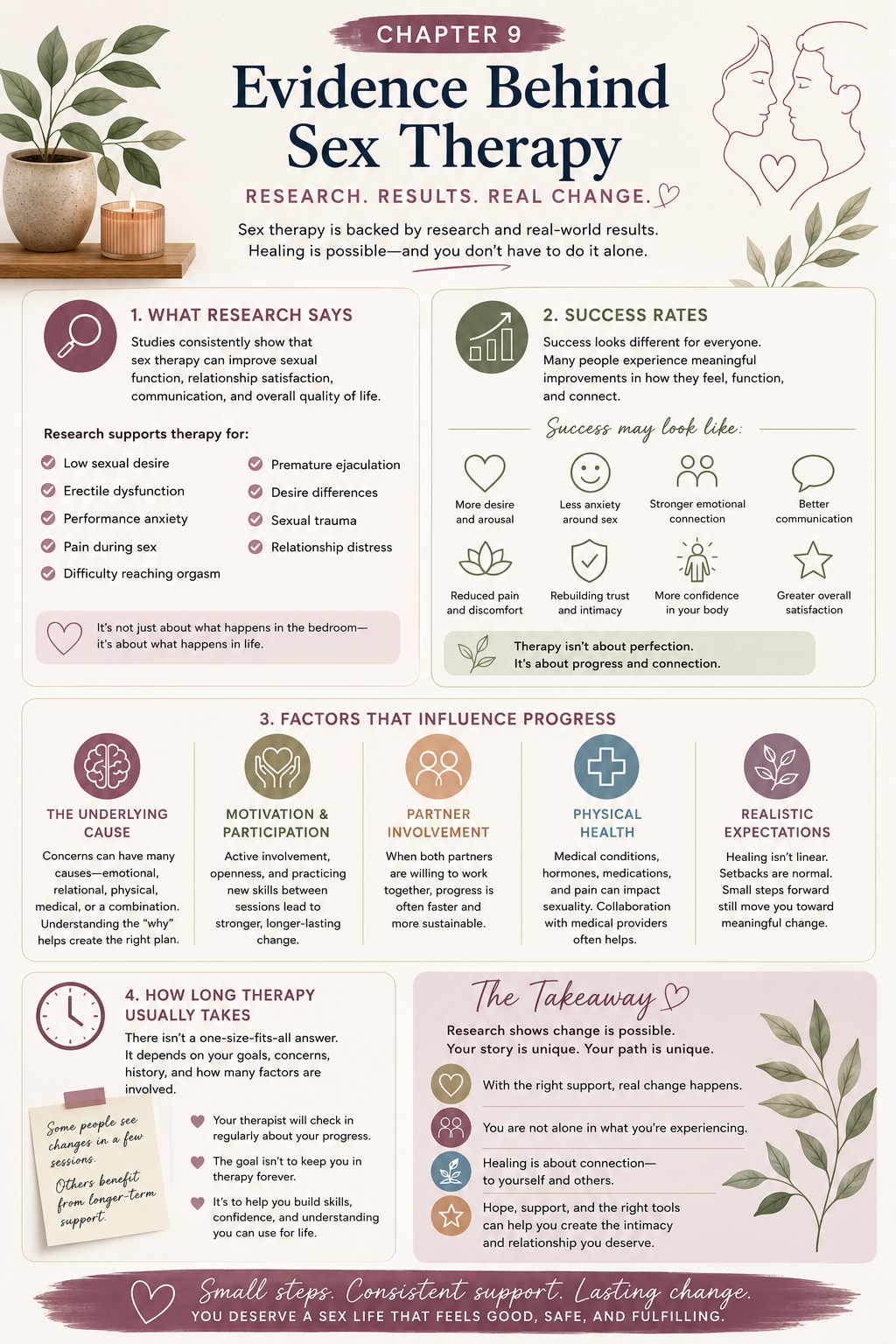
Chapter 10: Choosing the Right Sex Therapist
Finding the right sex therapist is about more than credentials—it's about finding someone you feel safe with.
Talking about sexuality, relationships, trauma, and intimacy can leave people feeling vulnerable. That's why the relationship you build with your therapist is one of the most important parts of the healing process.
A skilled sex therapist should help you feel heard, respected, and understood. You should never feel judged, pressured, or ashamed for bringing up questions about your sexuality or relationships.
Just as you would carefully choose a physician or surgeon, it's worth taking the time to find a therapist whose education, experience, and approach align with your needs.
Qualifications to Look For
Not every therapist has specialized training in sexual health.
While all licensed mental health professionals receive education in counseling and psychotherapy, training in human sexuality is often limited unless a therapist chooses to pursue additional education.
As you search for a therapist, consider looking for someone who has experience treating the concerns you're experiencing.
Helpful qualifications may include:
A Professional Mental Health License
Look for a licensed professional such as a:
Licensed Professional Counselor (LPC)
Licensed Marriage and Family Therapist (LMFT)
Licensed Clinical Social Worker (LCSW)
Licensed Psychologist (PhD or PsyD)
Psychiatrist (MD or DO)
Licensure means the therapist has met education, supervised training, and ethical requirements established by their licensing board.
Specialized Training in Sexual Health
Many therapists pursue advanced education focused specifically on sexuality and relationships.
Specialized training may include topics such as:
Sexual functioning
Desire and arousal
Erectile dysfunction
Pain during sex
Orgasm concerns
Trauma and intimacy
LGBTQ+ affirming care
Ethical non-monogamy
Some therapists also pursue certification through professional organizations dedicated to sexual health, while others complete extensive continuing education throughout their careers.
Experience With Your Specific Concern
Sexual concerns are diverse.
Someone seeking help for erectile dysfunction may benefit from different expertise than someone healing from sexual trauma or navigating menopause.
When reading therapist biographies, look for someone who regularly works with concerns similar to yours.
Examples include:
Erectile dysfunction
Pain during sex
Performance anxiety
Difficulty reaching orgasm
Couples intimacy
Desire discrepancies
Body image
LGBTQ+ clients
Experience doesn't guarantee results, but working with someone familiar with your concerns can make treatment more focused and effective.
A Therapy Style That Fits You
Research consistently shows that one of the strongest predictors of successful therapy is the quality of the therapeutic relationship.
Ask yourself:
Do I feel comfortable talking with this person?
Do I feel heard?
Do they explain things clearly?
Do I feel respected?
Can I imagine discussing difficult topics with them?
Feeling emotionally safe is an important part of meaningful therapeutic work.
Questions to Ask
It's okay to ask questions before scheduling your first appointment.
Most therapists expect prospective clients to want more information, and asking questions can help you decide whether someone is a good fit.
Consider asking:
Do you regularly work with concerns like mine?
What experience do you have treating low libido, erectile dysfunction, pain during sex, or trauma? (Choose the concern most relevant to you.)
What therapeutic approaches do you use?
Do you work with individuals, couples, or both?
How do you typically structure therapy?
Will there be homework between sessions?
How do you measure progress?
Do you collaborate with physicians or other healthcare providers when appropriate?
Do you offer telehealth sessions?
What are your fees and cancellation policies?
Remember, the consultation isn't just for the therapist to learn about you.
It's also an opportunity for you to determine whether you feel comfortable working with them.
Red Flags to Avoid
Just as there are qualities to look for, there are also warning signs that a therapist may not be the right fit.
Be cautious if a therapist:
Guarantees specific results or promises to "fix" your sex life.
Claims to have a one-size-fits-all solution.
Makes you feel ashamed or judged.
Pressures you to discuss topics before you're ready.
Dismisses your concerns.
Imposes their own personal, religious, or moral beliefs onto your sexuality.
Lacks appropriate licensure or professional credentials.
Is unwilling to refer you to medical providers when physical concerns may be contributing.
Suggests or requests any form of sexual contact or physical intimacy as part of treatment.
A particularly important point is this:
Ethical sex therapy never involves sexual activity, nudity, or physical touching between you and your therapist.
Sex therapy is psychotherapy. It is conversation, education, emotional processing, skill-building, and collaborative treatment—not physical contact.
If something feels inappropriate or uncomfortable, trust your instincts and seek another provider.
When to Seek Medical Care Alongside Therapy
Many sexual concerns involve both physical and psychological factors.
That's why the best care is often collaborative.
In some cases, your therapist may recommend meeting with a physician, gynecologist, urologist, endocrinologist, pelvic floor physical therapist, or another healthcare professional.
Medical evaluation may be especially important if you experience:
Sudden changes in sexual desire.
New erectile difficulties.
Pain during sex.
Persistent vaginal dryness or bleeding.
Pelvic pain.
Changes after surgery or cancer treatment.
Hormonal concerns.
Medication side effects.
Symptoms that interfere with daily functioning.
Addressing physical health concerns doesn't mean your experiences are "all medical," just as benefiting from therapy doesn't mean they're "all psychological."
Sexual health is influenced by both mind and body.
When healthcare providers work together, treatment is often more comprehensive and effective.
The Right Therapist Should Help You Feel Hopeful
Choosing a therapist is an important decision, and it's okay if the first person you meet isn't the right fit.
Finding someone you trust can make all the difference.
The right therapist won't expect you to have all the answers.
They won't judge your experiences or assume your goals should look like someone else's.
Instead, they'll take the time to understand your story, help you make sense of what's contributing to your concerns, and work with you to create a treatment plan that fits your unique needs and values.
Whether you're seeking support for low libido, erectile dysfunction, painful sex, relationship challenges, healing after trauma, or simply wanting a healthier relationship with your sexuality, you deserve care that is compassionate, evidence-based, and tailored to you.
The first step isn't finding the perfect therapist.
It's finding someone who helps you feel safe enough to begin.

Chapter 11: Frequently Asked Questions
If you're considering sex therapy, you probably have questions—and you're not alone. Many people aren't sure what to expect before scheduling their first appointment. Some worry therapy will be uncomfortable, while others wonder whether their concerns are "serious enough" to seek help.
Below are answers to some of the most common questions people ask before starting sex therapy.
Is Sex Therapy Confidential?
Yes.
Like other licensed mental health professionals, sex therapists are required to protect your privacy and confidentiality. What you discuss in therapy stays between you and your therapist, with a few specific exceptions required by law, such as concerns about immediate safety, child or vulnerable adult abuse, or certain court orders.
Your therapist will explain these limits to confidentiality during your first appointment so you understand exactly what to expect.
Many people are understandably nervous about talking about sex for the first time. A therapist's role is to create a space where you can speak openly without fear of judgment or embarrassment.
Do I Have to Come With My Partner?
Not at all.
Many people attend sex therapy on their own.
Individual therapy can be incredibly helpful if you're working through concerns such as:
Difficulty reaching orgasm
Pain during sex
Body image concerns
Sexual shame
Questions about sexuality or identity
If your concerns primarily involve your relationship, your therapist may recommend couples sessions. In some situations, individual and couples therapy are used together.
The right approach depends on your goals—not your relationship status.
Will I Have to Talk About Explicit Details?
Only to the extent that it's helpful.
Sex therapists are trained to discuss sexuality professionally and respectfully, but therapy is never about sharing graphic details for the sake of sharing them.
Instead, conversations focus on understanding your experiences, identifying patterns, and developing solutions that support your goals.
You are always in control of what you choose to share.
If discussing certain topics feels difficult, that's okay. Therapy moves at a pace that feels safe and manageable for you.
Is There Homework?
Sometimes.
Homework is a common part of many forms of therapy because lasting change happens between sessions as well as during them.
Depending on your goals, homework may include:
Communication exercises
Journaling
Mindfulness practices
Reading educational resources
Self-reflection activities
Relaxation exercises
Relationship check-ins
Sensate focus exercises (when appropriate)
Homework isn't about being graded or doing everything perfectly. It's simply an opportunity to practice new skills and gather information about what works for you.
Does Insurance Cover Sex Therapy?
The answer depends on your insurance plan and your therapist.
Some therapists are in-network with insurance companies, while others are private-pay and can provide documentation that may allow you to seek reimbursement through out-of-network benefits.
Coverage also depends on factors such as your diagnosis, your policy, and your insurance provider.
If insurance is important to you, ask your therapist:
Do you accept my insurance?
Do you offer superbills for out-of-network reimbursement?
What fees should I expect?
What payment options are available?
If you're unsure about your benefits, contacting your insurance company before your first appointment can help you understand your coverage.
How Long Does Therapy Take?
There isn't one answer that fits everyone.
The length of therapy depends on:
Your goals
The concerns you're addressing
How long they've been present
Whether you're attending individually or as a couple
The presence of trauma or medical concerns
Your progress over time
Some people attend therapy for a relatively short period to address a specific concern.
Others choose longer-term therapy to work through more complex issues or continue personal growth.
Your therapist will regularly review your progress with you and adjust treatment as your needs evolve.
Can Sex Therapy Help Save My Relationship?
It can—but therapy can't guarantee any specific outcome.
Sex therapy can help couples:
Improve communication.
Rebuild emotional intimacy.
Navigate desire differences.
Reduce conflict.
Restore trust.
Strengthen emotional and physical connection.
For many couples, these changes lead to a healthier and more satisfying relationship.
In some cases, therapy also helps couples recognize patterns that need to change if the relationship is going to thrive.
The goal isn't simply to keep couples together at all costs.
The goal is to help each partner better understand themselves, understand each other, and make thoughtful decisions about the future of their relationship.
Can Therapy Improve Low Libido?
Yes—many people seek sex therapy specifically because of changes in sexual desire.
Low libido often has multiple contributing factors, including:
Stress
Hormonal changes
Relationship dynamics
Mental health
Trauma
Medical conditions
Medications
Lifestyle habits
Rather than focusing only on increasing desire, therapy helps identify what's reducing desire in the first place.
When those barriers are addressed, many people experience meaningful improvements in both desire and overall relationship satisfaction.
Can Therapy Help Erectile Dysfunction?
Yes, particularly when emotional or relationship factors are contributing.
Performance anxiety, stress, depression, relationship conflict, and fear of future sexual experiences can all affect erectile functioning.
Sex therapy helps by:
Reducing anxiety.
Increasing confidence.
Improving communication.
Challenging unhelpful beliefs.
Reducing pressure surrounding performance.
If medical factors are also involved, therapy often works alongside physicians or urologists to provide comprehensive care.
Can Therapy Help After Trauma?
Absolutely.
Many survivors of sexual trauma wonder whether they'll ever feel comfortable with intimacy again.
Healing takes time, but recovery is possible.
Trauma-informed sex therapy helps survivors:
Understand trauma responses.
Reduce shame.
Rebuild trust.
Strengthen boundaries.
Reconnect with their bodies.
Develop healthy communication.
Create a greater sense of safety during intimacy.
Healing doesn't mean forgetting what happened.
It means learning that your past does not have to define your future relationships or your ability to experience connection, pleasure, and intimacy.
Still Have Questions?
Starting sex therapy is a big step, and it's completely normal to have questions that aren't covered here.
Whether you're wondering if therapy is right for you, trying to understand a specific sexual concern, or simply looking for trustworthy information, asking questions is an important part of the process.
A good sex therapist welcomes curiosity.
You don't need to know all the right words.
You don't need to have everything figured out.
You simply need a willingness to start the conversation.
If you've made it this far through this guide, you've already taken an important first step toward understanding your sexual health. The next step—whether it's scheduling a consultation, talking with your partner, or continuing to learn—is entirely yours.
Whatever you decide, know this: your questions are valid, your concerns matter, and support is available.
Conclusion
If there's one thing I hope you take away from this guide, it's this:
You are not broken.
Sexual concerns are incredibly common, and they happen to people of every age, gender, relationship status, and life experience. Whether you're struggling with low libido, erectile dysfunction, painful sex, performance anxiety, difficulty reaching orgasm, healing after sexual trauma, or simply feeling disconnected from your partner, you're far from alone.
More importantly, many of these concerns are treatable.
Throughout this guide, we've explored what sex therapy is, why people seek it, the many factors that influence sexual health, what happens during therapy, and how evidence-based treatment can help individuals and couples create healthier, more fulfilling intimate relationships.
One of the most important lessons is that sexual well-being is about so much more than sex itself. It's influenced by your physical health, mental health, relationships, life experiences, beliefs, stress levels, and the way you communicate with yourself and the people you love.
That's why there is rarely a quick fix—and why lasting change often comes from understanding the whole picture.
Healing doesn't happen overnight, and there isn't one "right" way to experience sexuality. Every person's journey is different. Your goals, your values, your relationships, and your experiences are uniquely your own. Therapy isn't about helping you fit someone else's definition of a healthy sex life. It's about helping you create a sex life and intimate relationships that feel authentic, connected, and meaningful to you.
Whether your next step is scheduling your first therapy appointment, having an honest conversation with your partner, talking with your medical provider, or simply continuing to learn about your sexual health, you've already taken an important first step by seeking reliable information.
Curiosity is often where healing begins.
As a therapist, I believe everyone deserves to feel safe in their body, connected in their relationships, and empowered to ask questions without shame. Sexual health is an important part of overall well-being, and seeking support is not a sign of weakness—it's an investment in yourself and your quality of life.
Thank you for taking the time to read this guide. I hope it has helped you feel more informed, more hopeful, and more confident about what healing can look like.
And remember: you don't have to figure it all out alone.
Support is available, change is possible, and a healthier relationship with yourself, your sexuality, and the people you love is within reach.
Ready to Take the Next Step?
If you're ready to begin your journey, I'd be honored to support you. Whether you're navigating low libido, erectile dysfunction, desire differences, painful sex, sexual trauma, relationship challenges, or simply want to feel more connected in your intimate life, therapy can provide a safe, compassionate space to explore what's holding you back and move toward the life you want.
You don't need to have all the answers before reaching out.
You simply need to take the first step.
Book your first appointment
About the Author: Holly Nelson – Intimacy Therapist in Scottsdale, AZ
Holly Nelson, LPC, NCC, is a licensed professional counselor based in Scottsdale, Arizona and the founder of The Connection Couch. Holly specializes in sex therapy, sexual trauma recovery, painful sex, performance anxiety, desire and libido discrepancies, sexless marriages, and couples intimacy therapy. Holly is EMDR-certified and currently completing certification as a sex therapist. Her work focuses on helping individuals and couples heal from sexual trauma, reconnect with their bodies, and build shame-free, pressure-free sexual relationships.Through therapy, education, and public outreach, Holly aims to normalize conversations about sexual health, consent, and intimacy so people can experience deeper connection, confidence, and wellbeing in their relationships.
Holly has also been featured in major publications such as HuffPost,Stylist’s Strong Women, Well Beings News, and VoyagePhoenix.
Follow her on Youtube, Instagram, & TikTok: @sextherapywithholly
References
The information in this guide is based on current research, clinical practice guidelines, and evidence-based approaches to sexual health, psychotherapy, and relationship counseling. The following resources provide additional information for those interested in learning more.
Professional Organizations
American Association of Sexuality Educators, Counselors and Therapists (AASECT). (n.d.). Professional standards and certification resources.
American Psychological Association. (n.d.). Clinical practice resources.
International Society for the Study of Women's Sexual Health (ISSWSH). (n.d.). Clinical guidelines and educational resources.
Sexual Medicine Society of North America (SMSNA). (n.d.). Patient education and clinical resources.
World Association for Sexual Health (WAS). (n.d.). Declarations and resources on sexual health.
World Health Organization. (2006). Defining Sexual Health: Report of a Technical Consultation on Sexual Health.
Evidence-Based Books
Brotto, L. A. (2022). Better Sex Through Mindfulness: How Women Can Cultivate Desire. Greystone Books.
Come As You Are (Revised and Updated). Emily Nagoski, PhD. (2021). Ballantine Books.
Johnson, S. M. (2019). Attachment Theory in Practice: Emotionally Focused Therapy (EFT) with Individuals, Couples, and Families. Guilford Press.
Levine, S. B. (2010). Sexual Life: A Clinician's Guide. Springer.
Perel, E. (2017). The State of Affairs: Rethinking Infidelity. Harper.
Perel, E. (2006). Mating in Captivity: Unlocking Erotic Intelligence. Harper.
Schnarch, D. (2009). Passionate Marriage. W. W. Norton & Company.
Trauma Resources
Shapiro, F. (2018). Eye Movement Desensitization and Reprocessing (EMDR) Therapy: Basic Principles, Protocols, and Procedures (3rd ed.). Guilford Press.
van der Kolk, B. A. (2015). The Body Keeps the Score: Brain, Mind, and Body in the Healing of Trauma. Penguin Books.
Sexual Medicine & Research
Basson, R. (2001). Human sex-response cycles. Journal of Sex & Marital Therapy, 27(1), 33–43.
Basson, R., et al. (2004). Revised definitions of women's sexual dysfunction. Journal of Sexual Medicine, 1(1), 40–48.
McCabe, M. P., et al. (2016). Risk factors for sexual dysfunction among women and men: A consensus statement. Journal of Sexual Medicine, 13(2), 153–167.
Rosen, R. C., et al. (2004). The International Index of Erectile Function (IIEF): A multidimensional scale for assessment of erectile dysfunction.
Couples Therapy & Relationships
Johnson, S. M. (2004). The Practice of Emotionally Focused Couple Therapy: Creating Connection. Brunner-Routledge.
Gottman, J. M., & Gottman, J. S. (2015). 10 Principles for Doing Effective Couples Therapy. W. W. Norton & Company.
Cognitive Behavioral Therapy
Beck, J. S. (2020). Cognitive Behavior Therapy: Basics and Beyond (3rd ed.). Guilford Press.
Hayes, S. C., Strosahl, K., & Wilson, K. G. (2016). Acceptance and Commitment Therapy: The Process and Practice of Mindful Change (2nd ed.). Guilford Press.
Additional Reading
Nagoski, E. (2015). Come As You Are: The Surprising New Science That Will Transform Your Sex Life.
Perel, E. (2007). Mating in Captivity.
Schnarch, D. (2009). Passionate Marriage.
Disclaimer
This guide is intended for educational purposes only and should not be considered medical, psychological, or legal advice. Every individual's circumstances are unique. If you are experiencing persistent sexual concerns, significant emotional distress, or symptoms that may be related to an underlying medical condition, consult with a qualified healthcare professional. If you are experiencing a mental health emergency, contact your local emergency services or crisis resources immediately.